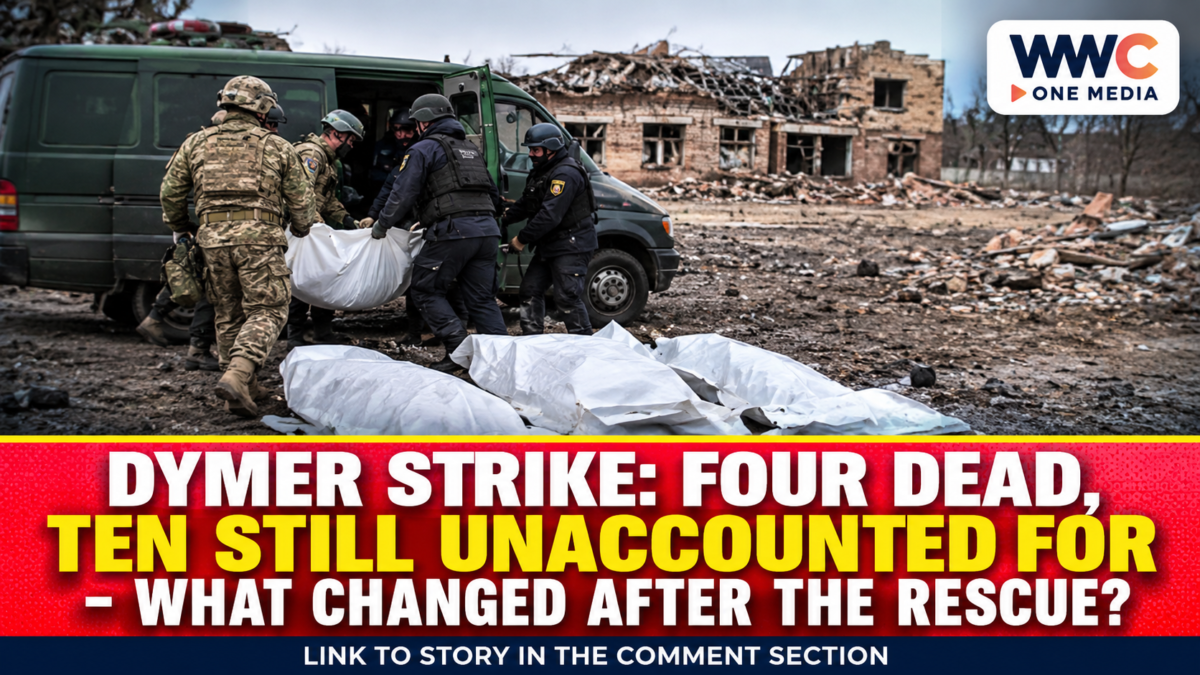
Four people had been confirmed dead and 10 others remained unaccounted for after a Russian drone struck a residential building in Dymer, in Ukraine’s Kyiv region, on Nov. 22, 2026. The rescue operation also produced a significant development: a child was pulled alive from beneath the rubble and taken for medical care. President of Ukraine
The evening update from Ukrainian President Volodymyr Zelenskyy showed how the situation had changed during the day, with emergency personnel continuing their work despite repeated air-raid warnings and renewed threats.
The immediate issue is no longer just the extent of the building’s destruction. It is whether rescuers can account for everyone who may have been inside, while keeping emergency teams and survivors safe during an operation exposed to further aerial danger.
Dymer strike: What Ukraine’s president confirmed
In an official address published at 8:33 p.m. on Nov. 22, Zelenskyy said four people had died in the attack on the residential building in Dymer. He also reported that 10 people were still unaccounted for at the time of his statement. President of Ukraine
The president identified the weapon as a Russian Shahed drone. He said the strike hit the building and destroyed a section of it, leaving rescuers to work through the damaged structure.
The statement did not provide the names of the four people who died, nor did it identify the 10 people whose whereabouts remained unknown. It would therefore be premature to publish identities or assume that everyone unaccounted for had died.
The distinction between confirmed fatalities and missing people is essential. A person who has not yet been located during a rescue operation cannot automatically be counted among the dead.
A child was found alive as the search continued
One of the most important developments in the presidential update was the rescue of a child from beneath the debris.
Zelenskyy said the boy was receiving the necessary medical care after being brought out alive. The statement did not disclose the child’s name, age, precise injuries or medical condition. President of Ukraine
The rescue came after emergency teams had been working at the site throughout the day. It also meant that the search was not simply a recovery operation for victims already confirmed dead; rescuers were still trying to locate people whose status had not been established.
That distinction matters in reporting on collapsed buildings. Search teams must examine damaged areas carefully, while authorities work to identify residents and establish who has been evacuated, located or remains missing.
The presidential statement did not say whether the rescued child was included in the earlier count of people unaccounted for. Without a detailed incident list, that relationship should not be assumed.
More than 130 people were involved in the response
The scale of the operation was another detail highlighted in the president’s address. More than 130 people were involved in the response at the Dymer site, he said. President of Ukraine
However, the operation faced a serious complication: repeated air-raid alerts and renewed threats. Those conditions made it difficult for emergency personnel to continue working without interruption.
Rescue operations after an aerial attack can require a balance between reaching people trapped inside damaged structures and protecting the teams sent into the area. Further warnings can force personnel to pause or move to safer positions, affecting the pace of the search.
The official statement did not provide a breakdown of the personnel by agency or specify how many firefighters, medical workers, police officers or other responders were assigned to the building.
The figure of more than 130 should therefore be understood as the total involvement reported by the president, not as a confirmed count for any single emergency service.
The Dymer incident was separate from another deadly strike
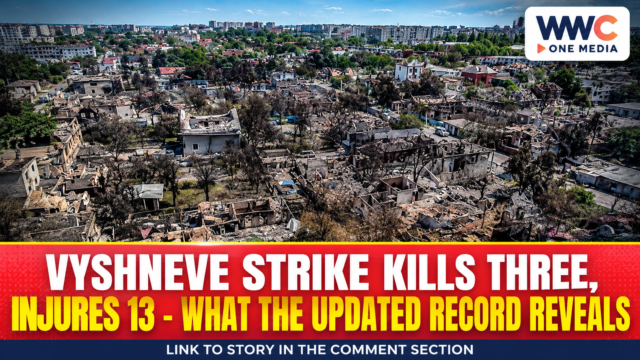
The same presidential address also reported a separate attack in Vyshneve, another community in the Kyiv region.
Zelenskyy said a grocery store there had been struck, killing three people and injuring 13. Those casualties were separate from the four deaths reported in Dymer. President of Ukraine
Keeping the two incidents separate is important. Both occurred in the Kyiv region on Nov. 22, but they involved different locations and different civilian sites.
Combining their casualty figures without explaining the separate incidents could give readers a misleading impression of what happened at the apartment building.
The wider pattern of attacks on Ukrainian cities has also affected transport and essential services. WWC previously examined the November 20 attack on Kyiv and its reported impact on bridges, water and electricity. That was a separate attack, but it illustrates how aerial strikes can disrupt civilian life well beyond the immediate site of impact.
Another WWC report looked at damage to Kyiv’s power grid and a major bridge during an earlier November assault. The incidents should not be conflated, but both show why the consequences of attacks on populated areas extend beyond casualty counts.
Why the missing-person figure must be handled carefully
The 10 people still unaccounted for in the evening statement represent an unresolved part of the Dymer operation. Their status could only be clarified through further searches and official identification.
Missing-person figures during an emergency can change as rescuers reach more areas, survivors are evacuated and authorities confirm identities. A number released at a particular time is a snapshot of the information available then, not necessarily the final outcome.
This is particularly important when a building has suffered a partial collapse. Residents may have been inside, evacuated independently or moved to another location. Authorities need to establish each person’s status before drawing conclusions.
WWC has previously reported on a deadly drone attack on a railway platform in Dnipro, another incident that raised concerns about civilian exposure during attacks on populated areas and transport facilities.
The broader lesson is that accurate reporting must distinguish between people confirmed dead, those injured, those rescued and those whose whereabouts remain unknown. These categories are not interchangeable.
What happens next
The next essential development is an updated statement from Ukraine’s emergency services or regional authorities confirming the outcome of the search in Dymer.
That update should establish whether the 10 people listed as unaccounted for have been located, whether the number of confirmed fatalities has changed and whether further survivors have been found.
Authorities would also need to provide verified information about the rescued child’s condition if they decide to release it. No medical details should be inferred from the fact that the child was taken for treatment.
As of the latest presidential statement reviewed for this report, four deaths had been confirmed, 10 people remained unaccounted for and the child rescued from the rubble was receiving medical care. Those figures should not be treated as the final outcome of the operation.
Frequently asked questions
1. Where did the Russian drone strike take place?
The strike hit a residential building in Dymer, in Ukraine’s Kyiv region, on Nov. 22, 2026.
2. How many people were confirmed dead in Dymer?
Ukraine’s president reported four deaths in his evening address on Nov. 22.
3. How many people were still missing?
Ten people remained unaccounted for at the time of the president’s statement.
4. Was anyone rescued alive?
Yes. A child was rescued from beneath the rubble and was receiving medical care, according to the presidential update.
5. How many people were involved in the rescue operation?
The president said more than 130 people were involved in the response at the site.