
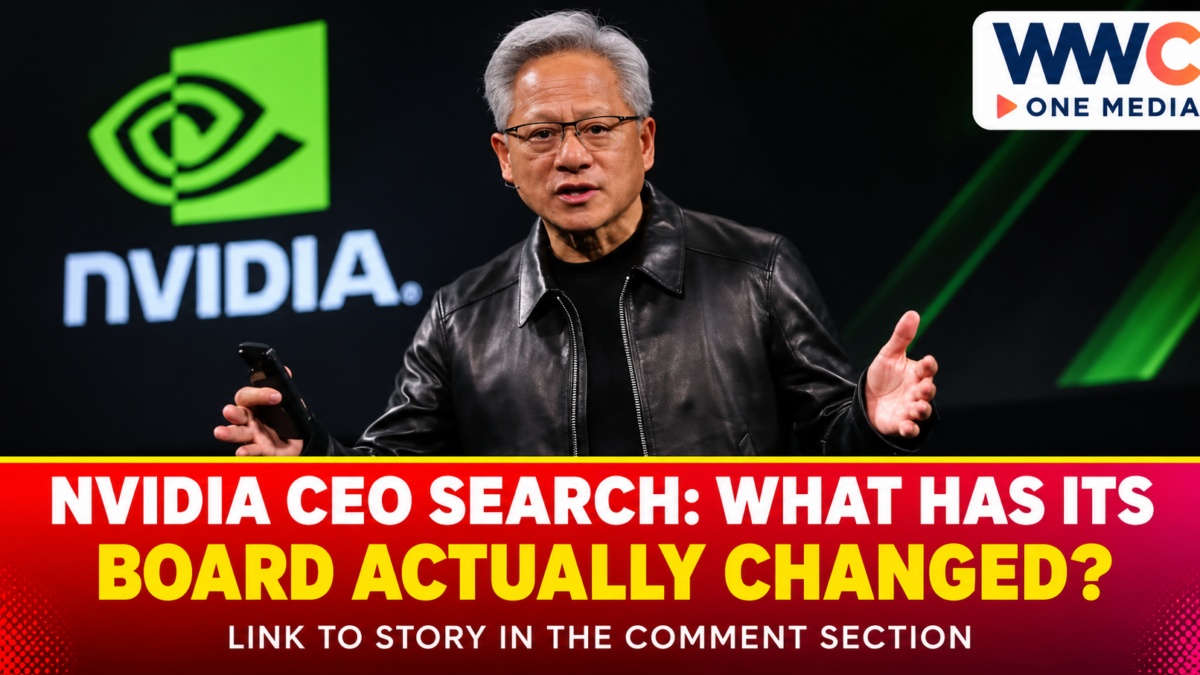
Nvidia’s board has introduced a new national-security and export-control oversight committee as the chipmaker continues its search for a permanent chief executive following Jensen Huang’s resignation. The Nov. 17, 2026, announcement gives directors an explicit new governance role while interim CEO Colette Kress remains in charge of day-to-day management.
The change matters because a leadership transition at a major AI-chip supplier raises two separate questions: who runs the business, and how the board supervises risks that persist regardless of who occupies the corner office. Nvidia’s regulatory filings answer the first question for now; its latest committee announcement sets out a structure for addressing the second.
Nvidia CEO Search Remains a Board Decision
Nvidia’s Form 8-K records that the board accepted Huang’s resignation as president, chief executive officer and director on Nov. 11, effective immediately. The company publicly announced the transition on Nov. 12 and appointed executive vice-president and chief financial officer Colette M. Kress as interim CEO while it considers permanent candidates.
Kress continues to hold the CFO role. Nvidia said the board would look at both internal and external candidates, but its official announcements reviewed for this report do not identify a final selection or provide a timetable for an appointment.
For context, WWC’s earlier examination of the Nvidia CEO succession process explained why a formal search should not be confused with an appointment. The latest disclosures do not change that distinction.
Reports concerning possible interest in Huang’s return are not, by themselves, board resolutions. No company announcement or SEC filing examined here confirms that he has been reinstated, selected or formally offered the permanent post.
What the New Oversight Committee Will Do
Nvidia announced the National Security and Export Control Oversight Committee on Nov. 17. The standing committee is responsible for board oversight of national-security policies, export-control compliance and global trade risk management.
Director Suzanne Nora Johnson chairs the committee, with Stephen C. Neal and John O. Dabiri serving as members. Nvidia said it would meet at least quarterly, including sessions with management and executive sessions, and work with outside specialists in law, security and trade compliance.
The company also said its existing National Security Team and Global Trade Compliance Team would report directly to the committee and to interim CEO Kress for day-to-day operations. This creates an explicit reporting connection between staff managing those risks and directors responsible for oversight.
Analysis: A new committee is a governance mechanism, not evidence that a compliance problem has been established or solved. Its usefulness will depend on access to information, consistent follow-through and decisions taken when concerns are raised.
Independent Investigation Is a Separate Process
On Nov. 8, Nvidia’s directors announced an independent inquiry in response to reports that Huang had been targeted by a foreign-intelligence effort. The board stated at the time that it had no reason to believe national security or company secrets had been compromised.
Two days later, the independent directors identified former acting US attorney Joon H. Kim and the law firm Wachtell, Lipton, Rosen & Katz as retained to conduct the investigation. The reviewed statements do not announce completed findings or substantiate allegations against a named third party.
These are different actions: an investigation examines particular reported concerns, while a standing oversight committee can supervise ongoing policies beyond the original matter. Neither an inquiry nor a committee should be reported as a finding of wrongdoing.
WWC’s previous report on Huang’s apology, exit and board inquiry addresses the earlier confirmed announcements. The editorial focus here is the additional, documented governance structure rather than speculation about private relationships.
Why Export Controls Matter to Governance
Nvidia sells advanced computing technology into an environment where international trade and national-security requirements shape which products can be supplied to which customers. Compliance therefore involves more than a single transaction; it also depends on the company maintaining procedures to assess changing rules and customer arrangements.
The Nov. 17 announcement makes those responsibilities explicit at board level. Nvidia said the committee would oversee efforts to strengthen the internal security and trade-compliance teams and use independent expertise. That is an organizational commitment; its results will have to be evaluated through subsequent disclosures and actions.
The wider regulatory challenge has already been examined in WWC’s analysis of US AI-chip export restrictions and overseas computing. The relevance is direct: a complex cross-border sales environment makes clear accountability and escalation channels commercially important.
Analysis: Investors should distinguish ordinary exposure to regulatory complexity from an actual violation. A company may devote substantial resources to compliance without any particular allegation having been proved.
Leadership Continuity Is Not the Same as Resolution
Nvidia’s Nov. 12 announcement appointed Harvey C. Jones as its first-ever board chair. That creates a named chair alongside an interim chief executive and the subsequent security-focused standing committee.
The company said Kress would lead while the board conducts a permanent search. Those arrangements provide an identified chain of responsibility, but they do not resolve who will lead in the longer term or when an independent investigation will conclude.
The practical test is whether leadership responsibilities remain clear while the company pursues its computing and AI product plans. Directors must manage succession and oversight without claiming that installing new governance structures alone establishes a commercial outcome.
Analysis: A transparent appointment process and substantive updates on board oversight would help stakeholders evaluate continuity. Neither the possibility of a founder’s return nor informal expressions of support should substitute for a company decision recorded through proper channels.
What Happens Next
The next meaningful milestones are an official selection of a permanent CEO, any public findings the board chooses or is required to disclose from its independent review, and evidence of how the standing committee operates. The company has specified at least quarterly committee meetings, but has not provided a public deadline for concluding the inquiry or making the leadership appointment in the records reviewed.
Until an updated official release or filing changes the position, Kress is the documented interim CEO. The distinction between an unverified statement about a possible return and a formal governance decision remains central to fair coverage.
Frequently Asked Questions
Who is Nvidia’s interim CEO?
Colette M. Kress, also Nvidia’s executive vice-president and chief financial officer, was appointed interim CEO following Huang’s resignation.
Has Nvidia announced Jensen Huang’s return?
No reinstatement or permanent appointment was confirmed in the company statements and SEC filings reviewed for this update.
What is Nvidia’s new board committee?
It is the National Security and Export Control Oversight Committee, established to supervise security policies, trade compliance and global trade risks.
Who chairs the new committee?
Suzanne Nora Johnson chairs it, with Stephen C. Neal and John O. Dabiri as members.
Has the independent inquiry concluded?
The official statements reviewed do not announce a final investigative finding. The inquiry and the standing oversight committee are separate processes.










