
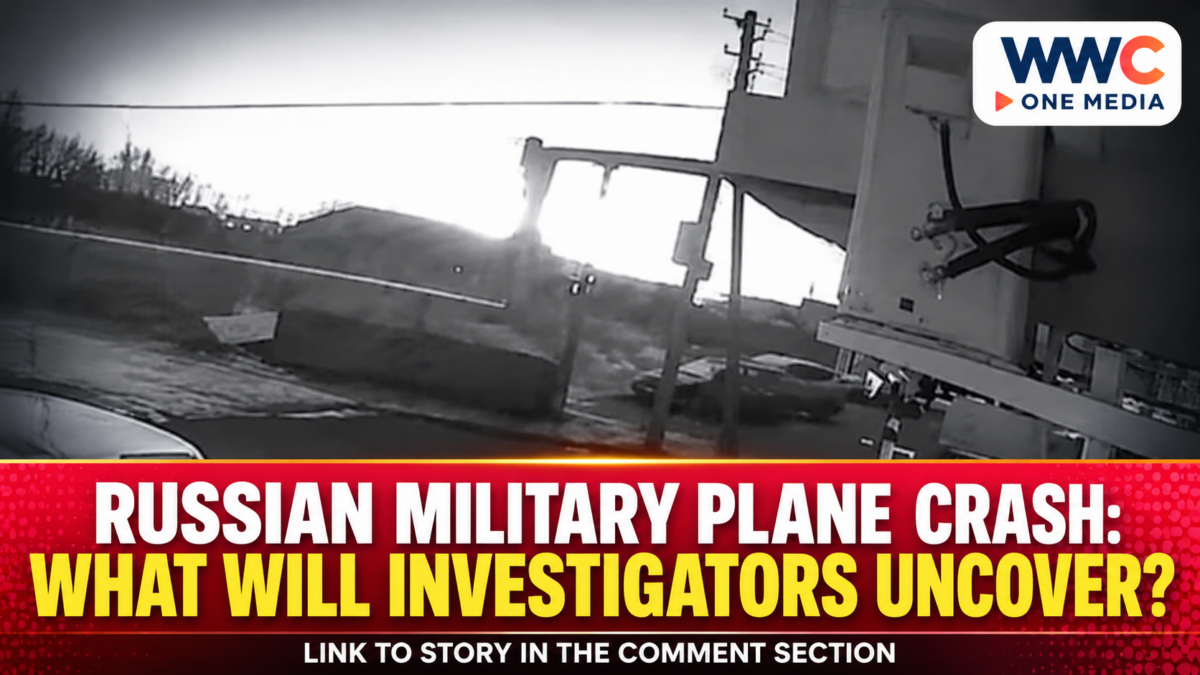
KEMEROVO, Russia — Nov. 22, 2026. A Russian Antonov An-12 aircraft crashed near the village of Yagunovo in the Kemerovo region on Nov. 17, killing everyone aboard, Russia’s Investigative Committee confirmed. Military investigators have opened a criminal case examining possible breaches of flight or flight-preparation rules, but the public announcement does not establish the cause.
The distinction matters because opening an inquiry is not the same as identifying a fault or a responsible party. Investigators must still determine what happened during the flight, which evidence can explain the event and whether any legally relevant breach took place. The official statement leaves those questions open.
Russian Military Plane Crash: What Is Confirmed?
The committee identified the aircraft as an An-12 and placed the crash in the vicinity of Yagunovo, in the Kemerovo region, also known as Kuzbass. It said passengers and crew members aboard the aircraft died. Its publicly accessible announcement did not give a numerical death toll, identify the victims or list their respective roles.
That limitation is significant. A confirmed fatal accident can be reported without converting an early, unverified headcount into an established statistic. Any detailed accounting of the people aboard should be tied to a formal passenger-and-crew record or an authenticated official update.
The statement likewise does not disclose the aircraft’s registration, flight origin, destination, precise operating assignment or the sequence of events immediately before impact. These omissions do not mean investigators lack such information; they mean it has not been established in the specific public record examined here.
Why Investigators Opened a Criminal Case
The Investigative Committee said military investigative authorities opened proceedings under Article 351 of Russia’s Criminal Code. Its announcement describes the provision as involving violations of rules for flying or preparing for a flight.
This is a procedural development, not a criminal verdict. The cited legal provision indicates a possible line of inquiry; it does not prove that a crew member, mechanic, commander or any other person violated the rules. A finding of responsibility would require evidence and the appropriate legal process.
A careful investigation would need to distinguish conditions that contributed to the accident from conduct that could amount to a legal breach. A technical problem, for example, would not by itself identify who knew about it, whether it was detectable or whether required procedures were followed. These are investigative questions, not conclusions about this aircraft.
WWC previously considered similar distinctions in its coverage of a Jordanian Black Hawk training crash. That separate incident offers a comparison in how to interpret preliminary military statements, not evidence about the Russian flight.
What Evidence Could Clarify the Flight?
Analysis: Several categories of material could help reconstruct the final flight, provided investigators can obtain and authenticate them. Maintenance and inspection records could show the aircraft’s documented condition; operational paperwork could establish its authorised mission and planned route; and any recovered recording or communications evidence could help build a timeline.
Physical examination might also distinguish damage created during the accident from damage that existed beforehand. Witness accounts and independently verified images, if available, would need to be compared with physical and technical findings rather than treated as a substitute for them.
None of those potential evidence sources has been individually confirmed as recovered or analysed in the public Investigative Committee announcement reviewed for this story. It would therefore be premature to state that a recorder has been decoded, a component has failed or an operating decision caused the crash.
The same caution applies to civil investigations. In WWC’s Air India crash investigation coverage, the difference between preliminary information and a completed technical finding is central. The two crashes are unrelated, and their evidence must be assessed independently.
Why the Missing Details Matter
For families and the wider public, the immediate priority is reliable information about those who died and the circumstances of the disaster. An official casualty reconciliation would reduce confusion over early figures while respecting the need for accurate identification and notification.
For aviation safety, the key issue is whether the available evidence supports a specific corrective action. If investigators eventually identify a maintenance, operational or procedural problem, the scope of that problem would determine whether the response should concern one aircraft, a particular practice or a wider system. No such finding has been published in the record examined here.
This is also why unrelated accidents should not be used to infer a cause. WWC’s report on the long-running Korean Air Flight 858 investigation addresses a different event, but illustrates the importance of separating verified records from unresolved public claims.
Analysis: Public confidence is served by a clear sequence of updates: confirmation of the event, a reconciled account of casualties, identification of evidence examined and finally the conclusions that evidence can support. Each stage answers a different question and should not be presented as interchangeable with the next.
What Happens Next
The next meaningful development would be an incident-specific statement from the military investigative authorities explaining the evidence collected, the status of the criminal proceedings and any findings that can be released. A separate authenticated defence or investigative record could also clarify the exact number of people aboard.
Until such material is publicly available, the confirmed position remains narrow but important: an An-12 crashed near Yagunovo on Nov. 17, everyone on board died, and military investigators opened a case under Article 351. Neither the cause nor any individual’s responsibility has been established by the opened official statement.
Frequently Asked Questions
Where did the Russian An-12 crash?
The Investigative Committee placed the Nov. 17, 2026 crash near Yagunovo village in Russia’s Kemerovo region, also called Kuzbass.
How many people died in the crash?
The committee confirmed that all passengers and crew aboard died but did not specify the total in the official announcement reviewed here. A numerical count requires a separately verified primary record.
Has Russia confirmed the cause of the crash?
The Investigative Committee announcement reviewed for this article did not establish a cause. It said investigators were determining the circumstances.
Why was a criminal investigation opened?
Military investigators opened a case under Article 351, concerning possible violations of flight or flight-preparation rules. Opening a case does not establish that such a violation occurred.
What should the next official update explain?
It could clarify the number aboard, the evidence examined, the incident timeline and whether investigators have reached any findings. Those outcomes remain pending.










