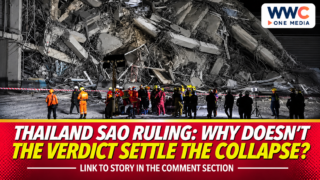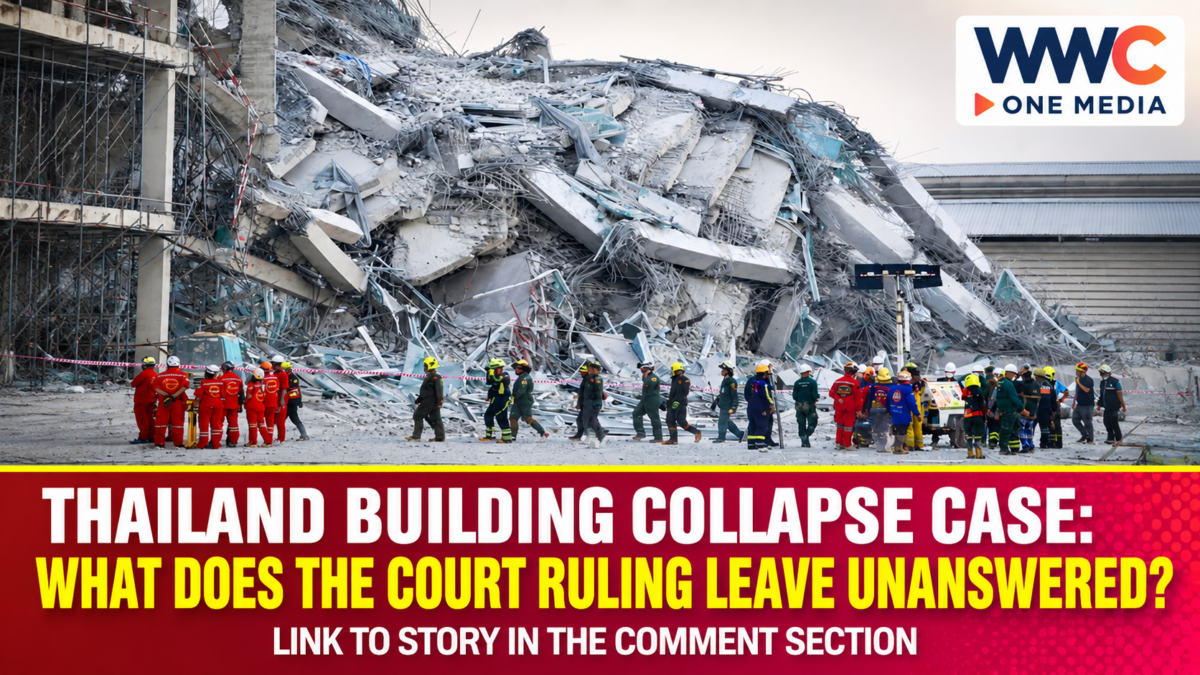
BANGKOK, Thailand — Nov. 22, 2026. A Thai Criminal Court ruling on Nov. 18 convicted China Railway Number 10 (Thailand) and four individuals of offences involving foreign-business operations and nominee shareholding. The decision marked a legal development in a case connected to the collapse of Thailand’s unfinished State Audit Office headquarters, but it did not determine criminal responsibility for the building’s failure.
The distinction matters. A conviction concerning who lawfully owned and operated a construction business does not automatically establish why a building failed, whether construction standards were breached, or which parties may ultimately bear liability for the disaster.
Thailand Building Collapse: What the Court Decided
The Department of Special Investigation (DSI) announced the outcome on Nov. 19, identifying proceedings before the Criminal Court on Ratchadaphisek Road.
The case concerned China Railway Number 10 (Thailand), its Chinese authorised director and three Thai defendants. It arose from an investigation into whether Thai nationals had held shares on behalf of foreign interests to circumvent restrictions under Thailand’s Foreign Business Act.
The court fined the company 1 million baht and ordered it to cease the relevant business operations under conditions specified by the court.
The Chinese director received a three-year prison sentence and a 1-million-baht fine. Two Thai defendants received sentences of four years, nine months and 18 days, alongside fines of 1.6 million baht each. Another Thai defendant received two years, four months and 24 days in prison and an 800,000-baht fine.
The DSI announcement described reductions in penalties following guilty pleas.
These penalties concern the ownership and foreign-business case. The official announcement expressly separates the ruling from the principal criminal proceedings concerning the collapse.
Why Nominee Ownership Became a Central Issue
In April 2025, the DSI accepted the State Audit Office building investigation as a special case, examining possible nominee shareholding, procurement irregularities and construction-material compliance.
Its initial public briefing described three Thai shareholders collectively holding 51% of shares in China Railway Number 10 (Thailand). Investigators questioned whether the shareholding reflected genuine investment and control.
That distinction was important because Thailand regulates foreign participation in certain business activities, including construction.
A nominally Thai-controlled company may appear eligible to participate in business activities that face restrictions for foreign-controlled enterprises. If investigators establish that the declared ownership arrangement conceals the actual controlling interests, the company’s legal eligibility can become a separate issue.
Analysis: Ownership transparency is part of procurement integrity. Public agencies need to understand not only which company submits a bid, but also whether that company’s ownership, financing and operating authority comply with the law.
For Philippine readers, the broader question of contractor accountability is also relevant to WWC’s earlier coverage of the NGCP tower collapse in Cavite. The incidents are legally separate and no wrongdoing in one establishes responsibility in the other.
What the Collapse Investigation Must Establish Separately
The unfinished State Audit Office building collapsed on March 28, 2025, during an earthquake.
The State Audit Office subsequently announced that it had established an independent investigation committee and would involve technical experts in examining the structural failure.
Several questions belong to that technical and criminal inquiry rather than to the nominee-shareholding judgment.
Investigators must distinguish the effect of the earthquake from any potential deficiencies in design, materials, execution or supervision. Determining structural responsibility requires engineering evidence and an assessment of the applicable standards.
The DSI’s original investigation also identified procurement practices and material compliance as separate areas requiring examination.
Analysis: A business-ownership conviction may reveal failures in the qualification or approval process without proving that those failures physically caused a collapse.
That legal separation protects both public accountability and the rights of defendants facing distinct proceedings.
The importance of distinguishing regulatory findings from construction-causation questions also appears in WWC’s report on the Angeles City building-collapse labour ruling. Different legal findings may address different responsibilities arising from a construction incident.
The Financial and Procurement Questions
The DSI’s April 2025 announcement identified the construction contract value as 2.136 billion baht.
That figure provides a measure of the public procurement involved, but it should not be mistaken for a final judicial calculation of damages, insurance recoveries or compensation payable.
The State Audit Office’s response to the disaster committed the institution to greater transparency, structural investigation and strengthened construction oversight.
Those commitments raise practical questions about how public agencies assess contractors before signing contracts and how they monitor compliance during construction.
Analysis: Stronger procurement checks could include verification of beneficial ownership, examination of financing arrangements and clearer documentation of contractor responsibilities.
However, the presence of a compliance failure does not establish that every administrative decision associated with a project was unlawful.
Authorities must assess each suspected breach against the applicable evidence and legal requirements.
What Happens Next?
The November judgment offers a defined result in the nominee-shareholding case, but it is not a final resolution of every legal issue connected to the State Audit Office collapse.
Several developments would materially change the public understanding of the proceedings: an official appellate decision, confirmation of the implementation of the business-cessation order, or a separate judgment determining criminal responsibility for the structural failure.
The position of affected workers and families also remains an important dimension of public accountability. Financial assistance, insurance payments and legal liability should not be treated as interchangeable.
The next stage of the case must therefore be reported through dated judicial orders, official agency notices and verified company disclosures.
WWC’s existing report on the Thailand State Audit Office ruling provides the background to the November verdict. Any subsequent update should identify precisely what has changed rather than repeat the original convictions as a new event.
For now, the confirmed legal outcome concerns foreign-business compliance. The larger question of responsibility for the building’s collapse must be evaluated through the separate proceedings.
Frequently Asked Questions
What happened in the Thailand building collapse case?
Thailand’s Criminal Court convicted a construction company and four individuals on Nov. 18, 2026, over Foreign Business Act offences connected to a contractor involved in the collapsed State Audit Office project.
Did the court find that the defendants caused the building collapse?
No. The DSI explicitly stated that the November ruling concerned foreign-business and nominee-shareholding offences, not the main criminal case over the collapse’s cause.
What penalty did China Railway Number 10 (Thailand) receive?
The company was fined 1 million Thai baht and ordered to cease the relevant business operations under conditions specified by the court.
Why was the shareholding arrangement investigated?
Authorities examined whether Thai nationals were holding shares on behalf of foreign interests in a manner that circumvented restrictions on foreign participation in construction.
Is the entire State Audit Office collapse case closed?
The November ruling does not resolve the separate collapse-related criminal proceedings. Any subsequent final ruling or appeal outcome requires additional official confirmation.