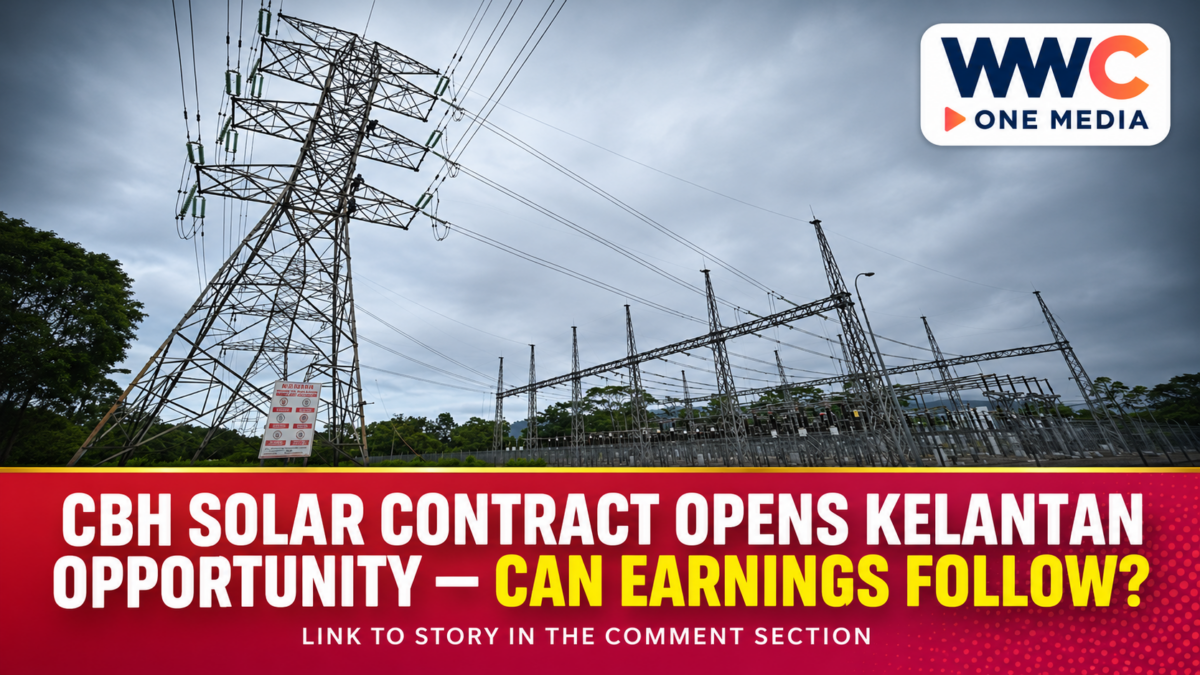
KUALA LUMPUR, Malaysia — CBH Engineering Holding Berhad said its wholly owned subsidiary, CBH Engineering Sdn Bhd, accepted a contract on Nov. 18, 2026, for engineering work on a solar photovoltaic project in Kelantan. The CBH solar contract covers the plant’s interconnection facility, interconnector and related solar power plant works, extending the group’s exposure to electricity infrastructure beyond its established project portfolio.
The announcement matters because getting solar electricity into a power network requires more than installing generating equipment. For CBH, the commercial question is whether the newly accepted work can translate into timely execution, cash collection and profitable revenue rather than simply adding another project to its pipeline.
What the CBH solar contract actually covers
The group’s exchange announcement identifies CBH Engineering Sdn Bhd as the contracting company and describes the customer only as “Company A”. It says the subsidiary accepted a letter of award dated Sept. 1, 2026, on Nov. 18, 2026. The site is in Kelantan Darul Naim, Malaysia.
The named work packages are engineering, procurement and construction of the solar power plant interconnection facility, the solar power plant interconnector and solar power plant works. Those descriptions establish the broad engineering responsibility, but the accessible announcement text does not provide an itemised bill of quantities, milestone-payment schedule or independently confirmed generation capacity.
A solar project can have panels and inverters in place yet still depend on connection infrastructure before electricity can be delivered. That distinction also appears in WWC’s examination of Southeast Asia’s power-grid challenge, which explains why developing generating capacity is only part of building a functioning power system.
Why the contract’s scope matters
Interconnection facilities are a practical link between generation assets and the wider electricity system. They may involve electrical equipment, protection systems and testing requirements, although the precise components assigned to CBH must not be assumed without the detailed contract documents.
This makes the announcement different from a claim that CBH owns the solar farm, will sell the electricity or has commissioned a completed plant. The published announcement establishes an engineering appointment. It does not, by itself, establish project ownership, a power-purchase arrangement or the date on which the plant will begin supplying electricity.
The distinction is useful for readers comparing projects across the region. WWC’s coverage of PetroGreen’s Isabela solar financing and transmission arrangements illustrates how construction finance, generation development and grid connections form related but separate parts of a renewable-energy investment.
CBH’s financial results provide a stronger backdrop
CBH released unaudited results for the quarter ended Sept. 30, 2026, on the same day as the solar announcement. Group revenue reached RM228.075 million, compared with RM31.523 million in the corresponding quarter of 2025. Profit attributable to ordinary shareholders rose to RM34.790 million from RM12.535 million.
Across the first nine months of 2026, revenue totalled RM438.542 million against RM127.638 million a year earlier. Profit attributable to the company’s owners reached RM77.519 million, compared with RM28.376 million. These are group-wide results, not earnings specifically generated by the newly announced Kelantan assignment.
The financial report attributed the stronger quarterly revenue mainly to progress on existing mechanical and electrical systems projects. It also reported an outstanding order book of around RM710 million as of the report’s date. The report did not provide a separate profit forecast or guarantee.
That order book provides context for the scale of work under management. However, an order book is not cash in the bank or profit already earned. Revenue recognition depends on project progress and accounting requirements, while cash collection depends on contractual billing and payment.
The execution test investors should watch
The company’s reported growth is substantial, but its operating cash figures deserve attention alongside its income statement. For the nine months ended Sept. 30, 2026, CBH reported net cash used in operating activities of RM26.422 million, whereas the corresponding 2025 period generated RM42.386 million.
Its Sept. 30 balance sheet showed trade receivables of RM182.634 million and contract assets of RM136.706 million. Those balances do not establish that customers have failed to pay. They do show why the conversion of completed project work into cash is a legitimate monitoring point as the group handles multiple contracts.
The company’s financial report also shows that third-quarter profit-before-tax margin declined from 43.88% in 2025 to 20.50% in 2026. CBH explained that the earlier comparison benefited from a reversal of expected credit-loss provisions. This makes a simple headline comparison of profit margins potentially misleading without the accounting context.
What this could mean: A growing workload offers opportunities to earn more revenue, but it can also place demands on procurement, project management and working capital. The Kelantan project should therefore be judged by execution and eventual financial contribution, not merely by its announcement.
A regional lesson for renewable-energy expansion
The Kelantan award highlights an often overlooked part of the renewable-energy market: companies supplying the electrical infrastructure that lets generation projects connect to the grid. These contractors participate in the energy transition without necessarily developing or owning power stations.
The same delivery challenge appears in WWC’s reporting on Citicore Renewable Energy’s expansion beyond one gigawatt. Announced capacity and construction plans require equipment, connections and commissioning before they become useful operating assets.
For CBH, diversification across customer needs could support a broader pipeline. That remains a commercial possibility, not a confirmed outcome of this single award. The company’s future financial disclosures will be more informative than assuming every signed project delivers the same margin or cash timetable.
What happens next
The next evidence to watch is whether CBH publishes further contract particulars, project milestones, revenue contributions or updated working-capital figures. Readers should also distinguish a reported acceptance of work from final commissioning: the first is documented; the second has not been established by the accessible announcement.
As of Nov. 21, 2026, the official announcement confirms the contractor, general scope, location and acceptance date. Without the complete accompanying attachment, a precise contract value, output rating and target completion date should not be treated as independently verified in this report.
Frequently asked questions
What is the CBH solar contract in Kelantan?
It is an engineering, procurement and construction appointment involving a solar photovoltaic plant’s interconnection facility, interconnector and related solar plant works in Kelantan, Malaysia.
Which CBH company accepted the award?
CBH Engineering Sdn Bhd, a wholly owned subsidiary of CBH Engineering Holding Berhad, accepted the award on Nov. 18, 2026.
Has CBH confirmed that the solar plant is operating?
No. The accessible announcement records a contract acceptance, not the completion or commissioning of the solar project.
Does the new solar contract guarantee higher earnings?
No. The company’s group results and order book provide financial context, but any additional earnings will depend on contract execution, costs, accounting recognition and collections.