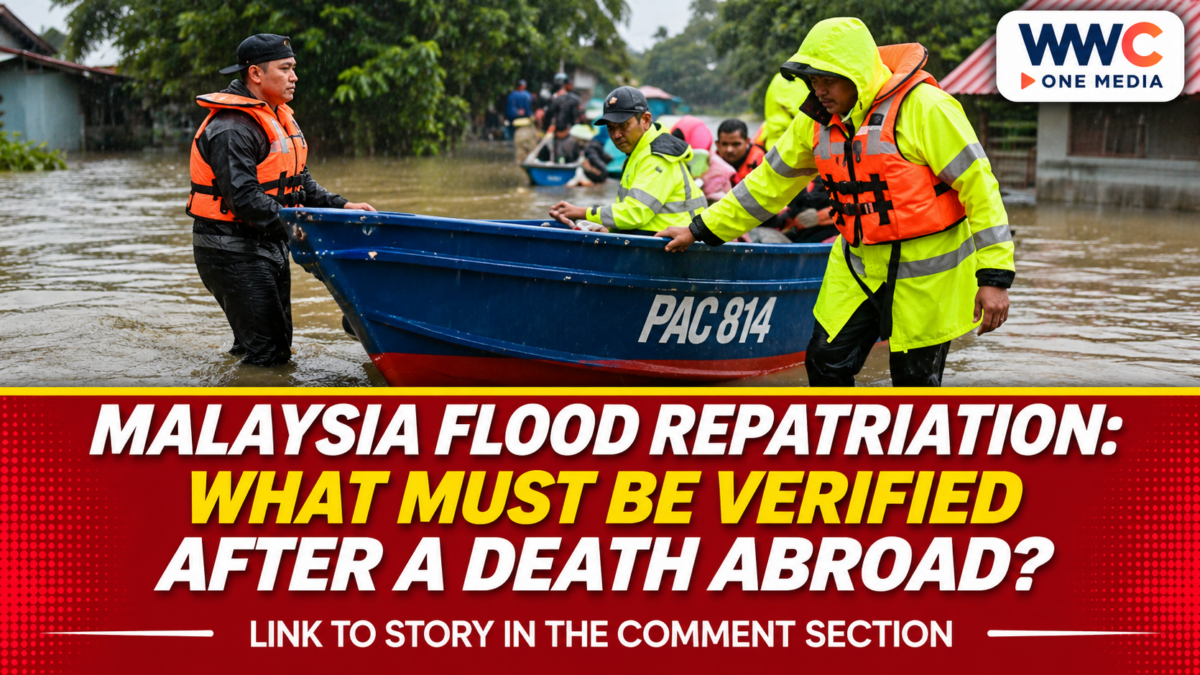
KUALA LUMPUR — Nov. 21, 2026. Questions about the return to India of a Kerala resident following a reported Malaysian flash-flood tragedy have placed cross-border death registration and repatriation procedures in focus. The Indian High Commission in Kuala Lumpur publishes a detailed checklist for transferring a deceased Indian national’s remains, but its records reviewed for this report do not confirm the individual’s identity, arrival date or whether a reported Nov. 19 transfer occurred.
That distinction is critical to Malaysia flood repatriation reporting. A published flight expectation is not proof of arrival, and the existence of consular assistance procedures does not establish that the authorities approved, financed or completed an individual case.
Malaysia Flood Repatriation: What the Official Checklist Requires
The High Commission’s death-registration guidance separates documentation supplied by a funeral or casket company from that provided by family members. Among the items listed are a hospital death register, a death certificate issued by Malaysia’s National Registration Department, and the deceased person’s passport and immigration documentation.
The guidance also requires a letter identifying the receiving person in India and proposed flight arrangements. That is an administrative requirement, not independent confirmation of any particular booking or flight.
For an unnatural death, the checklist specifically calls for a police report with an English translation. It includes drowning among the examples covered by this requirement. This makes official police documentation an important part of the process when a death follows a reported water-related accident.
The mission warns that incomplete or inaccurate documents can cause delays. It says the consular documents it issues—such as a no-objection certificate, death registration or release-of-body certificate—are normally processed on the same or next working day after complete relevant documents are received.
That service standard cannot be used to infer how long a specific family actually waited. The full journey can involve other approvals and arrangements not established by the mission’s processing target alone.
What Can and Cannot Be Established About the Flood
Malaysia’s National Disaster Management Agency posted a Nov. 17 account concerning a search near Sungai Luit and the Sungai Pertak picnic area. Its website reproduces reporting about a temporary suspension of rescue operations because of rain, rather than publishing a standalone original rescue incident report.
As a result, that page helps identify the incident authorities were discussing, but it does not meet the stricter standard of a directly reviewed fire-department operational log. It cannot by itself prove the identity of the person mentioned in the repatriation story or the date the remains reached Kerala.
Independent rescue updates have circulated, but this report does not convert secondhand accounts into official confirmation. Exact victim counts, recovery times, detailed personal histories and travel arrangements should be checked against original documents before becoming factual claims in a WWC news article.
The distinction also prevents an incorrect implication that all flood incidents discussed during Malaysia’s current monsoon season are connected. WWC has separately examined Malaysia’s preparations for monsoon rescue and assistance. That is a broader preparedness story, not evidence about a particular family’s repatriation.
Who May Receive Assistance From India?
The High Commission’s published Indian Community Welfare Fund rules provide a possible route to assistance for qualifying Indian citizens in distress overseas. The fund may cover transporting remains to India or local burial and associated expenses when an employer, sponsor or insurer does not meet the costs and the family cannot afford them.
Assistance is means-tested. The mission’s rules specify eligibility considerations and require an official decision; they do not promise automatic reimbursement to every bereaved family.
Consequently, the existence of the fund does not prove it was used in this case. Without a public consular record or an attributable official confirmation, WWC cannot state who paid for transportation, whether a claim was accepted or which agency arranged local travel after arrival.
This is a consumer and welfare issue as much as a diplomatic one: families need clear explanations of responsibilities, acceptable documents, fees and the status of applications without being subjected to assumptions about their financial circumstances.
Why Accurate Dates Matter
A report written before a scheduled repatriation may properly say an arrival was expected. By Nov. 21, however, a planned Nov. 19 arrival is in the past. Repeating it as though it remains a future event would mislead readers.
A confirmed arrival would require a subsequent attributable record, such as an official consular statement. Absent such evidence, the responsible formulation is that the date has not been independently verified in the primary documents examined.
The issue is similar to how a newsroom should handle early casualty and rescue reports during floods: preliminary information can change as authorities complete identification and documentation. WWC’s coverage of a separate Johor Bahru flash-flood rescue shows why emergency responses should be tied to their own location and date rather than combined into one regional incident.
A Wider Test of Disaster Communication
Analysis: A useful public record after a fatal overseas emergency should make it possible to distinguish recovery, identity confirmation, consular clearance, departure and reception at home. Those stages serve different purposes and may happen on different dates.
This does not mean every family’s private documents should be published. Personal dignity and next-of-kin privacy remain important, particularly when an account could reveal sensitive identification information.
A limited official status update can still correct misinformation without exposing private correspondence. Regional preparedness coverage, including WWC’s report on Johor’s identified flood-risk locations, reinforces the separate need for timely, location-specific risk communication.
What Happens Next
For this case, the decisive next record would confirm whether the remains were transferred and received, with an official date. Until one is available, the High Commission’s published procedures establish the administrative framework but not the outcome of the reported individual journey.
Families requiring assistance can consult the High Commission’s official consular guidance and verified contact channels. Readers should avoid circulating unconfirmed personal details, photographs or supposed flight information.
The central editorial conclusion is limited but important: there is an official process for repatriation after a death in Malaysia, while the reported Nov. 19 arrival remains unconfirmed by the primary records reviewed here.
Frequently Asked Questions
1. Was the Kerala victim’s return to India on Nov. 19 confirmed?
Not by the original consular or Kerala government records reviewed for this article. An anticipated arrival should not be presented as a completed transfer without later verification.
2. What documents are required to return a deceased Indian national from Malaysia?
The High Commission lists death-registration documents, a Malaysian death certificate, passport records, receiving-person information and family authorisations, with additional requirements depending on the circumstances.
3. Is a police report required after a drowning?
Yes. The mission’s published checklist includes drowning among unnatural deaths requiring a police report and English translation.
4. Does India automatically pay for transporting remains home?
No. Possible support through the Indian Community Welfare Fund is subject to eligibility and a means-tested decision.
5. Where can families seek consular guidance?
The Indian High Commission in Kuala Lumpur publishes death-registration instructions and official contact channels on its website.