KAJANG, Malaysia — Malaysian police confirmed that a married couple in their 30s was found dead at a residence in Bandar Tasik Kesuma, Beranang, Selangor, on Nov. 13, 2026. A police account published by Malaysia’s public broadcaster on Nov. 14 said investigators had classified the matter as a sudden-death case while awaiting post-mortem findings and further inquiries.
The deaths have brought fresh attention to online harassment, but the publicly reviewed police account does not establish that cyberbullying caused or contributed to the deaths. That distinction matters: concern about online abuse can justify scrutiny of Malaysia’s safeguards without turning an unverified explanation into an official finding.
Beranang deaths: What police actually established
Kajang district police chief ACP Naazron Abdul Yusof said police received a report at approximately 6.31 p.m. on Nov. 13. Initial examinations found the two people in separate spaces on the upper floor of the home.
Police said their initial inspection found no clear indication of criminal elements. Both bodies were sent to Kajang Hospital for post-mortem examinations to establish the causes of death. The case was classified as sudden death pending those findings and further investigation.
These are preliminary facts, not final answers. A sudden-death classification does not, on its own, prove what happened, explain why it happened, or settle every question that investigators may examine. At the time of the reviewed official account, the medical findings had not been presented there as completed.
The police also asked the public to respect the family’s feelings and privacy. Reporting should follow that request by avoiding speculation about the couple’s private lives, personal circumstances or possible motives.
Why the cyberbullying question remains unresolved
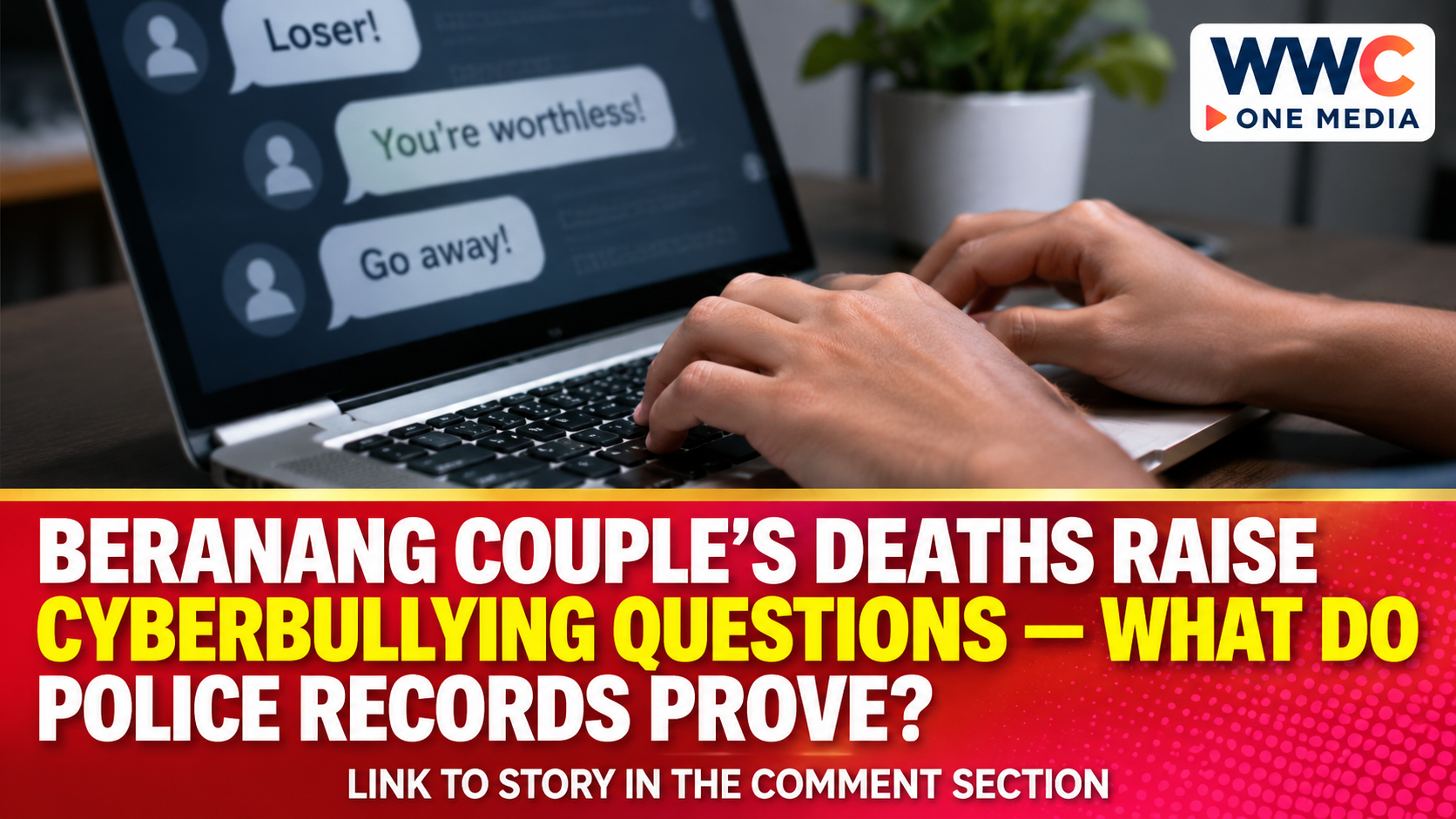
Cyberbullying can involve repeated hostile or intimidating online behaviour, but an allegation that someone experienced online hostility is not proof that the hostility caused a particular death. Establishing any connection would require case-specific findings rather than assumptions drawn from social-media posts.
The police account reviewed for this report does not identify cyberbullying as a cause or state that an online-harassment allegation had been substantiated. No verified medical conclusion or police finding linking the deaths to online conduct was located in the official materials reviewed.
This is not a reason to disregard reports of abuse. It is a reason to handle them carefully. If relevant digital conduct becomes part of an investigation, the basic questions would include what material is authentic, when it was posted, who controlled the accounts and whether investigators can establish its relevance through lawful evidence gathering.
For readers, the most responsible position is to distinguish a wider public-policy concern from a conclusion about two identifiable people. An investigation must not become a trial by comment section.
Malaysia’s online safety rules are already in force
Malaysia’s legal response to online harm predates the Beranang case. In a July 27, 2024, media statement, the Malaysian Communications and Multimedia Commission announced a licensing framework covering social-media and internet-messaging services with at least eight million registered users in Malaysia. Its stated concerns included cyberbullying, scams and online fraud, and crimes involving children.
The framework was scheduled for enforcement from Jan. 1, 2025. Separately, the federal government’s published commencement order brought the Online Safety Act 2025, also known as Act 866, into operation on Jan. 1, 2026.
These two dates are important because the licensing framework and the later Online Safety Act are not the same measure. Neither date establishes that a specific platform breached its duties in the Beranang case.
The broader discussion of digital safeguards is also reflected in WWC ONE MEDIA’s earlier coverage of Malaysia’s debate over social-media restrictions for children. Age-related restrictions, however, are not a complete response to harassment involving adults.
What effective platform accountability would require
What this could mean: A regulatory framework matters only when users have practical ways to report harmful conduct and service providers respond through fair, workable processes. For a person facing targeted harassment, a rule written into law is different from a report that receives an understandable and timely response.
A credible system needs to balance several aims: reducing clearly abusive material, preserving evidence when legally appropriate, avoiding arbitrary censorship and respecting the privacy of users and affected families. These are policy considerations, not findings about the Beranang investigation.
The same tension appears in WWC ONE MEDIA’s report on proposed stronger safety measures involving Meta and Roblox in the Philippines. Although that coverage concerns child protection in another country, it illustrates why platform procedures and accountability matter beyond public promises.
Regulators should also be judged on the information they make publicly available: the scope of the rules, the complaint pathways and the standards used to evaluate compliance. None of those measures should be presented as having solved online harassment merely because a new law has taken effect.
Why responsible public discussion matters
The official police request for privacy should shape how the case is discussed. Sharing unverified accusations, republishing private content or identifying alleged offenders without established evidence may create additional harm and complicate fact-finding.
Readers can take concerns about cyberbullying seriously without endorsing speculation. In particular, a complaint about a business, an online disagreement and targeted harassment are not automatically interchangeable categories. Context and evidence matter.
WWC ONE MEDIA has also covered Iloilo’s discussions about online safety, privacy and platform responsibility. The Philippine discussion is distinct from the Malaysian case, but both raise the practical question of how users can seek help before a digital dispute escalates.
Public debate is most useful when it demands better systems rather than assigning blame without proof. For the Beranang family, restraint is part of responsible coverage, not an obstacle to accountability.
What happens next
The immediate factual question is whether police release further verified investigative findings, including the post-mortem results or any formal conclusion about the circumstances of the deaths. Until then, the preliminary sudden-death classification remains the limit of the official case account reviewed here.
The separate policy question is whether Malaysia’s online-safety framework can deliver accessible reporting processes and meaningful oversight. That debate can continue on the strength of published government rules without falsely presenting cyberbullying as an established cause in this case.
The two questions deserve scrutiny, but they should not be confused.
Frequently asked questions
When were the Beranang couple found dead?
Police said the couple were found at a home in Bandar Tasik Kesuma, Beranang, on Nov. 13, 2026. Police received a report at approximately 6.31 p.m. that day.
Did police confirm cyberbullying caused the deaths?
No such confirmation appears in the official police account reviewed for this report. The case was initially classified as sudden death pending post-mortem findings and further investigation.
What is the status of Malaysia’s Online Safety Act 2025?
The federal commencement order appointed Jan. 1, 2026, as the date Act 866 came into operation. That fact does not establish a legal breach by any particular platform in this case.
Why should people avoid sharing accusations online?
Unverified accusations can mislead readers, intrude on a family’s privacy and put individuals under suspicion without established evidence. The police specifically appealed for respect for the family’s privacy.