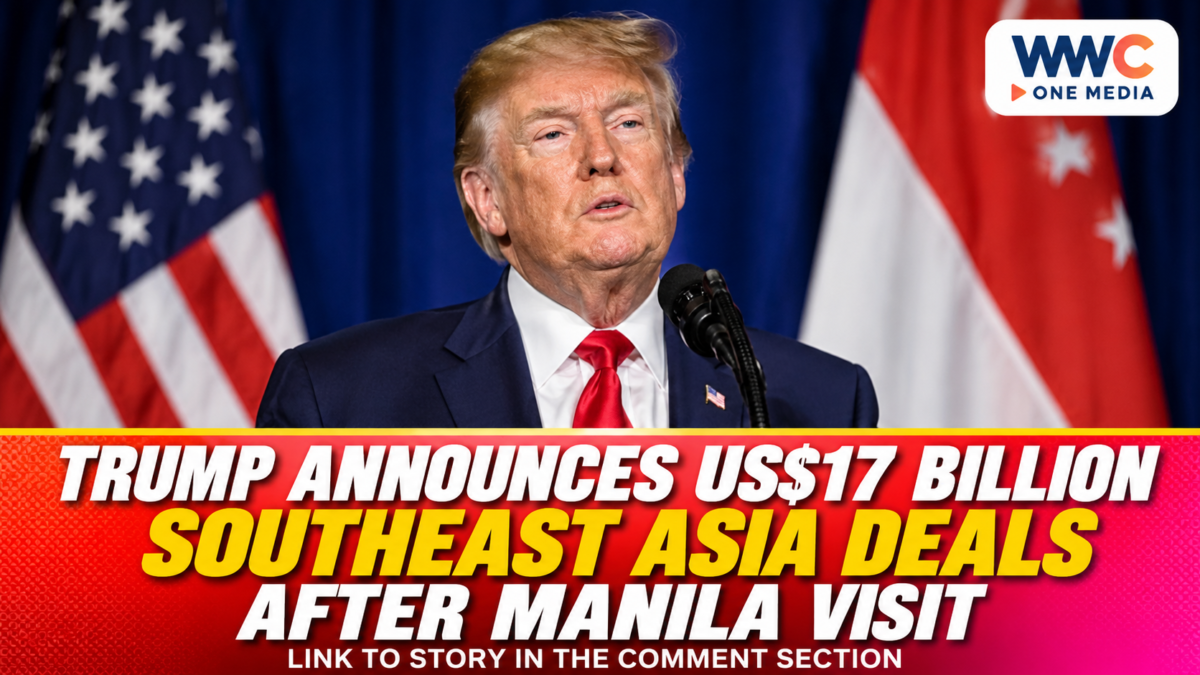
US President Donald Trump announced more than US$17 billion in commercial deals and strategic investments involving American companies across Southeast Asia on Nov. 18, 2026, following his two-day visit to the Philippines for the ASEAN Summit. The package includes a major Philippine Airlines aircraft agreement, proposed defence financing, infrastructure projects and technology initiatives, but not every item represents a completed contract.
For the Philippines, the announcements include a US$12 billion Boeing and GE Aerospace aircraft transaction involving Philippine Airlines, more than US$2 billion in defence financing that Washington and Manila will pursue, and several projects involving airports, fuel storage, satellite connectivity and defence technology.
The distinction between signed agreements, confirmed contracts, announced intentions and ongoing negotiations matters. The headline value is substantial, but businesses and taxpayers will need to follow the implementation details before treating the entire amount as money already committed or spent.
Philippine Airlines’ Dreamliner agreement leads the package
The largest individual transaction highlighted in the announcement involves Philippine Airlines (PAL), Boeing and GE Aerospace.
PAL confirmed on Nov. 15 that the three companies formalised agreements on Nov. 10 covering Boeing 787 Dreamliner aircraft and GEnx-1B engines. The arrangement builds on commitments announced at the Farnborough International Airshow in July.
The airline’s plan covers 15 Boeing 787-10 aircraft, with an option to purchase five more. Deliveries are scheduled for the next decade, making the agreement part of PAL’s longer-term fleet modernisation and international expansion programme.
The White House valued the Boeing and GE Aerospace transaction at US$12 billion and described it as involving up to 20 aircraft. However, the distinction in PAL’s own announcement is important: 15 aircraft are covered by the acquisition plan, while five are additional purchase options.
This is not simply a short-term capacity increase. Widebody aircraft are used for longer international routes, and the 787-10 programme could give PAL additional capacity and operational flexibility as it develops its network.
The investment also comes as the airline manages fuel expenses, financing requirements and other operating pressures. WWC previously examined PAL’s financial position and its aircraft expansion plans.
Defence financing and military technology form another major component
The United States and the Philippines will pursue a Foreign Military Financing loan package worth more than US$2 billion to support Philippine defence and security purchases from American suppliers.
The White House also identified US$400 million in Foreign Military Financing for the Philippine military. The stated purpose is to support operational reach and deterrence capabilities in the South China Sea, including long-range systems, command and control, critical infrastructure and multi-domain drones.
These figures should not be confused with a completed cash transfer to the Philippine government. The larger financing package is still to be pursued, while the US$400 million allocation is described as part of the military financing arrangement.
The technology component includes a US$37 million contract announced by the Department of National Defense with a US firm for mission-support technology. The Philippine department also committed to work with US technology providers on a separate US$63 million initiative to modernise its defence cloud infrastructure.
These projects are intended to improve technological capabilities and interoperability. Their practical value will depend on implementation, procurement arrangements, security standards and the ability of Philippine agencies to operate and maintain the systems.
Subic, Batanes and satellite connectivity feature in infrastructure plans
The announcements also cover projects outside aircraft and defence procurement.
Subic Grain will build a US$40 million fuel storage depot at Subic Bay to support military and commercial operations. The project places fuel infrastructure within the wider effort to strengthen logistics and supply-chain capacity.
The Philippines will also modernise Basco Airport in Batanes. The stated objectives include improving operational access, disaster response and commercial supply chains in the country’s northernmost islands.
The airport project has strategic and civilian dimensions. Better airport infrastructure can support transportation and emergency response in geographically remote areas, although the announcement does not provide a completion timetable or detailed construction budget.
Another initiative involves US satellite company Astranis, which announced that it is offering connectivity services from its US-manufactured AGILA satellite to the Philippines. The commercial opportunity is valued at up to US$200 million.
The satellite initiative is intended to provide communications infrastructure for the Philippine government and public. The figure is an estimated commercial opportunity, not confirmation that the full amount has already been paid or that all services are operational.
Other Southeast Asian countries receive separate commitments
The wider package extends beyond the Philippines.
In Thailand, Trump and Prime Minister Anutin Charnvirakul confirmed on Nov. 17 that negotiations for an Agreement on Reciprocal Trade had reached substantial conclusion.
The joint statement says both governments will begin their respective internal procedures to prepare the agreement for signature and entry into force. It is therefore a negotiating milestone, not confirmation that the agreement is already effective.
The White House says the proposed arrangement would eliminate tariffs on 99% of goods once signed and address non-tariff barriers affecting selected American exports. Thailand also intends to commit up to US$123 million towards purchasing US-made High Mobility Artillery Rocket Systems.
In Indonesia, US company Latitude Energy and sovereign wealth fund Danantara announced negotiations on a US$2 billion coal project using American technology. The announcement describes negotiations, not a completed investment.
Malaysia’s Tenaga Nasional Berhad fuel procurement subsidiary, TNB Fuel Services, is covered by a three-year US$100 million coal supply agreement signed by Navajo Transitional Energy Company.
In addition, a US consortium is expected to develop a sovereign artificial intelligence cloud for the Malaysian government. Brunei’s Unified National Networks intends to award the Rimba Data Centre tender to US company Vertiv, with nearly US$1 billion in spending expected to be sourced from US vendors.
These projects differ considerably in their level of completion. Some involve signed supply agreements, while others remain planned developments or negotiations.
The US$17 billion headline needs a closer look
The White House presented the package as more than US$17 billion in commercial deals and strategic investments. That figure combines projects at different stages, including formalised commercial agreements, financing plans, proposed infrastructure work and negotiations.
It should not be interpreted as US$17 billion already invested across Southeast Asia.
For the Philippines, the distinction is especially important because the package includes both commercial opportunities and government-related defence initiatives. Aircraft purchases involve a private airline, while defence financing and airport modernisation involve public-sector decisions and implementation.
The wider trade relationship also remains a separate issue. WWC’s review of the official records surrounding US-Philippines trade explains why announcements about economic cooperation should not automatically be treated as a completed bilateral free trade agreement.
The earlier review of Trump’s Manila visit and the expectations surrounding the ASEAN talks also provides context for how the announcements developed after the summit.
For the Philippines, the potential gains will ultimately depend on whether projects move from announcements to signed contracts, financing approvals, construction and actual delivery.
What happens next
The next stage will involve implementation across several sectors.
PAL’s aircraft programme will move towards delivery over the coming decade. The Philippine and US governments will need to advance the proposed defence financing arrangements, while infrastructure and technology projects will require their own procurement, regulatory and operational steps.
Thailand must complete its domestic procedures before its reciprocal trade agreement can be signed and enter into force. The Indonesian coal project remains at the negotiation stage, while the announced technology and data-centre initiatives across Malaysia and Brunei will need to progress through their respective commercial and government processes.
The US$17 billion announcement sets out the scale of Washington’s commercial ambitions in Southeast Asia. Whether it becomes a lasting economic shift will depend on what is delivered, when it is delivered and how much of the announced value translates into operating projects.
Frequently asked questions
What is the total value of Trump’s Southeast Asia deals?
The White House announced more than US$17 billion in commercial deals and strategic investments involving US companies across Southeast Asia.
How much is the Philippine Airlines Boeing agreement worth?
The White House valued the Boeing and GE Aerospace transaction at US$12 billion. PAL’s formalised agreement covers 15 Boeing 787-10 aircraft, with an option to purchase five more.
Will the Philippines receive more than US$2 billion in defence financing?
The United States and the Philippines will pursue a Foreign Military Financing loan package worth more than US$2 billion. The announcement does not mean the entire amount has already been transferred or spent.
What is the US$400 million allocation for the Philippine military?
It is Foreign Military Financing intended to support Philippine military capabilities, including long-range systems, command and control, critical infrastructure and multi-domain drones.
Have Thailand and the United States already implemented their trade agreement?
No. Their Nov. 17 joint statement confirmed substantial conclusion of negotiations. Both governments still need to complete internal procedures before signature and entry into force.