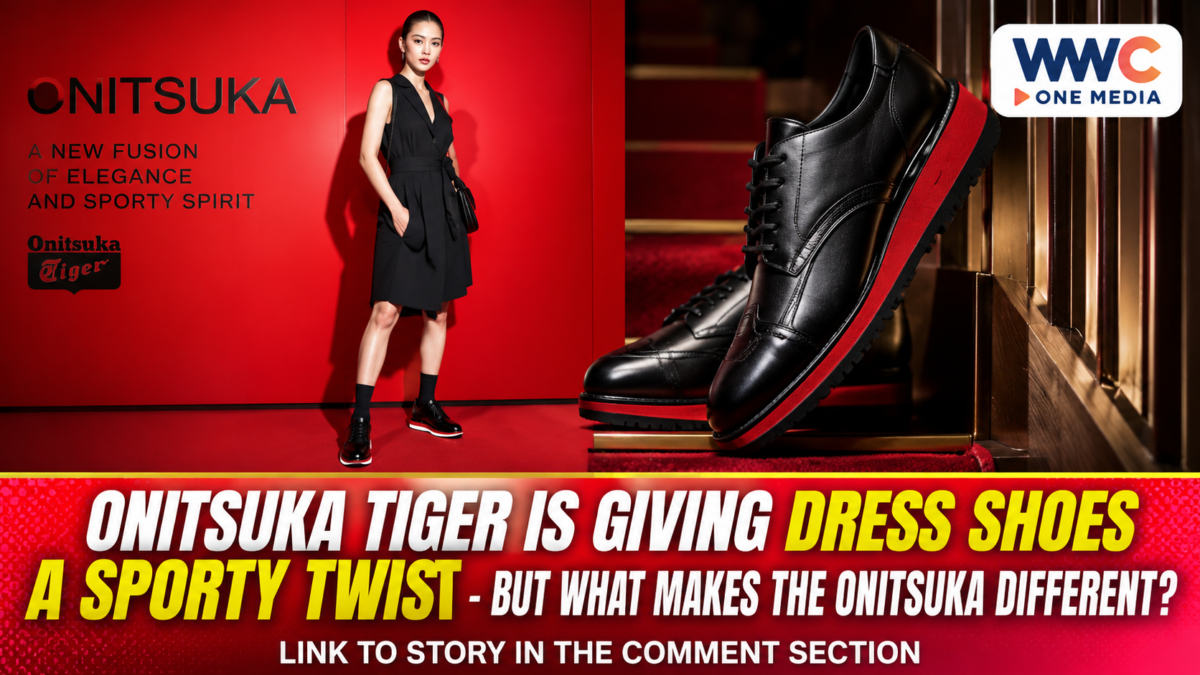
Onitsuka Tiger is taking its footwear heritage in a more formal direction through THE ONITSUKA, a premium line that combines traditional leather-shoe designs with technology associated with athletic footwear.
Introduced in 2019, the collection brings together familiar styles such as loafers, derbies and other dress shoes with Japanese craftsmanship, leather construction and cushioning features. Its approach offers a different proposition in a market where formal footwear is often judged primarily by appearance.
The idea is straightforward: create shoes that look appropriate with tailored clothing but retain design elements intended to make everyday walking more comfortable. The details behind that approach reveal how the Japanese brand is extending its identity beyond its familiar sports-inspired silhouettes.
A premium line with a different purpose
THE ONITSUKA is not simply another version of the brand’s best-known trainers.
ASICS’ corporate history records its introduction in 2019 as a dress-sneaker line. The concept combines the appearance of dress footwear with sneaker-inspired design, allowing the shoes to work with different styles of clothing.
That positioning gives the collection a distinct place within Onitsuka Tiger’s broader footwear identity. Rather than abandoning its athletic background, the brand uses elements of that experience in products designed around more formal silhouettes.
The distinction is important. A conventional leather shoe and a sports shoe serve different purposes, but THE ONITSUKA attempts to bring selected characteristics of both into one product category.
Japanese leather and craftsmanship take centre stage
One of the collection’s defining features is its emphasis on Japanese materials and manufacturing.
The brand’s official product information describes selected models using domestic leather associated with Himeji, a Japanese city known for leather production. Some product descriptions identify the material as Kobe Beef leather.
The official website also highlights the attention given to construction and finishing. These details are intended to make the shoes look like traditional leather footwear while retaining the brand’s contemporary design identity.
The approach is consistent with the collection’s wider emphasis on craftsmanship rather than relying entirely on prominent branding.
For consumers, material descriptions provide useful information when comparing premium footwear. However, leather type, construction and manufacturing details can differ between models, so buyers should check the specifications of the particular pair they intend to purchase.
The technology beneath the leather
The collection’s other defining feature is its use of cushioning technology.
THE ONITSUKA’s official brand material identifies αGEL Foam as one of the technologies used in selected footwear. The material is developed by Japanese company Taica and is designed to absorb impact.
The brand also describes insoles made with foam materials of different firmness levels. Their construction is intended to provide cushioning and support, while the heel and outsole designs contribute to stability and durability.
This combination is particularly relevant to people who spend extended periods walking or standing. Traditional dress shoes can prioritise a polished appearance, while athletic footwear often places greater emphasis on cushioning and movement.
THE ONITSUKA attempts to address both considerations in a single design.
These are manufacturer-described product features, not a guarantee that every wearer will experience the same level of comfort. Fit, foot shape, walking habits and individual preferences remain important when choosing footwear.
Loafers and derbies show how the collection balances formal and casual
The range includes familiar footwear categories, but their execution reflects the collection’s hybrid identity.
The Bit Loafer, for example, retains the recognisable slip-on form associated with classic loafers. Its official product description highlights a hand-stitched moccasin construction, a more substantial silhouette and a leather upper.
Derby shoes provide another example. The style uses a traditional lace-up design, while selected models incorporate features intended to improve flexibility and cushioning.
These silhouettes can be worn with tailored trousers and office clothing, but their familiar shapes also make them adaptable to less formal outfits.
That flexibility is relevant as consumers increasingly look for wardrobe pieces that can serve more than one occasion. A leather shoe does not necessarily have to be reserved for formal events, particularly when its design can work with everyday clothing.
The same broader fashion conversation can be seen in Southeast Asia’s expanding retail scene. WWC ONE MEDIA has also covered the arrival of regional fashion labels in Singapore, illustrating how international and regional brands are competing for shoppers interested in distinctive design and everyday wear.
The collection reflects a wider design direction at Onitsuka Tiger
The brand’s recent runway collections show that it is exploring combinations of formal, casual, workwear and sportswear influences.
For its Autumn-Winter 2026 collection, Onitsuka Tiger presented clothing that mixed different wardrobe categories and footwear that extended beyond conventional athletic designs.
The official collection announcement described the theme as the Aesthetics of Ma, a Japanese concept concerned with meaningful space between elements. The presentation included combinations of formal and casual clothing, alongside new footwear silhouettes.
This runway direction does not mean every item belongs to THE ONITSUKA line. It does, however, show that the brand is exploring ways to connect its sporting background with a wider fashion identity.
That strategy also places craftsmanship and product design at the centre of its premium positioning.
What this means for footwear shoppers
For buyers, the appeal of a hybrid dress shoe depends on what they need from it.
Someone who regularly attends formal meetings may prefer the cleaner appearance of a derby or loafer. A person looking for a shoe that can move between office settings and casual occasions may place greater value on versatility.
The collection’s use of cushioning technology may also attract shoppers who want alternatives to conventional stiff dress shoes. Still, no product specification can replace trying on footwear and checking whether the fit works for an individual’s needs.
Price is another consideration. Premium leather, specialised construction and Japanese manufacturing can place a shoe in a different price category from mass-market footwear. Shoppers should compare the materials, construction and features of individual models rather than assuming every product in a collection has identical specifications.
That attention to craftsmanship is also relevant to the Philippine footwear industry. WWC ONE MEDIA previously examined the challenges facing Carcar’s traditional shoemakers, where local craftsmanship faces pressure from changing consumer habits and imported footwear.
The comparison highlights two different sides of the footwear business: established manufacturing traditions and brands seeking to differentiate products through materials, design and technology.
Singapore’s retail market is also evolving as shopping destinations compete through more specialised retail and lifestyle experiences. Our coverage of Singapore’s changing shopping-mall landscape provides further context for the environment in which premium fashion labels are positioning their products.
What happens next
THE ONITSUKA’s development shows how Onitsuka Tiger is extending its product identity beyond sports-inspired footwear.
Its combination of traditional silhouettes, Japanese leather and cushioning technology gives the premium line a clear design proposition. Whether that combination appeals to individual shoppers will depend on fit, styling preferences, materials and price.
For now, the collection’s significance lies in how it brings together two categories that have traditionally been treated separately.
The question is no longer whether a dress shoe can look different from a conventional formal pair. It is whether shoppers will see enough value in the craftsmanship and comfort features to make the hybrid design part of their everyday wardrobe.
Frequently asked questions
1. What is THE ONITSUKA?
THE ONITSUKA is Onitsuka Tiger’s premium footwear line, introduced in 2019. It combines dress-shoe silhouettes with sneaker-inspired design and selected comfort technologies.
2. What types of shoes are included in THE ONITSUKA collection?
The range includes styles such as loafers, derbies, oxfords and other leather footwear. Product availability and specifications vary by market and model.
3. Does THE ONITSUKA use Japanese leather?
The brand identifies Japanese leather, including leather associated with Himeji, among the materials used in selected products. Buyers should check individual product descriptions for exact specifications.
4. What is αGEL Foam?
αGEL Foam is a cushioning material developed by Taica. Onitsuka Tiger uses it in selected footwear to help absorb impact.
5. Is THE ONITSUKA suitable for everyday wear?
The collection is designed to combine formal-looking footwear with comfort-oriented features. Whether a particular model is suitable for daily use depends on its fit, construction and the wearer’s needs.