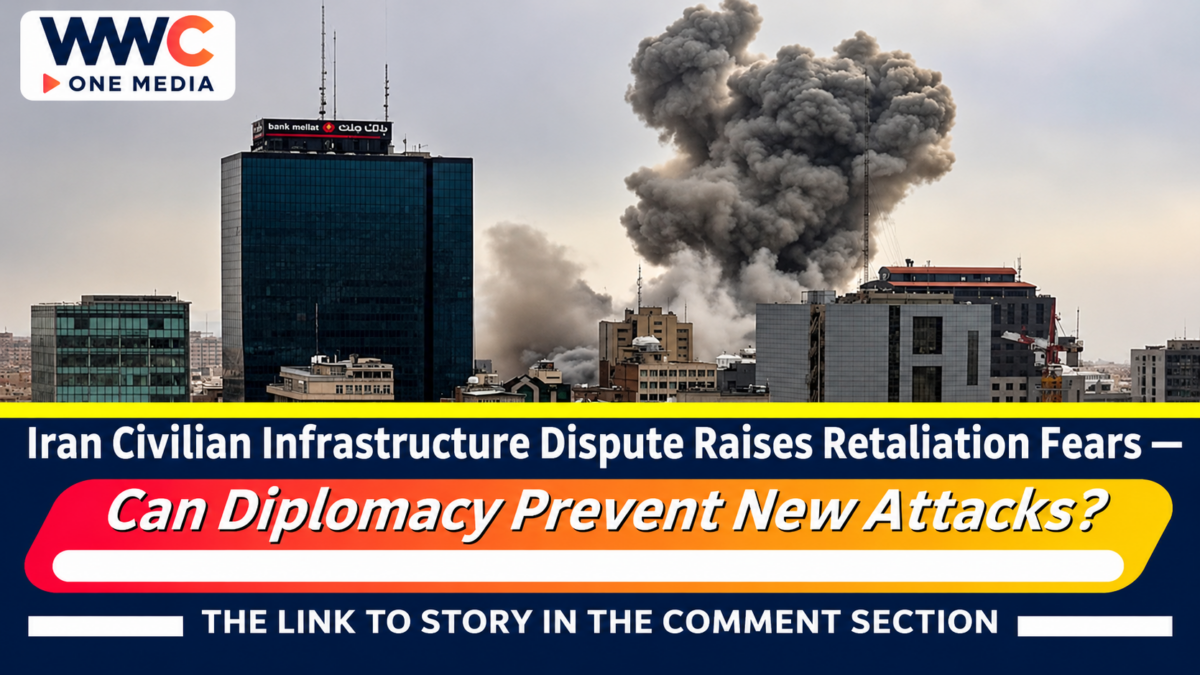
TEHRAN / NEW YORK — Official diplomatic records and United Nations warnings have placed the protection of civilian facilities at the centre of continuing tensions between Iran and the United States as of Nov. 17, 2026. The Iran civilian infrastructure dispute is also a test of whether renewed mediation can stop threats from escalating into attacks on facilities that ordinary people rely upon.
Iran has previously lodged formal objections to American statements about possible strikes on energy and water facilities. The United Nations has separately warned that maritime insecurity and renewed fighting could damage regional stability. A newly reported Iranian threat to retaliate against civilian targets on Nov. 17 has not been corroborated by an original statement reviewed for this article.
Iran civilian infrastructure: What the diplomatic record confirms
In a letter dated March 31 and circulated by the United Nations on April 1, Iran’s permanent representative protested statements attributed to US President Donald Trump about the possible destruction of Iranian power-generation facilities, oil installations and desalination infrastructure. The letter is Iran’s formal diplomatic allegation and objection; it is not an independent finding that any subsequently threatened attack occurred.
Another Iranian letter dated Oct. 19, registered with the United Nations, addressed alleged threats by US and Israeli officials. Its official catalogue record confirms the subject and date, but does not establish the precise words of any new warning made in November.
A diplomatic complaint does not prove an attack occurred.
This distinction matters when reviewing WWC’s earlier coverage of Iranian warnings about US-linked Gulf energy interests. The earlier warning provides historical context; it does not verify a fresh threat made on Nov. 17.
Why civilian facilities are protected even during retaliation
International humanitarian law requires parties to armed conflict to distinguish civilian objects from military objectives. Buildings and systems used mainly for civilian purposes are not legitimate targets simply because destroying them would impose economic or political pressure.
The International Committee of the Red Cross explains that the legal assessment concerns an object’s nature, location, purpose or use, and whether attacking it would offer a definite military advantage in the circumstances. Its guidance also prohibits indiscriminate attacks and requires consideration of expected civilian harm.
Analysis: The word retaliation does not create a general exemption from these rules. A government alleging that its own civilian infrastructure has been threatened or damaged must still comply with the law when deciding how to respond.
Dual-use infrastructure requires case-by-case legal assessment.
The UN sees diplomacy and maritime security as linked
In a Nov. 13 briefing to the Security Council, UN Assistant Secretary-General Khaled Khiari described continuing threats to commercial shipping in and around the Strait of Hormuz and Bab al-Mandab. He warned that restrictions on navigation and attacks on vessels could affect regional security and the global economy.
The briefing acknowledged reports of restored energy export volumes through some routes, but cautioned against treating that as a return to normal maritime operations. It also noted that major military exchanges had not resumed since early September while expressing concern about rhetoric that could lead to renewed confrontation.
Khiari welcomed diplomatic activity in Doha and elsewhere in the region, but said talks remained stalled over important issues, including the nuclear file and sanctions. He referred to the June Islamabad Memorandum of Understanding as evidence that negotiated steps were possible, without describing a final peace settlement.
Readers can compare this with WWC’s Nov. 15 examination of Iran talks and shipping risks. That existing report already covers the negotiating backdrop, so this article focuses on the distinct legal question of civilian infrastructure.
What an attack on basic services could mean
Electricity and water services have consequences well beyond the structures that house them. Hospitals may depend on reliable power; water-treatment and pumping facilities may depend on both electricity and access to chemicals and replacement parts.
In November, the Red Cross and participating governments published practical measures for protecting health care, water, electricity, sanitation and communications during conflicts. The guidance includes better identification of essential sites, coordination between civilian and military authorities and arrangements intended to preserve critical services.
Analysis: The impact of a strike extends beyond the immediate damage to essential services.
However, this article does not assign a casualty total, assert the destruction of a newly named facility or claim that an attack is scheduled. Those conclusions would need incident-specific records and independent verification.
What this means for the Gulf and Philippine readers
Security warnings can affect both military facilities and surrounding communities. A public alert does not, by itself, establish that missiles struck a target or that a civilian site was deliberately attacked.
This appears in WWC’s report on the Nov. 15 Bahrain security alert, which separated the government’s warning to residents from unverified reports about damage at a US installation.
For the Philippines, the potential effects are indirect but important. Disruption to commercial shipping and energy supplies can affect international transport and fuel markets. The size of any subsequent change in Philippine pump prices or electricity bills would require separate market and domestic regulatory data.
Analysis: Separate a public threat from an actual operation and its verified consequences.
What happens next
The first necessary record is an original Iranian government, military or diplomatic statement establishing the precise wording, date and speaker of the reported Nov. 17 warning. A corresponding official US statement would help establish whether Washington announced any new plan involving civilian facilities.
Beyond that, the most useful evidence will come from formal diplomatic communications, UN briefings, independently documented attacks and any verifiable agreements reached through mediation.
The public record supports concern about the protection of civilian infrastructure and the danger of escalation; it does not yet establish the precise new retaliatory threat described in the original news tip. That is why a legally grounded assessment is more responsible than presenting an unverified military warning as fact.
FAQ
Did Iran issue a verified new threat against civilian sites on Nov. 17?
The specific new statement could not be confirmed from an original Iranian-issued record reviewed for this article. Earlier Iranian diplomatic objections and regional warnings are documented.
Can civilian power or water facilities be targeted in retaliation?
Civilian objects are protected under international humanitarian law. Retaliation alone does not make a civilian site a lawful military objective.
Are all airports and energy facilities automatically civilian objects?
No universal classification applies regardless of use. Each potential objective requires assessment against the legal criteria for military objectives, along with proportionality and precautions.
Are the United States and Iran negotiating?
The UN’s Nov. 13 briefing acknowledged renewed diplomatic activity but described negotiations on key issues as stalled. It did not announce a comprehensive settlement.
Does a warning mean Philippine energy prices will rise?
No. Any impact depends on actual shipping conditions, global market prices, exchange rates and domestic fuel or electricity pricing arrangements.