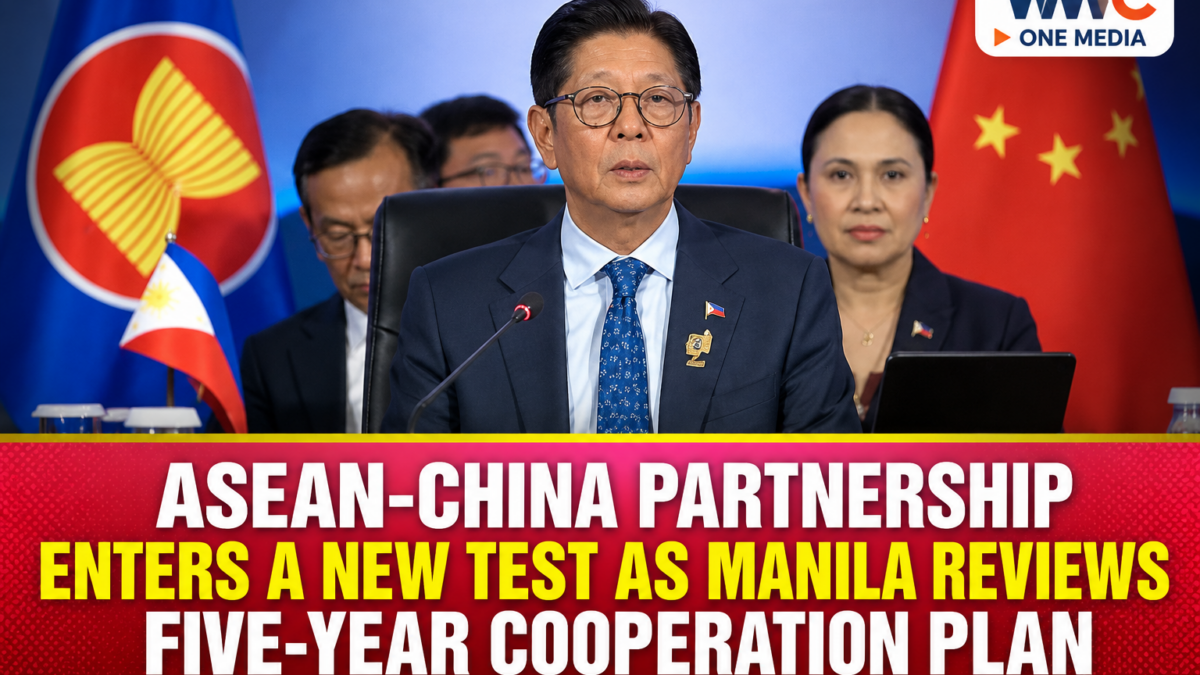
ASEAN and China have reaffirmed their commitment to deepen regional cooperation following the 29th ASEAN–China Summit in Manila, placing the partnership’s next five-year programme at the centre of discussions between Southeast Asian leaders and Chinese Premier Li Qiang.
The summit reviewed the progress of the ASEAN–China Comprehensive Strategic Partnership and reaffirmed the implementation of its 2026–2030 Plan of Action. The outcome puts a practical question before both sides: can their established diplomatic and economic relationship deliver stronger regional cooperation while disagreements over maritime security remain unresolved?
The meeting comes during the Philippines’ 2026 ASEAN chairship, giving Manila an important role in facilitating discussions between regional governments and one of Southeast Asia’s most significant economic and diplomatic partners.
A five-year cooperation programme moves into focus
The November 16 summit marks an important point in the development of ASEAN-China relations.
The ASEAN Secretariat confirmed that the meeting brought together ASEAN member-state leaders, Chinese Premier Li Qiang and Secretary-General Kao Kim Hourn.
The discussions coincided with the fifth anniversary of the ASEAN–China Comprehensive Strategic Partnership, established in 2021.
Rather than treating the partnership as a single diplomatic arrangement, the 2026–2030 Plan of Action provides a framework for cooperation across different areas of the ASEAN Community.
Its implementation is important because political declarations alone do not establish whether governments have completed projects, increased trade or improved regional coordination.
The previous ASEAN-China summit in October 2025 had already recognised the adoption of the new five-year programme. The November 2026 meeting therefore represents a continuation of an existing regional commitment rather than the announcement of an entirely new partnership.
For businesses and governments, the important question is whether cooperation produces measurable results before the programme reaches its conclusion.
Why the Philippines has a significant diplomatic role
The Philippines occupies an important position in the relationship because it is both an ASEAN member and a country with direct maritime and economic interests in its engagement with China.
As ASEAN chair in 2026, Manila has responsibilities that extend beyond its own bilateral relations. It must also help maintain a regional process through which different governments can discuss shared interests and disagreements.
That responsibility is particularly relevant when examining the South China Sea.
The Philippines has consistently maintained that maritime cooperation must operate within international law. In an official statement following the 28th ASEAN–China Summit in October 2025, President Ferdinand Marcos Jr. called for meaningful cooperation, dialogue and an effective Code of Conduct consistent with the 1982 United Nations Convention on the Law of the Sea.
The position provides useful context for understanding Manila’s diplomatic priorities during its current chairship.
However, ASEAN’s collective approach is not identical to the foreign policy position of any single member. Its decisions require regional participation and agreement, making diplomatic coordination particularly important.
The South China Sea remains a difficult test
Economic cooperation and maritime disagreements exist within the same ASEAN-China relationship.
That creates a complicated diplomatic environment. Governments can pursue investment, tourism, trade and environmental projects while continuing to disagree over maritime rights and jurisdiction.
The proposed South China Sea Code of Conduct is one of the most important areas to monitor.
The agreement is intended to establish practical expectations for behaviour in disputed waters and reduce the risk of incidents escalating into wider confrontations.
The Philippines has supported a substantive agreement consistent with international law, particularly UNCLOS.
The January 2026 ASEAN Foreign Ministers’ discussions also maintained the objective of concluding an effective and substantive Code of Conduct within the year.
For a closer examination of that negotiation process, readers can review WWC’s reporting on the South China Sea Code of Conduct’s 2026 deadline.
The distinction between progress in negotiations and an actual agreement is essential. A diplomatic commitment to continue negotiations does not establish that all parties have settled the difficult questions surrounding the proposed code.
The November 16 ASEAN Secretariat readout confirms that regional and international concerns were discussed. It does not establish that the summit resolved the South China Sea dispute or concluded a new maritime agreement.
Economic cooperation could provide tangible benefits
Security issues are only one part of the relationship.
ASEAN and China also have substantial economic interests in maintaining stable regional engagement.
Trade, investment, supply-chain development, digital technology, agriculture, energy and environmental cooperation are among the areas that have featured in the broader partnership.
The 2026–2030 programme provides an opportunity to move these priorities forward through government coordination and practical projects.
For the Philippines, this could matter in areas such as manufacturing, agricultural trade, infrastructure development and access to regional markets.
But stronger diplomatic relations do not automatically translate into equal economic benefits for every ASEAN member.
The Philippines must still compete with other Southeast Asian economies for investment, manufacturing projects and participation in international supply chains.
WWC previously examined how changing ASEAN supply chains could create opportunities for Philippine companies.
That economic challenge is relevant to the ASEAN-China relationship because regional cooperation becomes more valuable when businesses can use it to develop reliable commercial partnerships.
Investment announcements and expressions of interest should therefore be evaluated against completed projects, actual capital flows, employment and stronger participation by local suppliers.
The anniversary offers an opportunity to assess regional cooperation
The 2026 diplomatic calendar also carries historical significance.
The year marks 35 years of ASEAN-China dialogue relations, five years of the Comprehensive Strategic Partnership and 50 years of the Treaty of Amity and Cooperation in Southeast Asia.
The TAC was signed in 1976 and established principles for peaceful relations among countries in the region.
Its emphasis on sovereignty, non-interference, peaceful settlement of disputes and cooperation remains relevant to ASEAN’s diplomatic framework.
China’s accession to the treaty in 2003 strengthened its formal participation in that regional framework.
These milestones provide a broader context for the November summit. They also highlight the difference between maintaining diplomatic relationships and successfully addressing disagreements.
ASEAN’s institutional role is particularly important because its member states have different economic priorities, security concerns and relationships with major powers.
For readers seeking a wider explanation of the organisation’s regional responsibilities, WWC has also published an overview of ASEAN’s role in global power rivalries and regional challenges.
The challenge for the organisation is to preserve its ability to cooperate without ignoring differences among its members.
What happens next
The next stage will depend on how governments translate the 2026–2030 Plan of Action into specific programmes and measurable outcomes.
Further official statements, implementation reports, ministerial meetings and sector-specific agreements will help establish whether the summit’s commitments are producing meaningful progress.
The South China Sea negotiations also require continued attention. Any eventual Code of Conduct should be assessed against its actual provisions, consistency with international law and practical ability to reduce the risk of maritime incidents.
For the Philippines, the 2026 chairship provides an opportunity to keep these issues on the regional agenda.
The broader test is whether ASEAN and China can maintain economic cooperation while managing political and security disagreements through established diplomatic mechanisms.
The Manila summit reaffirmed the partnership. Its longer-term value will depend on what governments do after the leaders return home.
Frequently asked questions
1. What happened at the 29th ASEAN-China Summit on November 16, 2026?
ASEAN leaders and Chinese Premier Li Qiang met in Manila to review the Comprehensive Strategic Partnership, discuss future cooperation and reaffirm the 2026–2030 Plan of Action.
2. Why is the ASEAN-China relationship important to the Philippines?
China is an important regional economic and diplomatic partner, while the Philippines has significant interests in trade, investment, maritime security and international law.
3. What is the ASEAN-China Plan of Action 2026–2030?
It is the five-year cooperation framework intended to guide implementation of the ASEAN–China Comprehensive Strategic Partnership across different areas of regional cooperation.
4. Did the November 2026 summit resolve the South China Sea dispute?
The ASEAN Secretariat’s published summit readout does not report a resolution of the dispute or the conclusion of a new Code of Conduct.
5. What happens after the summit?
ASEAN and China are expected to continue cooperation through the established partnership framework, official meetings and implementation of agreed programmes. Further official records will be needed to assess specific progress.