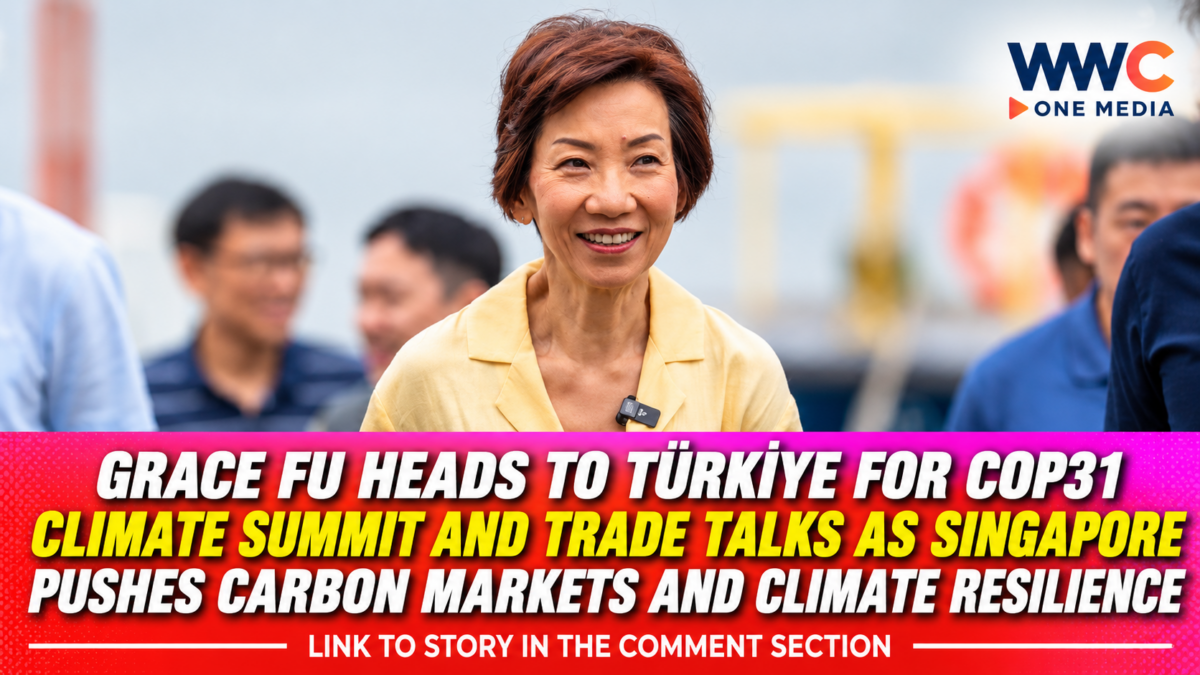
Singapore’s Minister for Sustainability and the Environment Grace Fu is making a nine-day visit to Türkiye from November 13 to 21, combining high-level trade discussions with participation in one of the world’s most important climate negotiations.
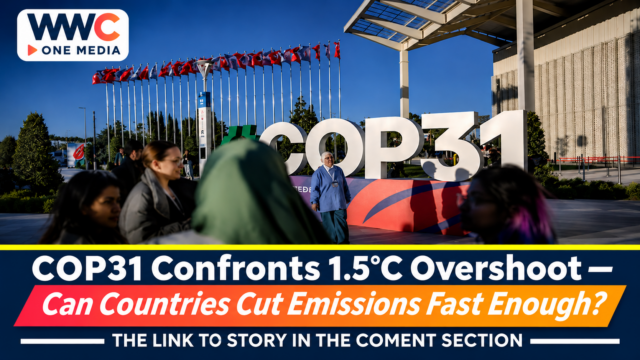
Her visit comes as nearly 200 countries gather in Antalya for the 31st United Nations Climate Change Conference, known as COP31, amid growing concerns over extreme weather, energy security, climate financing and the widening gap between international climate commitments and actual progress.
Fu, who also serves as Singapore’s Minister-in-charge of Trade Relations, will visit Istanbul and Mersin before travelling to Antalya for the climate summit.
The mission carries two important objectives: strengthening Singapore’s economic relationship with Türkiye and advancing international cooperation on climate action, carbon markets and environmental resilience.
The trip could also reinforce Singapore’s growing role as a regional centre for sustainable finance, carbon trading and climate-related investment.
Grace Fu’s Türkiye Visit Combines Trade and Climate Diplomacy
According to a joint announcement by Singapore’s Ministry of Sustainability and the Environment and Ministry of Trade and Industry, Fu will spend November 13 and 14 in Istanbul and Mersin before attending COP31 and related meetings in Antalya from November 15 to 21.
In Istanbul, she is scheduled to meet Türkiye’s Minister of Trade, Professor Dr Ömer Bolat, to discuss bilateral economic cooperation.
She will also meet business leaders from Singapore and Türkiye to strengthen commercial relationships, explore investment opportunities and identify areas where companies from both countries can expand their partnerships.
The discussions are expected to cover opportunities in both countries and their wider regional markets.
The visit demonstrates that Singapore’s participation in international climate diplomacy is not limited to environmental negotiations. It is also an opportunity to develop business relationships and encourage investment in industries connected to sustainability and the green transition.
Why Mersin International Port Matters to Singapore
One of the important stops on Fu’s itinerary is Mersin International Port, a major maritime gateway in southern Türkiye.
The port has a significant connection to Singapore because PSA International, the Singapore-headquartered global port operator, is a majority shareholder in the facility.
Mersin International Port plays an important role in Türkiye’s international trade and logistics network, connecting shipping routes and commercial activity across the Mediterranean and surrounding regions.
Fu’s planned visit highlights the importance of Singapore’s overseas infrastructure investments and its interest in strengthening connections with strategic trade gateways.
For Singapore, a country whose economy depends heavily on international trade and shipping, maintaining strong relationships with major logistics hubs is an important part of its economic strategy.
COP31 Brings Nearly 200 Countries Together in Antalya
After her trade engagements, Fu will attend COP31, the 31st Conference of the Parties to the United Nations Framework Convention on Climate Change.
The conference is taking place in Antalya from November 9 to 20, bringing together government representatives, climate experts, businesses and international organisations.
The negotiations cover several major challenges, including reducing greenhouse gas emissions, accelerating electrification, strengthening climate finance and helping vulnerable countries adapt to the effects of global warming.
The discussions are taking place against a difficult international backdrop.
Wars, geopolitical tensions, rising energy costs and inflation are competing for governments’ attention, while devastating floods, heatwaves, droughts and other climate-related disasters continue affecting communities around the world.
The challenge is not simply securing another international declaration. Countries must determine how existing commitments can translate into practical policies, investment and measurable emissions reductions.
Fu will deliver Singapore’s National Statement and participate in ministerial roundtables on pre-2030 ambition and global climate action.
Singapore Says Climate Talks Must Focus on Implementation
Fu’s participation follows her earlier remarks that COP31 may not produce major new emissions-reduction targets.
Speaking ahead of the summit, she said countries already have substantial commitments under the Paris Agreement and should concentrate on implementing what has been agreed.
Her position reflects a growing concern within international climate diplomacy: governments have made ambitious promises, but implementation remains uneven.
The Paris Agreement seeks to keep the increase in global average temperatures well below 2 degrees Celsius above pre-industrial levels while pursuing efforts to limit warming to 1.5 degrees.
Countries are expected to submit and strengthen their nationally determined contributions, or NDCs, outlining how they intend to reduce emissions and address climate change.
Singapore submitted its 2035 climate commitment ahead of the February 2025 deadline.
The country pledged to reduce its annual emissions to between 45 million and 50 million tonnes of carbon dioxide by 2035, while maintaining its longer-term ambition of achieving net-zero emissions by 2050.
The challenge now is ensuring that policies, technology, investment and international cooperation are sufficient to deliver those targets.
Fu has also warned that one of the biggest risks to climate action is governments turning away from negotiations because of competing national priorities.
Singapore Pushes International Carbon Markets at COP31
One of Fu’s major responsibilities at the summit involves strengthening international carbon markets.
She serves as co-chair of the Coalition to Grow Carbon Markets, a government-led initiative established in 2025 to encourage stronger corporate demand for high-integrity carbon credits.
At COP31, she will participate in the coalition’s ministerial roundtable and convene a high-level dialogue on advancing Article 6 of the Paris Agreement.
Article 6 allows countries to cooperate voluntarily on emissions-reduction projects and the international transfer of carbon credits under agreed accounting and transparency rules.
For example, a country may support a verified emissions-reduction project in another country and use eligible credits toward its climate commitments, subject to the applicable rules.
However, the credibility of carbon markets depends on ensuring that credits represent genuine emissions reductions or removals, avoid double counting and meet strong environmental standards.
Singapore has been working to establish bilateral agreements with countries that could eventually supply eligible carbon credits.
The wider goal is to encourage investment in projects such as renewable energy, forest protection and other initiatives that can deliver measurable climate benefits.
The Straits Times also reported that Singapore hopes to see its first international carbon-credit transfer take place in 2027, although the timing depends on project developers, host countries and the completion of approval procedures.
The issue is particularly important for Singapore because its limited domestic land and renewable-energy resources create challenges for reducing emissions entirely within its borders.
Singapore and 13 Countries Launch New Carbon Market Guidelines
The push for stronger carbon markets gained further momentum on November 12, when Singapore and 13 other countries launched policy guidelines aimed at increasing private-sector investment in international carbon credits.
Reported by Channel NewsAsia, the guidelines identify eight policy measures that governments can use to encourage companies to participate in carbon markets.
The initiative is part of a broader effort involving Singapore and other members of the Coalition to Grow Carbon Markets.
The objective is to make carbon markets more credible, transparent and attractive to investors while encouraging funding for projects that can contribute to emissions reductions.
For Singapore, the initiative could strengthen its position as a centre for carbon services, sustainable finance and international climate cooperation.
However, growing the market will require more than government announcements. Companies and investors must have confidence that credits are properly verified and that the environmental benefits are real.
Heat Resilience and Sustainable Cooling Are Also on the Agenda
Fu will also participate in international discussions on heat resilience and sustainable cooling.
This is becoming an increasingly important issue as rising temperatures increase demand for air-conditioning and cooling systems across Asia.
Although cooling protects people from dangerous heat, conventional air-conditioning can increase electricity consumption and greenhouse gas emissions, particularly when power is generated from fossil fuels.
The Global Cooling Pledge seeks to encourage countries to improve access to cooling while reducing the environmental impact of cooling technologies.
Singapore hosted the inaugural Global Cooling Pledge Assembly in September 2026, bringing together representatives from governments, businesses and international organisations.
At COP31, Fu will attend the third annual United Nations Environment Programme Ministerial on Heat Resilience and Sustainable Cooling, building on the momentum of the Singapore meeting.
The discussions are expected to address practical approaches to protecting communities, workplaces, hospitals, schools and critical infrastructure from extreme heat.
For Singapore, the issue is particularly relevant because the city-state faces increasing exposure to high temperatures and heat stress.
Singapore Pavilion Highlights Climate Adaptation and the Circular Economy
Fu will also host a programme on circular economy strategies at the Singapore Pavilion in Antalya.
The circular economy focuses on keeping materials and resources in use for as long as possible through reuse, repair, recycling and more efficient production.
This approach can reduce waste, lower demand for raw materials and support more sustainable industrial development.
The Singapore Pavilion is operating under the theme “Shared Resilience, Strengthened by Community”.
Its programme includes discussions on climate finance, carbon markets, energy, transportation, cities, zero waste, adaptation and resilience.
Fu is also scheduled to observe the signing of a mutual recognition agreement between the Singapore Environment Council’s Singapore Green Labelling Scheme and Türkiye’s Environmental Labelling System.
The agreement is intended to strengthen cooperation between the two countries’ environmental labelling programmes and support recognition of sustainability standards.
Such arrangements can help businesses navigate environmental certification requirements and improve cooperation on sustainable products and trade.
Singapore Launches a New US$500 Million Climate Resilience Initiative for Southeast Asia
Singapore’s climate agenda at COP31 also includes a new regional initiative focused on protecting Southeast Asia’s food systems from climate risks.
At the opening of the Singapore Pavilion on November 10, Fu announced the launch of Scaling Projects and Investments for Resilience in Asia, or SPIRE Asia.
The programme aims to make climate adaptation projects more attractive to investors, beginning with food resilience.
It is designed around three components:
- A data platform to assess climate risks and identify adaptation opportunities.
- A market development facility to develop promising resilience projects into investment-ready opportunities.
- A blended-finance fund of up to US$500 million.
Blended finance combines different sources of funding, including public, private and philanthropic capital, to help attract investment into projects that might otherwise struggle to secure financing.
SPIRE Asia is intended to help scale adaptation solutions across Southeast Asia, where extreme weather can threaten agricultural production, food supply chains and rural livelihoods.
The initiative is especially relevant to countries such as the Philippines, where typhoons, flooding, drought and changing rainfall patterns can severely affect agriculture and food security.
Its success will depend on securing partners, developing viable projects and mobilising the proposed financing.
Why COP31 Matters to Singapore and Southeast Asia
Singapore’s involvement in COP31 reflects the growing connection between climate policy, economic competitiveness and regional security.
Climate change affects more than the environment. It can disrupt food production, damage infrastructure, increase insurance costs, threaten supply chains and place additional pressure on public finances.
For Southeast Asian countries, the consequences can be particularly serious because many communities depend on climate-sensitive industries such as agriculture, fisheries and tourism.
The region also faces the challenge of meeting rising electricity demand while reducing dependence on fossil fuels.
Singapore’s efforts to strengthen carbon markets, promote sustainable cooling, support climate adaptation and mobilise investment are part of a broader strategy to address these interconnected challenges.
The country is also working with regional partners on cleaner energy development and stronger electricity connectivity through initiatives such as the ASEAN Power Grid.
Fu’s meetings in Türkiye therefore carry significance beyond the nine-day diplomatic visit. They connect Singapore’s trade interests with its longer-term plans for regional climate cooperation.
A Critical Test for Climate Diplomacy
Fu’s visit comes at a time when international climate negotiations face mounting pressure to produce practical results.
Governments must balance emissions-reduction commitments with energy security, economic growth, inflation and geopolitical uncertainty.
Developing countries are also demanding more reliable climate financing to help them prepare for disasters and transition toward cleaner energy systems.
Singapore is seeking to contribute through carbon markets, sustainable finance, adaptation programmes and international partnerships.
Its approach is based on the belief that climate action must deliver measurable outcomes rather than remain limited to political declarations.
The nine-day visit to Türkiye gives Singapore an opportunity to strengthen commercial relationships while advancing its priorities at COP31.
But the larger challenge remains whether international cooperation can move faster than the climate threats facing communities worldwide.
As Grace Fu prepares to bring Singapore’s climate and economic priorities to the negotiating table, one question looms over the summit: Can COP31 turn years of climate promises into real investment and action, or will geopolitical tensions and competing national interests once again slow the world’s response?