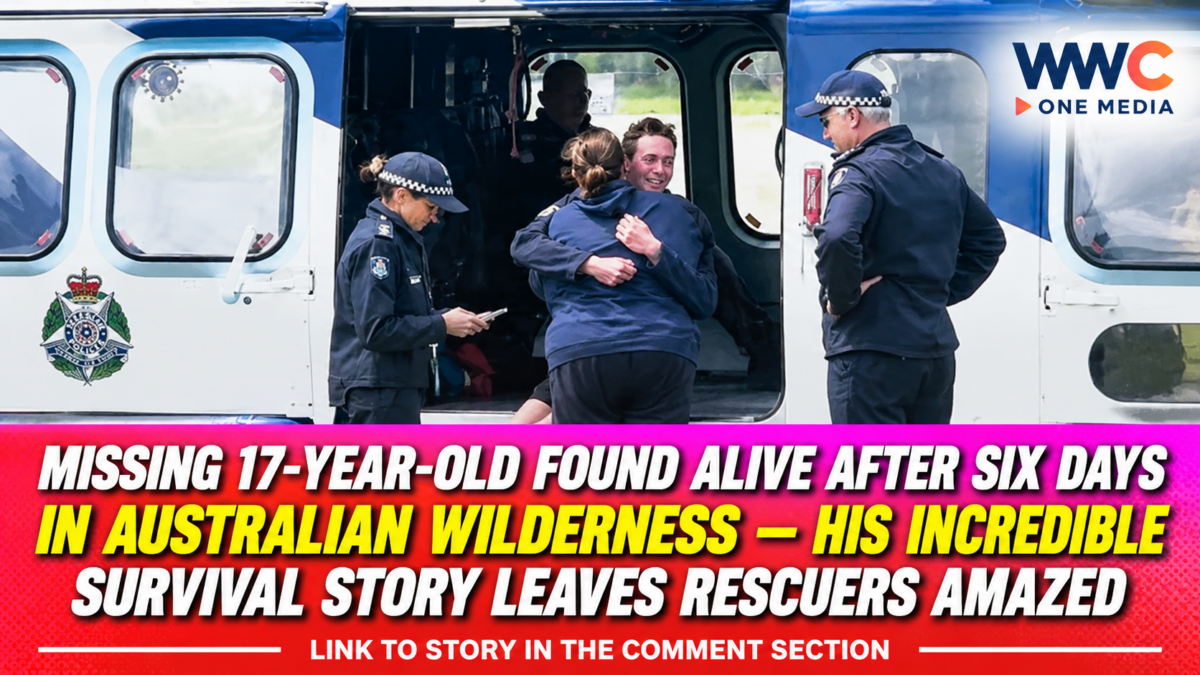
A desperate six-day search for a missing 17-year-old boy in Australia has ended in an emotional rescue after a police helicopter spotted him lying beside a creek in rugged bushland, bringing an extraordinary survival story to a dramatic conclusion.
The teenager, identified by authorities only as William, disappeared during a camping trip near Walhalla in Victoria’s Gippsland region on November 6. He was eventually located on November 12, approximately 185 kilometres east of Melbourne, after emergency personnel and volunteers searched the challenging terrain.
William, who has Level 2 autism, was found alive by Victoria Police Air Wing officers during an aerial search. He was lying on a rock near a creek, where he had spent the final two days of his ordeal.
Although initial police reports described him as being in good spirits and mostly in good health, subsequent medical updates revealed that his condition required closer attention. He was treated for dehydration and transferred for further specialist assessment.
His survival has become one of Australia’s most remarkable missing-person rescue stories this week, while his family’s emotional reunion with him brought relief after nearly a week of uncertainty.
How William Disappeared During a Camping Trip
William was camping with a teenage friend near Walhalla East when he went missing on Friday afternoon, November 6.
According to Victoria Police, his mother had dropped him and his companion off for a weekend camping trip. At some point, William walked a short distance toward the drop-off location to collect additional camping equipment.
He never returned.
His friend searched the surrounding area but could not locate him. William’s disappearance was reported to authorities, triggering a major search operation across the rugged bushland.
Police said he was last seen near Stoney Creek Road, between Cowwarr and Walhalla, at approximately 4pm.
The situation was particularly concerning because William did not have his mobile phone with him, leaving him without an immediate way to contact his family or emergency services.
His family also confirmed that he has Level 2 autism, a classification associated with substantial support needs. This added another concern for rescuers as they tried to determine where he might have gone and how he was coping in unfamiliar surroundings.
Six Days of Survival With Limited Food and Water
As the search continued, further details emerged about how William managed to survive in the wilderness.
According to Australian media reports, he drank water from a nearby creek and rationed a family-sized packet of chicken-flavoured potato chips, which lasted approximately two days.
He also used towels and a pillow to help keep himself warm during the cold nights.
William later told Australian television reporters that the nights were cold, some periods were rainy, and the days became hot enough to leave him badly sunburned.
He also revealed that he sang John Denver songs, including the familiar country classic “Take Me Home, Country Roads,” to keep his spirits up.
The teenager said there were moments when he doubted he would survive the six days.
His account offered a glimpse into the physical and emotional challenges he faced while alone in unfamiliar terrain, without proper camping supplies or a reliable way to call for help.
A Fall Left Him Trapped Near a Creek
William’s mother, Elizabeth Barkley, later shared additional details about how her son became stranded.
According to her account reported by ABC News, William initially became disoriented after missing a turn while trying to find his way back to the campsite.
He reportedly sheltered beneath bushes before continuing his journey the following day.
However, he subsequently lost his footing and fell down a steep riverbed embankment, leaving him with scratches and sore legs.
The difficult landscape made it extremely challenging for him to climb back out.
William eventually remained near the creek for the final two days, waiting for help.
The location was approximately two kilometres from his campsite, but the steep and rugged surroundings made the area difficult to reach on foot.
The Small Clue That Helped Police Find Him
The breakthrough came on Thursday, November 12, when Victoria Police Air Wing officers spotted a fishing tackle box in the bushland during an aerial search.
The discovery prompted officers to examine the surrounding area more closely.
They then spotted William lying near a creek.
Police said the teenager was found approximately two kilometres east of Stoney Creek, close to the area where he had disappeared.
When the helicopter approached, William woke up, recognised the rescuers and gave them a thumbs-up.
Officers then lowered themselves into the difficult terrain and winched him to safety.
Acting Police Inspector Jason Benbow described the rescue as an extraordinary outcome after days of searching.
The teenager was reunited with his mother at the police command post in Cowwarr. Video from the rescue showed Elizabeth embracing her son after the helicopter brought him back.
More than 100 emergency services personnel and volunteers participated in the search, according to the Associated Press. The operation involved specialist police units, search-and-rescue teams, dogs, divers and helicopter crews.
Victoria Police later thanked the volunteers, emergency responders and community members who contributed to the operation.
His Mother’s Emotional Reunion After Six Days of Fear
The emotional reunion between William and his mother quickly became one of the most widely shared moments of the rescue.
Elizabeth told reporters she was overwhelmed with relief that her son had survived.
She said she had continued believing that he was alive, despite the difficult conditions and the length of the search.
In a light-hearted moment after the ordeal, she joked that William would be grounded for life and would never be allowed to go camping again.
She also described how relieved she was to see him safe after spending days fearing the worst.
The family later shared that William was eager to return to playing Australian rules football, a sport he enjoys.
Latest Hospital Update Raises Concern After Initial Rescue
Although police initially described William as being in good spirits and mostly in good health, his medical condition required further attention after the rescue.
ABC News reported on November 13 that William had been transferred to intensive care after his blood pressure dropped because of dehydration.
He was initially treated at Latrobe Regional Hospital before being transferred to The Alfred hospital in Melbourne for further testing and specialist assessment.
The hospital said he was stable and receiving care.
His mother also told Australian media that the medical team was monitoring his condition closely because complications from dehydration can become serious if not properly treated.
Despite the medical concerns, William was able to speak about his experience and express relief at being reunited with his family.
His latest account revealed that singing songs, rationing his food and trying to remain hopeful helped him cope with the frightening experience.
Autism, Outdoor Safety and the Importance of Search Operations
William’s disappearance has also highlighted the importance of planning and safety during outdoor activities, particularly when young people are exploring unfamiliar environments.
His family’s disclosure that he has Level 2 autism is relevant to understanding the circumstances of the search, but autism does not determine an individual’s ability to survive or navigate outdoors.
People with different support needs may respond differently to unfamiliar surroundings, changes in routine and stressful situations.
The incident also demonstrated the importance of carrying essential supplies, keeping a charged mobile phone, using navigation tools and ensuring that camping companions know where one another are going.
For search teams, the discovery of William’s tackle box proved particularly important. It helped direct attention toward an area that had been difficult to examine from the ground.
The successful rescue also demonstrated how aerial searches can reach terrain that may be inaccessible to people on foot.
A Six-Day Search Ends With Hope, but His Recovery Continues
William’s rescue brought an emotional end to a major search operation that had involved police officers, emergency personnel, volunteers and a worried family.
His survival in difficult terrain, limited supplies and changing weather conditions has drawn attention across Australia and internationally.
However, the story is not yet entirely over. His hospital treatment and further medical assessments remain important as he recovers from dehydration, injuries and the physical strain of spending nearly a week in the bush.
For his mother, the most important outcome is that her son was found alive and brought home safely.
What began as a routine camping trip became a frightening six-day ordeal. A fishing tackle box, a police helicopter and the determination of hundreds of searchers ultimately helped bring William back to his family.
And while his mother has joked that he is grounded for life, the remarkable rescue leaves a more serious question for families and outdoor enthusiasts: how can one small safety precaution make the difference between a missing-person emergency and a safe return?
Related WWC ONE MEDIA Reports
For more coverage of missing-person cases and search-and-rescue operations, read these related reports:
- Nine-Year-Old Boy Found Dead in Abra Mountains as Search Continues for His Younger Brother
- Rescuers Search for Five Journalists Missing Near Indonesia’s Anak Krakatau Volcano
- Search Ends for Two Missing Divers in Palau After Five-Day Operation
- Two Teens Rescued After Getting Stranded on Yishun Flat Parapet
- Missing Bukidnon Mother Found Dead in River as Police Reveal What May Have Happened