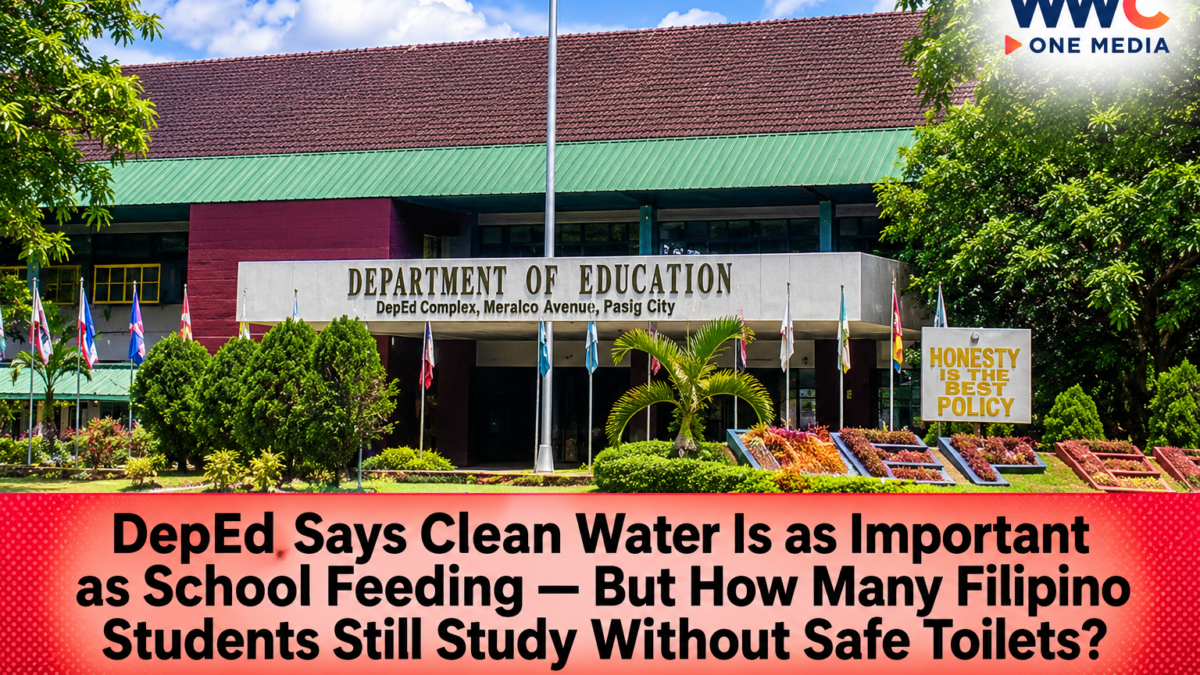
MANILA, Philippines — Serving nutritious meals to students may help fight hunger, but the Department of Education (DepEd) says that effort will not reach its full potential if children still lack safe drinking water, clean toilets and proper handwashing facilities in school.
The warning was highlighted as the Philippines presented its Water, Sanitation and Hygiene in Schools (WinS) Program at the Global Child Nutrition Forum 2026 in Lusaka, Zambia, held from November 2 to 5.
DepEd Secretary Sonny Angara emphasized that a child’s physical health cannot be separated from the ability to learn. He said feeding programs work best when students also have access to clean water, safe sanitation and daily hygiene practices that help prevent illness and keep them in school.
The Philippine delegation was represented by Assistant Secretary for Governance and Operations Roger Masapol, who discussed the government’s efforts to institutionalize the WinS program, which was launched in 2016.
The message is straightforward: school nutrition is not only about what children eat. It is also about the environment in which they eat, drink, learn and grow.
But while DepEd highlighted a decade of progress before international delegates, the department also acknowledged that many schools still need to be reached.
Why Clean Water and Sanitation Matter to Student Nutrition
A nutritious meal cannot protect a child from every health risk in an unsafe school environment.
When students do not have reliable access to safe drinking water, usable toilets and handwashing facilities, they may face preventable illnesses that interfere with attendance, health and classroom participation.
Repeated illness can also make it harder for children to benefit from school feeding and other nutrition interventions.
That is why DepEd is pushing an integrated approach: meals must be supported by safe water, proper sanitation and consistent hygiene practices.
Angara said healthy school environments are foundational to addressing learning gaps. He also stressed that children who frequently become ill from preventable waterborne diseases may struggle to stay healthy and participate fully in lessons.
The department’s position reflects a broader public-health principle: nutrition, disease prevention and education outcomes are closely connected.
DepEd’s WinS Program Has Been in Place Since 2016
The Water, Sanitation and Hygiene in Schools Program, commonly known as WinS, was institutionalized through DepEd Order No. 10, series of 2016.
The policy was designed to improve access to safe water, adequate toilets and handwashing facilities while encouraging lifelong hygiene and sanitation habits among learners.
It also covers school cleanliness, waste management, proper drainage, food sanitation and partnerships with organizations that can support implementation.
The program is not limited to constructing toilets or installing water sources. It also encourages schools to build routines that protect students’ health.
These include:
- Providing safe drinking water that learners can access.
- Maintaining clean and usable toilets.
- Establishing daily group handwashing activities.
- Encouraging regular toothbrushing.
- Supporting menstrual hygiene management.
- Conducting deworming and health-promotion activities.
- Maintaining clean school surroundings and proper waste disposal.
The policy recognizes that facilities alone are not enough. Schools also need regular maintenance, supplies, monitoring and active participation from teachers, learners and communities.
How DepEd’s Three-Star System Measures School Hygiene
One of the key features of WinS is its Three-Star Approach, which helps schools assess their progress toward national standards for water, sanitation and hygiene.
The system provides a way to identify gaps and guide schools toward better facilities and practices.
One star: Basic sanitation and hygiene practices are in place.
Two stars: Schools have improved facilities and active management systems.
Three stars: Schools demonstrate sustained compliance with the full set of required health and hygiene standards.
According to the Philippine News Agency’s November 11 report, DepEd recorded a 62-percent surge in schools securing at least a one-star rating from School Year 2025 to 2026, compared with a 9-percent baseline over the preceding decade. Fourteen schools attained the highest three-star distinction during the same school year.
These figures indicate reported progress, but they should not be interpreted as proof that all Philippine schools now meet the required standards.
The 14 three-star schools, in particular, show that the highest level of compliance remains limited.
The bigger challenge is ensuring that improvements reach schools in remote communities and areas where water infrastructure, sanitation facilities and maintenance resources remain difficult to secure.
UNICEF Data Shows Why the School WASH Problem Matters Globally
The Philippines’ message in Zambia comes as international data show that access to basic water, sanitation and hygiene services remains a major challenge for schools worldwide.
The WHO/UNICEF Joint Monitoring Programme’s 2026 update, covering school services through 2025, reported that:
- 429 million school-age children lacked basic drinking-water services at school.
- 460 million lacked basic sanitation services.
- 545 million lacked basic hygiene services, including handwashing facilities with soap and water.
The figures refer to global estimates, not the number of affected Filipino students.
The report also warned that the world is not on track to achieve universal access to basic school WASH services by 2030 under current progress rates.
This wider picture underscores why governments are being urged to treat water, sanitation and hygiene as essential parts of education infrastructure rather than optional school improvements.
For the Philippines, the challenge is to make sure national policies translate into reliable facilities in every community.
The Reality in Some Philippine Schools: Water Access Is Still a Challenge
Despite the existence of a national program, access to safe water and sanitation can vary significantly from one school to another.
A UNICEF Philippines report published in 2024 documented water and sanitation challenges in Tawi-Tawi.
At Pagasinan Elementary School in Bongao, learners relied on water pumped from the ground and stored in a tank. The school principal said the water quality had not been tested for years, while the school also purchased drinking water from a refilling station.
The school served 594 learners, making reliable access to drinking water a practical and financial concern.
UNICEF also reported that none of the more than 200 elementary and secondary schools in Tawi-Tawi had met the national WinS standards at the time of its report. Around 17 percent had earned one or two stars, while approximately 83 percent were rated zero stars.
These figures are from the 2024 report and should not be presented as the current 2026 status of Tawi-Tawi schools. However, they illustrate the infrastructure and resource gaps that school hygiene programs must address.
The example also highlights why asking children to bring their own drinking water cannot be the long-term solution, particularly in communities where households themselves have limited access to safe water.
School Feeding Must Work Together With Clean Water and School Gardens
DepEd’s WinS program is also connected to the government’s School-Based Feeding Program (SBFP) and the Gulayan sa Paaralan, or School Gardens, Program.
The feeding program provides meals and nutritional support to eligible learners, while school gardens can help supply fresh produce and strengthen food-related learning activities.
The integrated approach is intended to make school nutrition more effective by combining food provision with safe water and proper sanitation.
In July 2026, President Ferdinand Marcos Jr. launched the nationwide expansion of the School-Based Feeding Program.
The expanded program included universal feeding for Kindergarten and Grade 1 learners, alongside continued support for undernourished students in higher grade levels.
The Philippine Star reported that the program was designed to provide meals for at least 180 school days during the academic year.
The Philippine Information Agency also reported improvements in the nutritional status of beneficiaries in Occidental Mindoro following the 2025 feeding program. The local DepEd division said the share of target beneficiaries classified as severely wasted declined from 34.64 percent to 14 percent, while the share classified as wasted fell from 65.25 percent to 33 percent.
Those results are from one province and should not be treated as a nationwide outcome. They nevertheless show how school-based nutrition interventions can be assessed through measurable changes in learners’ nutritional status.
The next step is ensuring that these food programs operate alongside dependable water and sanitation services.
DepEd’s International Presentation Is Not the Finish Line
The Philippines’ participation in the Global Child Nutrition Forum gave DepEd an opportunity to share its WinS experience with international counterparts.
According to the PNA, delegates from Burundi, Ethiopia, Lesotho and host country Zambia showed interest in the Philippine presentation.
Angara said the department’s work remains unfinished because many schools still need to be reached.
That acknowledgment is important. A national policy and a positive monitoring result do not automatically mean that every learner has safe drinking water or access to a clean toilet.
The real test is whether the program can be sustained across schools with different levels of infrastructure, funding and access to basic services.
DepEd Order No. 10, series of 2016, already provides a policy foundation. The continuing challenge is implementation: making sure facilities are available, maintained, supplied and monitored.
What Needs to Happen Next?
For WinS to deliver lasting results, several priorities remain important:
- Close infrastructure gaps. Schools without reliable water sources, usable toilets and handwashing facilities need targeted support.
- Maintain water quality. Access to a water source does not automatically mean the water is safe to drink. Regular testing and proper storage matter.
- Provide recurring supplies. Soap, cleaning materials and menstrual hygiene supplies must be available, not just during inspections.
- Strengthen monitoring. School ratings should reflect actual conditions and sustained daily practices.
- Support disadvantaged communities. Remote and resource-constrained schools may need stronger partnerships and dedicated assistance.
- Connect nutrition with health services. Feeding, deworming, health education and hygiene practices should reinforce one another.
These priorities are essential if the program is to move beyond recognition and deliver consistent benefits to learners.
The Bigger Question: Can Every Filipino Student Get Safe Water at School?
DepEd’s presentation in Zambia highlights an important shift in how school nutrition is understood.
A child needs more than a meal to stay healthy and learn. Safe drinking water, clean toilets, handwashing facilities and a healthy school environment are also part of the foundation for education.
The Philippines has had a national WinS policy since 2016 and has reported progress in school hygiene ratings. But the limited number of three-star schools and continuing infrastructure challenges show that the work is far from complete.
The measure of success will not be how well the country presents its program at an international forum. It will be whether a student in a remote public school can drink safe water, use a clean toilet and wash their hands every day.