Africa Finally Hosts Its First Olympic Event as 2,700 Young Athletes Take Over Senegal — But Will Dakar 2026 Leave a Legacy Beyond the Medals?
DAKAR, Senegal — November 11, 2026 — Africa has finally entered a new chapter in Olympic history.
For the first time, an Olympic sporting event is taking place on African soil, with Senegal welcoming thousands of young athletes from around the world for the Dakar 2026 Youth Olympic Games.
The historic competition, which opened on October 31, has transformed Dakar and nearby communities into an international sporting stage. Approximately 2,655 athletes aged 14 to 17 are competing across 25 sports, representing 204 National Olympic Committees alongside the Youth Refugee Olympic Team.
From packed stadiums and beach competitions to colorful cultural performances, the event is showcasing a different side of Africa to the international sporting community.
But the significance of Dakar 2026 goes far beyond its opening ceremony.
For Senegal, this is an opportunity to demonstrate that the continent can organize a major Olympic event, develop its sporting infrastructure and create opportunities for the next generation.
Yet as the Games approach their November 13 conclusion, another question is becoming increasingly important: Will the benefits last after the athletes leave and the international spotlight moves somewhere else?
A Historic First for Africa
The Youth Olympic Games officially opened on October 31 at Stade Abdoulaye Wade in Diamniadio, near the Senegalese capital.
Thousands of spectators gathered to witness a ceremony celebrating African culture, history and youth.
Hundreds of performers participated in musical and dance presentations, including a spectacular sequence in which performers formed a giant map of Africa.
The ceremony featured Senegalese music, traditional costumes and performances highlighting the continent’s cultural diversity.
Senegalese President Bassirou Diomaye Faye officially declared the Games open, while International Olympic Committee President Kirsty Coventry described the occasion as a historic moment for Africa and the Olympic movement.
Coventry’s presence also carried particular significance. The former Zimbabwean swimming champion became the first African and first woman to lead the International Olympic Committee when she assumed the presidency in 2025.
The Games were originally scheduled for 2022 but were postponed by four years because of the COVID-19 pandemic.
Their arrival in 2026 represents the culmination of years of preparation and cooperation between Senegal, the IOC and international sporting organizations.
Nearly 2,700 Young Athletes Compete Across Three Locations
Dakar 2026 is bringing together approximately 2,655 athletes aged 14 to 17 from 204 National Olympic Committees, alongside the Youth Refugee Olympic Team.
The competitions are taking place across three host areas:
- Dakar: The Senegalese capital is hosting several indoor and outdoor competitions, including athletics, swimming, breaking, skateboarding and rugby sevens.
- Diamniadio: Located approximately 30 kilometers east of Dakar, this area includes the Abdoulaye Wade Stadium, Dakar Arena and the Youth Olympic Village.
- Saly: The coastal resort town is hosting beach and water-based competitions, including beach wrestling, beach volleyball, sailing and triathlon.
The program includes 25 competition sports and 153 medal events.
Another important feature is the inclusion of 10 engagement sports, giving young people opportunities to discover activities beyond the official medal competitions.
According to the IOC, Dakar 2026 is also the first Youth Olympic Games to achieve full gender equality across athlete quota places, sports, disciplines and events.
That means equal representation for male and female athletes throughout the competition program.
The Games are also introducing the first-ever Youth Refugee Olympic Team in the history of the Youth Olympic Games, with six athletes based in Kenya and Uganda representing displaced communities through athletics, judo and taekwondo.
These developments make Dakar 2026 significant not only for Africa but also for the future direction of international youth sports.
Senegal’s First Olympic Gold Creates a Historic Sporting Moment
The host nation has already celebrated a breakthrough moment on the competition floor.
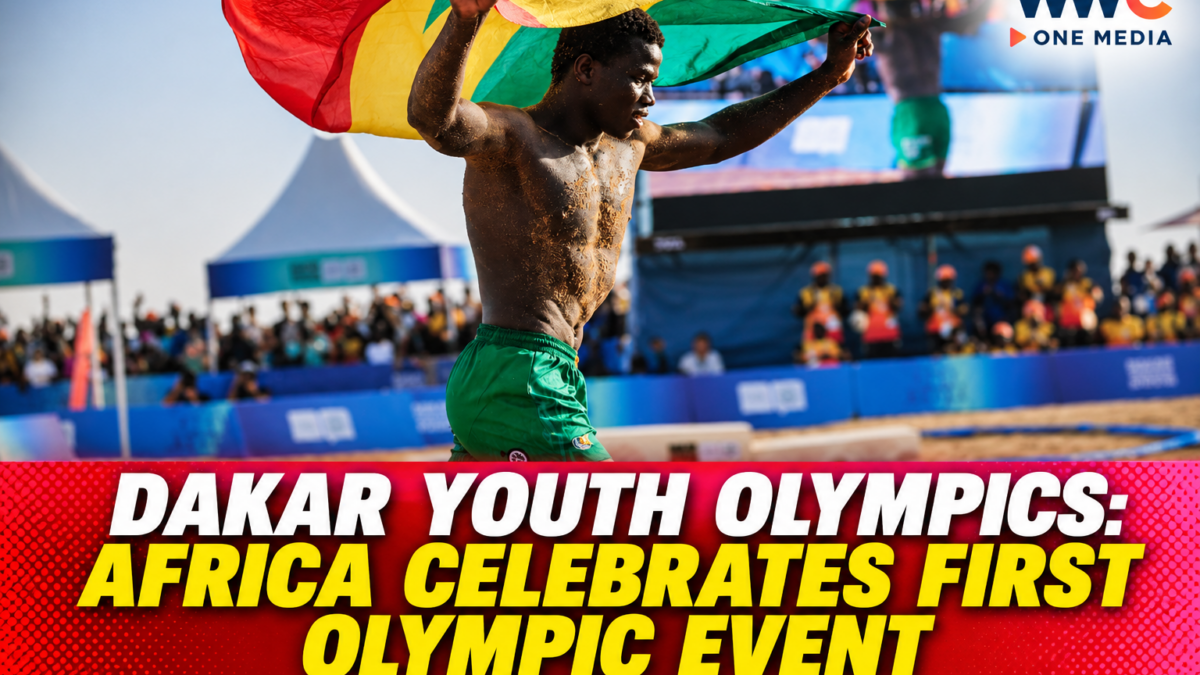
On November 7, 16-year-old Senegalese wrestler Elisabeth Diatta won gold in the women’s 55-kilogram beach wrestling competition.
She defeated Japan’s Reisa Kojima in the final, giving Senegal its first-ever Olympic gold medal.
The achievement became even more memorable because beach wrestling made its Olympic debut at Dakar 2026.
Another Senegalese wrestler, Maguette Diop, followed with a gold medal in the men’s 80-kilogram division after defeating Azerbaijan’s Nihad Suleymanli.
The victories triggered celebrations among local spectators and highlighted the importance of traditional wrestling in Senegalese culture.
Known locally as laamb, wrestling has deep roots in Senegal, particularly in coastal communities.
Diatta’s victory also carried a message for young girls who want to participate in a sport traditionally dominated by men.
Her achievement demonstrated that female athletes can compete at the highest level and inspire more girls to pursue wrestling.
For Senegal, the two gold medals offered something more meaningful than a successful host performance: a chance for local athletes to become part of the country’s Olympic history.
The Philippines Also Has a Presence in Dakar
The Youth Olympic Games are not only a milestone for the host country. They are also providing an international platform for developing athletes from Asia and other regions.
The Philippines is among the participating countries, with a nine-athlete delegation competing in different sports.
One of the Filipino athletes attracting attention is wushu competitor Angel Polo.
Although Polo did not secure a medal in her competition, she gained valuable international experience against some of the world’s strongest young competitors.
Her performance highlights an important purpose of the Youth Olympic Games: providing developing athletes with opportunities to compete internationally, learn from elite opponents and prepare for future senior-level competitions.
WWC One Media previously reported on Angel Polo’s Youth Olympic campaign and the lessons she gained in Dakar.
Her experience also reflects a wider challenge for countries investing in young athletes. International exposure is valuable, but long-term development requires consistent coaching, training facilities and financial support.
More Than a Sporting Competition: Dakar Is Showcasing African Potential
The importance of Dakar 2026 extends beyond the medals.
African countries have increasingly pursued international sporting events as opportunities to improve infrastructure, strengthen tourism and attract global attention.
Senegal’s hosting of the Youth Olympic Games is particularly significant because Africa has never hosted the Summer Olympic Games.
The continent has previously organized other major international competitions, including the 2010 FIFA World Cup in South Africa and the 2025 World Athletics Relays in Botswana.
Rwanda also hosted the UCI Road World Championships in 2025, another major milestone for African sports.
But Dakar 2026 represents a different achievement: the first time the Olympic movement has brought an Olympic sporting event to the continent.
The event also comes as South Africa considers another major Olympic ambition. Durban has been named the country’s candidate city for a possible bid to host the 2036 or 2040 Summer Olympic Games.
The success of Dakar could therefore influence how international sporting organizations view Africa’s capacity to host even larger competitions.
The Financial Question Behind the Celebration
Despite the excitement, the Games are taking place against a difficult economic backdrop.
Senegal continues to face high living costs, unemployment and pressure from public debt.
An Associated Press report published on November 2 highlighted the contrast between the international celebration and the everyday financial difficulties experienced by many Senegalese families.
The Senegalese government committed approximately 36 billion CFA francs, equivalent to around $60 million, toward organizing the Games. Another 11.3 billion CFA francs, approximately $19 million, was allocated for sports venue renovations.
While President Bassirou Diomaye Faye has defended the investment by pointing to infrastructure improvements, business opportunities and youth development, some residents question whether the spending could have addressed more immediate needs.
The economic pressure is particularly visible among young people.
Around 75% of Senegal’s population is younger than 35, according to figures cited by AP. Youth unemployment stands at approximately 23%, while many employed residents work in the informal sector.
For families struggling to afford food, electricity and education, an international sporting celebration may feel distant from their daily concerns.
Some businesses have also reported disruptions linked to preparations.
In Dakar’s Medina neighborhood, a group of shoemakers was relocated from an area near the Iba Mar Diop stadium to make way for stadium improvements. Some workers said their new location was less accessible to customers, affecting their sales.
The situation highlights a difficult reality: hosting a major international event can create opportunities while also disrupting the livelihoods of residents.
The debate is not necessarily about whether Senegal should host international competitions. It is about whether the benefits are reaching the people who are expected to gain from them.
Can the Olympic Infrastructure Benefit Senegal After November 13?
One of the biggest tests for Dakar 2026 will begin after the closing celebrations.
The IOC says the organizers have prioritized existing venues and renovations rather than relying entirely on new construction.
The eight competition venues are spread across Dakar, Diamniadio and Saly.
The Youth Olympic Village is located on the campus of Amadou Mahtar Mbow University in Diamniadio and is expected to return to student use after the Games.
This approach could help reduce the risk of expensive facilities becoming underused after an international competition.
However, maintaining sports infrastructure requires funding, proper management and regular community access.
The benefits will also depend on whether Senegal can continue organizing competitions, support local sports clubs and provide young athletes with affordable training opportunities.
The IOC has highlighted the development of more than 300 young professionals through the Dakar 2026 Learning Academy, alongside thousands of volunteer opportunities.
Its wider youth-engagement initiatives have also reached schools and communities across Senegal.
These programs could leave a more lasting legacy than the two weeks of competition itself.
But the real test will be whether those skills, facilities and opportunities remain accessible after the event.
What Dakar 2026 Could Mean for the Future of African Sports
Dakar’s historic hosting role could strengthen Africa’s position in international sports.
The continent has a large and youthful population, a growing sporting audience and athletes competing successfully in disciplines ranging from athletics and football to wrestling, boxing and basketball.
Yet talent alone is not enough.
Athletes need access to quality coaching, sports science, medical support, competitive opportunities and properly maintained facilities.
Major events can help accelerate that development, but only if investment continues after the closing ceremony.
The performances in Dakar have already shown what young African athletes can achieve when they receive an international platform.
Senegal’s wrestling victories are one example. The participation of athletes from 204 National Olympic Committees and the Youth Refugee Olympic Team is another.
The wider opportunity is to turn the attention generated by Dakar into stronger grassroots programs and more sustainable sports development across the continent.
The Final Question: Will Africa’s Olympic Moment Last?
The Dakar 2026 Youth Olympic Games have already secured their place in sporting history.
For the first time, an Olympic sporting event has taken place in Africa, bringing thousands of young athletes, international officials and spectators to Senegal.
The event has showcased African culture, delivered memorable sporting performances and given young athletes an opportunity to compete on a global stage.
Senegal has also celebrated its first Olympic gold medals through Elisabeth Diatta and Maguette Diop, creating moments that will be remembered long after the Games conclude.
But the biggest measure of success will not be the number of medals or the size of the opening ceremony.
It will be what remains after November 13.
Will the renovated venues continue serving local athletes? Will young people gain better access to sports programs? Will local businesses benefit from the international attention? And can Senegal use this achievement to attract future sporting events without placing unnecessary pressure on its economy?
Dakar has shown that Africa can host an Olympic sporting event.
Now comes the bigger challenge: proving that this historic moment can create opportunities for an entire generation long after the Olympic flame is extinguished.