The threat of a very strong El Niño is extending beyond Philippine farms and water supplies, with scientists warning that changing ocean temperatures could disrupt marine reproduction, increase coral bleaching risks and affect fisheries that support coastal communities.
Although El Niño is commonly associated with drought, reduced rainfall and agricultural losses, its effects on marine ecosystems could also become significant. Changes in seawater temperature can influence when marine animals and plants reproduce, where fish are found and how healthy coral reefs remain.
During the November 9, 2026, Lawudnon 2026: The National Marine Biodiversity Research and Development Conference and Workshop in Davao City, University of the Philippines Diliman Marine Science Institute oceanographer Prof. Laura T. David discussed how changing ocean conditions could affect marine life.
She identified parts of the West Philippine Sea, particularly Palawan, Zambales and some areas of Tawi-Tawi, as locations requiring closer attention because of their potential exposure to ocean warming and coral bleaching during El Niño.
Her warning highlights an often-overlooked consequence of the climate phenomenon: the possibility that environmental changes could affect not only marine biodiversity but also fishing livelihoods, food security and coastal economies. SunStar Publishing Inc.+1
El Niño Could Change When Marine Animals Reproduce
One of the concerns raised by David involves the possible disruption of spawning and reproductive cycles among marine animals and plants.
Temperature is an important environmental signal for many marine organisms. Changes in water conditions can influence spawning schedules, egg release, larval development and other reproductive activities.
If those environmental signals change, some species may reproduce earlier or later than usual. Such changes could affect the synchronization of reproductive events, potentially influencing the survival of eggs and young marine organisms.
David explained that temperature changes can act as triggers for reproduction, meaning unusual ocean conditions could interfere with the timing of these biological processes.
Scientific research supports the importance of temperature in coral reproduction. A 2016 study published in Proceedings of the Royal Society B, titled Coral Mass Spawning Predicted by Rapid Seasonal Rise in Ocean Temperature, found that rapid seasonal increases in ocean temperature helped predict mass coral spawning across 34 reefs in the Indian and Pacific oceans.
However, this does not establish that El Niño has already disrupted spawning throughout Philippine waters. Local monitoring is needed to determine whether reproductive schedules have actually changed and which species may be affected.
West Philippine Sea Could Face Greater Coral Bleaching Risks
David also warned that parts of the western Philippines could experience increased coral bleaching risks during El Niño.
She specifically identified Palawan, Zambales and portions of Tawi-Tawi as areas that deserve closer monitoring.
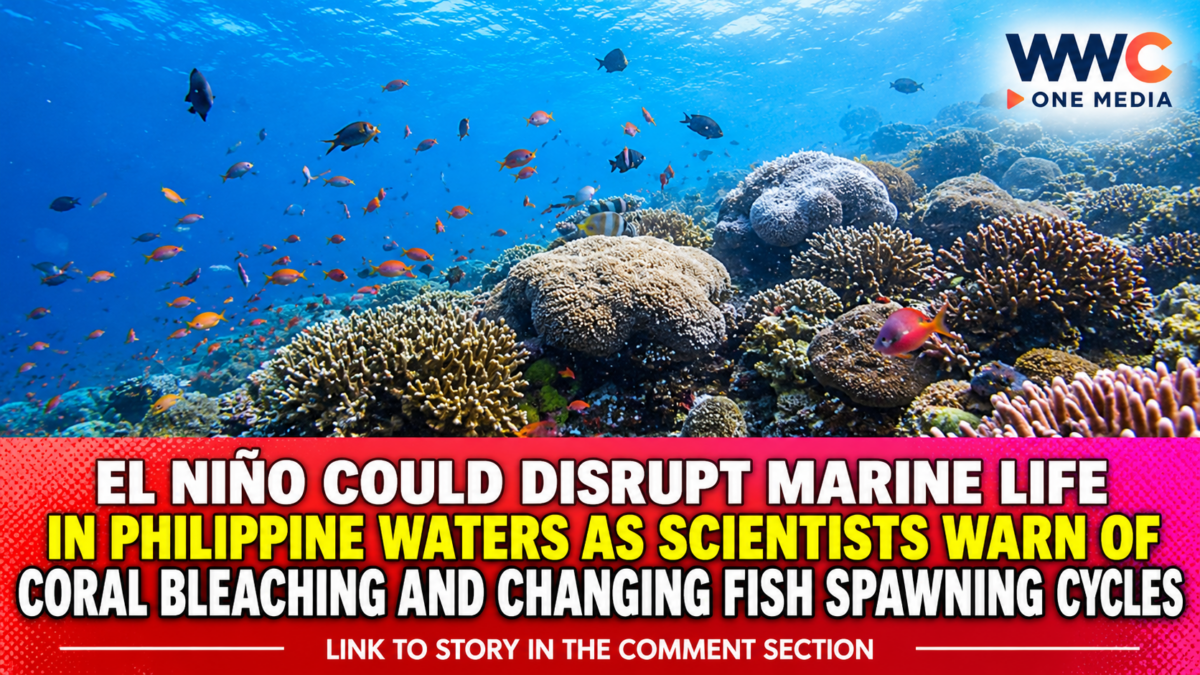
Coral bleaching happens when corals experience prolonged thermal stress and expel microscopic algae called zooxanthellae that live inside their tissues.
These algae provide much of the energy corals need through photosynthesis and contribute to their characteristic colors. When corals lose them, they turn white and become more vulnerable to disease, starvation and death if stressful conditions continue.
Bleaching does not automatically mean that every affected coral will die. Some corals can recover if water temperatures return to suitable levels before the stress becomes severe or prolonged.
However, repeated or extended bleaching events can weaken reef ecosystems and make recovery more difficult.
The concern is particularly important because coral reefs provide habitat for numerous marine species, support fisheries and help protect coastlines from waves and erosion. SunStar Publishing Inc.+1
Why Tawi-Tawi’s Marine Biodiversity Is Particularly Important
Tawi-Tawi is among the areas highlighted in the discussion because of its location within the Coral Triangle, widely recognized as one of the world’s richest marine biodiversity regions.
Its extensive reef systems support numerous fish species and provide resources for fishing communities across the Sulu Archipelago.
A 2020 study published in Fisheries Research, titled Inventory of Commercially Important Coral Reef Fishes in Tawi-Tawi Islands, Southern Philippines: The Heart of the Coral Triangle, documented 266 commercially important coral reef fish species belonging to 11 families or subfamilies.
The research also identified one near-threatened species and four vulnerable species.
More recent research published in Ocean & Coastal Management in July 2026 examined the use of environmental DNA, or eDNA, to monitor marine fish biodiversity in Tawi-Tawi.
Researchers identified 134 fish species through eDNA sampling across three municipalities. When combined with market surveys and available secondary information, the study documented 493 fish species in the province.
Environmental DNA monitoring can help researchers detect species through genetic material collected from seawater, providing information that conventional market-based surveys may miss.
These studies demonstrate the ecological importance of Tawi-Tawi. They also underline why monitoring coral health, fish populations and changing ocean conditions is essential.
However, the research does not prove that El Niño has already caused widespread coral bleaching or disrupted fish reproduction in the province. Those impacts require further scientific observation. SunStar Publishing Inc.
Marine Heatwaves Could Make the Threat Worse for Fisheries
The El Niño warning comes amid growing concern about marine heatwaves and long-term ocean warming.
A marine heatwave occurs when ocean temperatures remain unusually high compared with the historical conditions of a particular area for an extended period.
According to the World Meteorological Organization, marine heatwaves can cause widespread coral bleaching, fish deaths, disruptions to aquaculture, changes in species distribution and harmful algal blooms.
The Daily Guardian also reported in October 2026 that University of the Philippines Marine Science Institute researcher Charina Lyn Amedo-Repollo warned that the combination of El Niño and rising ocean temperatures could intensify marine heatwaves and threaten Philippine fisheries.
She explained that phytoplankton, microscopic organisms forming the foundation of many marine food webs, can decline under certain ocean-warming conditions.
When phytoplankton availability decreases, organisms that depend on them may also be affected, potentially creating consequences higher up the food chain.
Marine species that cannot easily move away from unfavorable temperatures, including corals and some shellfish, may face particular risks. Mobile fish may shift toward cooler waters, changing their distribution and potentially affecting where fishing communities can find them.
These impacts can extend beyond fishing to aquaculture, tourism, coastal livelihoods and food security. Daily Guardian+1
Davao Fisherfolk Already Fear Smaller Catches and Higher Fishing Costs
The possible effects on fisheries are especially concerning for small-scale fishing communities in Mindanao.
In an October 13 report, Davao Today documented the concerns of local fisherfolk as a very strong El Niño approached.
One fisherman, Generoso Olasiman, described how poor catches sometimes force him to seek construction work to support his family. His experience illustrates the financial uncertainty faced by households whose income depends heavily on daily fishing.
The report also cited concerns that changing marine conditions could affect fish availability and force fishers to travel farther to find productive fishing grounds.
Higher fuel costs make the situation more difficult. Spending more time at sea does not necessarily guarantee a larger catch, and a disappointing trip can leave fishers with little income after paying for fuel and other expenses.
Philippine Statistics Authority figures cited in the report showed that Davao Region produced 14,638.52 metric tons of fish in the second quarter of 2026, a 13.2 percent decline from the same period in 2025.
Commercial fisheries production fell by 38.4 percent, while marine municipal fisheries production declined by 14.7 percent.
These figures show that the region’s fisheries were already facing challenges. They do not establish that El Niño caused the decline, since fishing production is affected by several factors, including weather, fishing effort, fuel costs and resource conditions.
WWC ONE MEDIA previously examined the concerns of Davao fishers as the climate phenomenon strengthens.
Read more: Davao Fishers Fear Smaller Catches as Very Strong El Niño Looms
DENR Steps Up Coral Reef Monitoring as El Niño Threatens Ecosystems
The Department of Environment and Natural Resources (DENR) has also intensified environmental monitoring and protection efforts in preparation for worsening climate conditions.
In an October 30 report, the Philippine News Agency said the DENR was strengthening wetland restoration, waterway cleanup and coral reef protection to help ecosystems cope with extreme heat and the effects of a very strong El Niño.
The agency reported that personnel in Masbate were monitoring coral bleaching and fish kills every two weeks in vulnerable coastal areas of Mobo and San Jacinto.
In Aurora, Bataan and Zambales, environmental personnel were monitoring marine heat stress to assess possible effects on coral reefs and fisheries.
The DENR has also taken steps to maintain seawater flow through mangrove forests, remove abandoned fishing nets and prevent activities that could further damage heat-stressed reef areas.
These efforts are important because coral reefs and coastal wetlands serve as natural protection systems. They provide habitats, support food production and help communities withstand environmental pressures.
The agency’s monitoring activities also show that the threat to marine ecosystems is being addressed through localized environmental assessments rather than assuming that every coastal area will experience the same conditions. Philippine News Agency+1
El Niño Does Not Make All Philippine Waters Warmer
One important point raised by David is that El Niño does not affect every part of the Philippine marine environment in the same way.
Although El Niño is associated with warmer-than-average sea surface temperatures in the central and eastern equatorial Pacific, local ocean conditions around the Philippines can vary.
Ocean currents, seasonal winds, upwelling and other oceanographic processes can influence temperatures in different parts of the archipelago.
David explained that while some areas facing the West Philippine Sea could experience warming and coral bleaching risks, other Philippine waters may respond differently.
She also noted that La Niña can have a more pronounced influence on certain oceanographic conditions in Philippine waters.
This is why scientists need to monitor actual sea temperatures and reef conditions instead of assuming that a national El Niño warning means all Philippine waters are becoming warmer.
The distinction is particularly important for coastal communities and local governments deciding where to focus marine conservation and fisheries interventions.
Farmers and Fisherfolk May Need Different Adaptation Strategies
David also discussed how communities could adapt to the effects of El Niño.
She emphasized that farmers are among the sectors most directly exposed to prolonged dry conditions, particularly those who rely on rainfall or have limited access to irrigation.
She suggested improving water management so crops receive sufficient irrigation during the stages when they need it most.
For households that depend on both farming and fishing, she also raised the possibility of diversifying livelihood activities when agricultural production becomes difficult.
However, shifting toward fishing should not be treated as a guaranteed solution. Fish availability varies by location and season, and increased fishing pressure could further threaten vulnerable marine resources.
Any livelihood diversification strategy must therefore consider local fish stocks, sustainable fishing practices and the actual conditions of nearby waters.
WWC ONE MEDIA has previously reported on the agricultural damage already affecting Davao Region.
The wider national outlook is also concerning, with PAGASA projections pointing to possible dry conditions, dry spells or drought in as many as 85 provinces through March 2027.
Davao’s Water Emergency Shows How Climate Risks Can Affect Entire Communities
The effects of El Niño are also placing pressure on water supplies in parts of Davao Region.
In Manay, Davao Oriental, authorities have used municipal fire trucks to distribute water to households experiencing supply difficulties.
The situation illustrates how prolonged dry conditions can affect communities, public services and livelihoods even before an entire province is formally classified as experiencing drought.
WWC ONE MEDIA previously reported on the emergency response and contingency measures being considered by local authorities.
Although water shortages and marine ecosystem stress are different environmental problems, both demonstrate how climate conditions can affect communities that depend directly on natural resources.
Lawudnon 2026 Calls for Stronger Marine Research and Conservation
The warnings were discussed during Lawudnon 2026, a national marine biodiversity research and development conference held in Davao City.
The event brought together researchers, universities and government institutions to discuss the country’s marine resources and strengthen the scientific foundation for conservation and management.
The conference involved the University of the Philippines Mindanao’s Coral Reef Resiliency and Ecology Studies Laboratory and Office of Research, the Mindanao State University–Tawi-Tawi College of Technology and Oceanography, and Davao del Norte State College, with support from the Department of Science and Technology–Philippine Council for Agriculture, Aquatic and Natural Resources Research and Development.
Conference convenor Prof. Cleto L. Nañola Jr. emphasized the importance of documenting marine biodiversity, including species identification and genetic information, to help resource managers and local governments make decisions based on scientific evidence.
David also stressed the need for more science communicators who can translate research findings into information that coastal communities and younger generations can understand.
Scientific discoveries will have greater value when they reach the people who depend on marine resources and can use that knowledge to protect their livelihoods.
Why the Coming Months Matter for Philippine Marine Life
The developing El Niño presents a complex challenge for the Philippines.
On land, communities are preparing for reduced rainfall, agricultural losses and possible water shortages. At sea, scientists are monitoring potential changes in marine reproduction, coral health, fish distribution and fisheries productivity.
The risks are not identical across all locations, and the warnings should not be interpreted as proof that widespread coral bleaching or fish population collapse has already occurred.
But the combination of climate variability, rising ocean temperatures and existing pressures on marine ecosystems makes early monitoring and conservation increasingly important.
For Tawi-Tawi, Palawan and Zambales, closer reef assessments could help identify areas experiencing unusual thermal stress. For fishing communities, monitoring fish availability and supporting sustainable livelihoods could reduce the risks associated with changing marine conditions.
The challenge is not only to protect coral reefs and marine species. It is also to protect the people whose food, income and coastal security depend on healthy oceans.
With very strong El Niño conditions expected to persist into 2027, the question is whether Philippine marine conservation efforts can keep pace with changing ocean conditions—or whether coastal communities will face a new wave of environmental and economic pressure.