Indonesia is preparing to tighten controls over government surveillance equipment and is considering sweeping the presidential palace for hidden listening devices after an extraordinary wiretapping scandal allegedly involving President Prabowo Subianto, senior government officials, journalists and business figures.
The controversy has triggered arrests of senior police officers, renewed scrutiny of the country’s intelligence and law-enforcement systems, and questions about possible political tensions inside Southeast Asia’s largest economy.
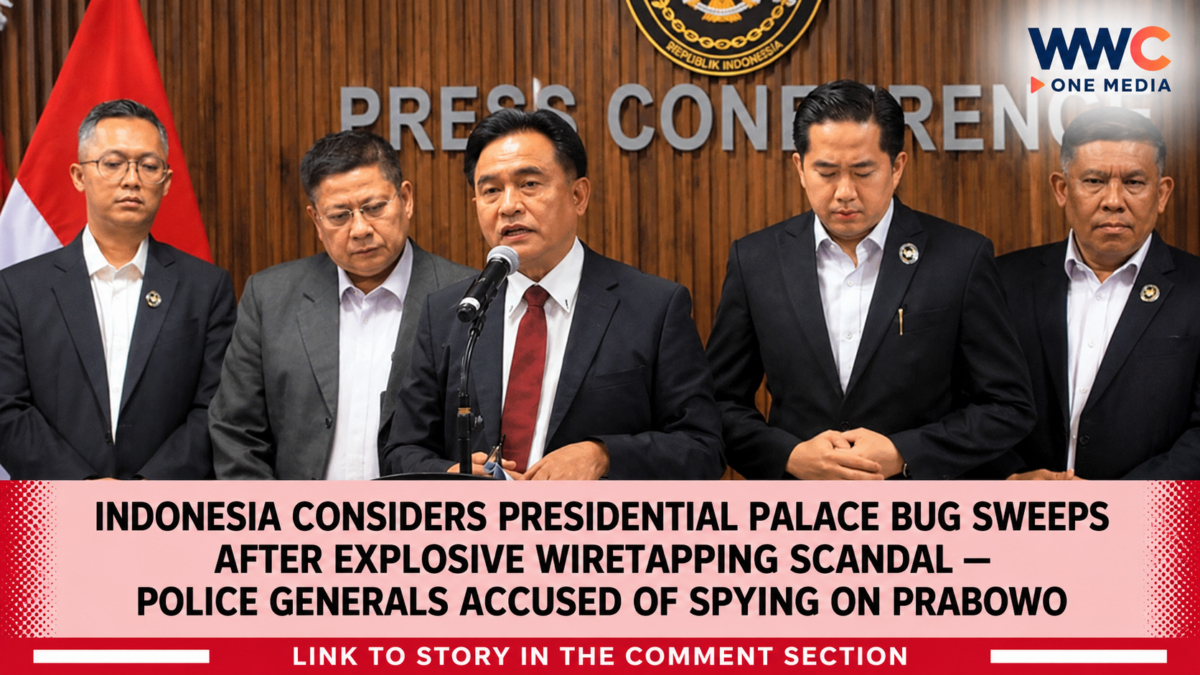
On November 9, 2026, Indonesia’s senior minister for legal affairs, Yusril Ihza Mahendra, confirmed that the government was considering security inspections at the presidential palace to detect possible covert listening devices.
He also said authorities were taking steps to prevent surveillance equipment held by government agencies from being misused.
The announcement follows the discovery of alleged unauthorized telephone interceptions involving Prabowo and other prominent individuals. The investigation has exposed serious concerns about how surveillance powers are controlled, who can authorize interception operations and whether sensitive government communications were compromised.
The scandal is particularly alarming because the alleged surveillance involved officers from the very institution responsible for enforcing the law.
Indonesia Considers Sweeping the Presidential Palace for Hidden Listening Devices
The possibility of conducting electronic security inspections at the presidential palace has become one of the most striking developments in the investigation.
Asked whether authorities would search the palace for hidden listening devices, Yusril said it was a measure the government would consider as a precaution.
The proposed inspections would be intended to identify covert electronic equipment that could potentially compromise sensitive conversations involving the president and senior officials.
However, the minister did not confirm that hidden listening devices had already been discovered inside the palace.
That distinction is important. The government is considering preventive inspections following the wiretapping allegations, not announcing that investigators have established a successful bugging operation inside the presidential residence.
The administration is also looking at tighter controls over surveillance equipment held by state agencies to ensure that legitimate law-enforcement capabilities are not used for unauthorized monitoring.
Senior Police Officers Detained Over Alleged Illegal Wiretapping
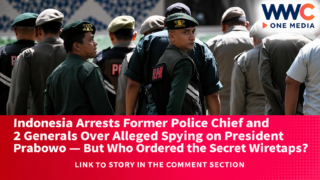
The scandal intensified after Indonesian police announced the detention of three senior police generals on November 3.
They were identified as:
- General Listyo Sigit Prabowo, former national police chief and recently appointed presidential chief of staff.
- Inspector General Ahrie Sonta Nasution, head of the National Police Legal Division.
- Inspector General Eko Hadi Santoso, a senior instructor at the National Police Education and Training Institute.
Investigators suspect the officers were involved in unauthorized interception of communications belonging to President Prabowo and other prominent figures.
Reuters subsequently reported on November 9 that four senior police officers had been arrested in connection with the scandal. The publicly identified suspects in the initial police announcement were the three generals named above.
The allegations involve possible unlawful interception, unauthorized access to electronic systems and the deletion of electronic information.
Police said the suspected surveillance took place between 2025 and 2026.
The alleged targets reportedly included government officials, politicians, journalists, activists, community figures and businesspeople.
Authorities have not disclosed the complete list of individuals allegedly monitored or established how many people were affected.
The suspects have not been convicted, and the investigation remains ongoing.
Former Police Chief Listyo Sigit Prabowo Becomes Central Figure
The involvement of Listyo Sigit Prabowo has made the scandal particularly sensitive.
Listyo previously served as Indonesia’s national police chief from 2021 until October 2026. He was appointed during the administration of former president Joko Widodo, commonly known as Jokowi.
After leaving the police chief position, Listyo was appointed presidential chief of staff under Prabowo.
His new appointment placed him in a powerful position within the president’s administration.
But the appointment was short-lived.
Following the announcement of the wiretapping investigation, Prabowo dismissed Listyo from the presidential chief of staff position on November 4.
The development raised serious questions about how someone who had recently occupied one of Indonesia’s most influential law-enforcement positions became a suspect in an investigation involving alleged misuse of surveillance capabilities.
Listyo is widely viewed as close to Jokowi, adding another politically sensitive dimension to the case.
However, his perceived political relationship with the former president does not establish that Jokowi ordered or knew about the alleged surveillance.
Investigators have not publicly established who directed the suspected operation or why it was conducted.
How Indonesia’s Lawful Interception System Was Allegedly Misused
One of the most important parts of the investigation involves the National Police’s Lawful Interception Management System, known as LIMS.
The system is designed to support authorized interception operations connected to legitimate law-enforcement investigations.
According to reporting by The Jakarta Post, investigators suspect that telephone numbers were entered into the system without the required verification and authorization procedures.
The alleged misuse raises concerns about whether officers were able to exploit official surveillance infrastructure without proper oversight.
LIMS can facilitate the interception of communications through telecommunications operators. The system can also provide information that may help investigators identify communication patterns and other relevant data.
Technology analysts have pointed out that conventional lawful-interception systems differ from sophisticated commercial spyware. Nevertheless, unauthorized access can still expose sensitive information and potentially compromise an individual’s privacy.
The central question is not simply whether the technology exists, but whether the people operating it followed the law.
If investigators establish that the system was deliberately used without proper authorization, the case could expose significant weaknesses in internal controls and institutional accountability.
Investigators Also Examine Alleged Deletion of Surveillance Records
The scandal became more serious after police alleged that electronic records connected to the suspected interceptions had been deleted.
Investigators said files containing intercepted communications were allegedly removed from the system in October.
Authorities are examining whether the deletion was intended to conceal evidence or erase traces of the suspected operation.
The investigation has involved witness interviews, expert examinations and the seizure of electronic devices.
According to the Associated Press, police questioned 10 witnesses and three expert witnesses and seized 11 mobile phones, an iPad and four flash drives.
These devices could help investigators reconstruct communications and determine whether the alleged interception activities were coordinated.
However, the existence of seized devices does not automatically establish criminal responsibility. Investigators must examine the evidence and demonstrate how each individual was involved.
The alleged deletion of records could become particularly important if forensic analysis establishes who accessed the system, what information was removed and whether the actions were coordinated.
Government Reviews Surveillance Regulations After the Scandal
Indonesia is now considering a broader review of the rules governing electronic surveillance.
The review could involve government institutions that possess authority to conduct lawful interception, including the National Police and other agencies with legally defined investigative powers.
Coordinating Minister for Law, Human Rights, Immigration and Corrections Yusril Ihza Mahendra previously confirmed that the government would evaluate existing surveillance safeguards.
The review is intended to ensure that agencies follow the required legal procedures and that sensitive surveillance capabilities cannot be abused.
Indonesia’s regulations recognize that electronic interception can be necessary in investigations involving serious crimes and national security.
But such powers must operate within legal boundaries.
The scandal has raised questions about authorization, recordkeeping, supervision and the ability of oversight bodies to detect unauthorized activity.
A stronger regulatory framework could require clearer approval procedures, tighter access restrictions, independent auditing and reliable preservation of electronic records.
Is the Wiretapping Scandal Connected to a Political Power Struggle?
The investigation has unfolded amid growing attention to relations between Prabowo and his predecessor, Jokowi.
The two leaders were once political allies. Jokowi supported Prabowo’s successful 2024 presidential campaign, while his son, Gibran Rakabuming Raka, became Prabowo’s vice president.
However, political tensions have become increasingly visible.
Listyo’s long association with Jokowi has drawn attention because he is now among the officers facing allegations in the wiretapping case.
Reuters has reported that the scandal has intensified scrutiny of the relationship between Prabowo and his influential predecessor.
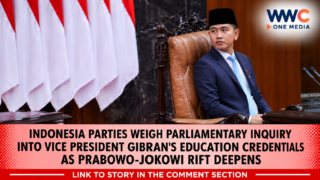
There are also wider political developments involving Gibran, whose educational qualifications have become the subject of renewed parliamentary discussion.
WWC ONE MEDIA previously examined the issue in Indonesia Parties Weigh Parliamentary Inquiry Into Vice President Gibran’s Education Credentials as Prabowo-Jokowi Rift Deepens.
The developments have added to speculation about political divisions inside Indonesia’s governing establishment.
Nevertheless, the wiretapping investigation and the parliamentary debate over Gibran’s qualifications are separate matters. There is no established evidence that they are part of one coordinated political operation.
Jokowi has said he respects the legal process, while Indonesian police have maintained that the wiretapping investigation is a law-enforcement matter.
Nearly 21,000 Military Personnel Deployed to Jakarta
The wiretapping controversy has also attracted international attention because of a major military deployment in Jakarta.
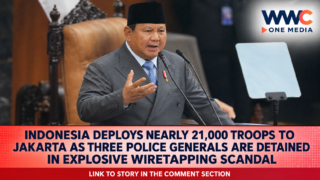
The Associated Press reported that Indonesia planned to deploy approximately 20,980 military personnel to the capital, with another 13,140 personnel placed on standby.
The deployment occurred while authorities were investigating the alleged surveillance operation.
The timing has raised questions about whether the troop movement is connected to the arrests.
However, officials have described the deployment as part of routine security and military activities. They have not officially confirmed that it was ordered in response to the wiretapping scandal.
This distinction is important because the presence of thousands of military personnel does not establish that Indonesia is facing a coup attempt, an imminent confrontation or a breakdown of government authority.
WWC ONE MEDIA previously reported the deployment in Indonesia Deploys Nearly 21,000 Troops to Jakarta as Three Police Generals Are Detained in Explosive Wiretapping Scandal.
The deployment and the surveillance investigation are developing simultaneously, but officials have not established a direct operational connection between them.
Why the Scandal Matters for Journalists, Activists and Businesses
The alleged monitoring of journalists, activists and businesspeople has raised concerns that surveillance powers may have extended beyond legitimate criminal investigations.
Journalists rely on confidential communications to protect sources and investigate matters involving public interest.
Activists and civil society organizations also need secure communication channels to coordinate activities and communicate with vulnerable communities.
If unauthorized monitoring occurred, it could undermine public confidence in the ability of individuals to communicate privately.
Businesses could also face risks if confidential commercial information, negotiations or sensitive corporate communications were accessed without legal authority.
Authorities have not disclosed the identities of all alleged targets or established the full extent of the information collected.
But the case has already raised a broader question about the protection of private communications in Indonesia.
Could the Officers Face Serious Criminal Penalties?
Indonesian authorities are examining possible violations of the country’s Criminal Code and Electronic Information and Transactions Law.
The relevant provisions cover unlawful interception of private communications, unauthorized access to electronic systems and the illegal alteration, destruction or deletion of electronic information.
According to information released by officials and reported by the Associated Press, certain alleged offences can carry maximum prison sentences of up to 10 years, six years and eight years, depending on the specific provisions applied.
These are potential statutory penalties, not sentences already imposed on the suspects.
Investigators must establish the evidence and applicable charges before a court can determine criminal responsibility.
The suspects remain entitled to due process and the presumption of innocence.
What the Scandal Means for Indonesia’s Security Institutions
Indonesia’s police, military and intelligence-related institutions are now facing renewed scrutiny over their internal safeguards.
Surveillance technology can be a valuable instrument in investigating organized crime, terrorism, corruption and other serious offences.
However, its use requires strict authorization and accountability.
The alleged misuse of an official interception system by senior officers raises concerns about whether existing safeguards are strong enough to prevent powerful individuals from bypassing established procedures.
The government may now face pressure to introduce stronger protections, including:
- Clearer authorization requirements for surveillance operations.
- Independent oversight of interception requests.
- Better access controls for sensitive government systems.
- Reliable audit records that cannot easily be deleted or altered.
- Stronger protections for journalists, activists and ordinary citizens.
These measures could help restore public confidence while allowing law-enforcement agencies to carry out legitimate investigations.
Four Questions Investigators Must Still Answer
Despite the arrests and the government’s proposed reforms, several critical questions remain unresolved.
Who ordered the alleged wiretapping?
Investigators must determine whether the suspected activity was directed by the detained officers or involved other individuals.
What information was collected?
Authorities have not disclosed the full extent of the alleged interception or established how the information may have been used.
Were the deleted records intended to conceal the operation?
Digital forensic investigations will be important in determining who accessed the system and whether evidence was deliberately removed.
Were more people involved?
The number of alleged targets and the possibility of additional participants remain under investigation.
The answers could determine whether Indonesia is dealing with an isolated case of unauthorized surveillance or a much wider institutional security failure.
Indonesia Faces a Major Test of Trust Inside Government
The wiretapping scandal has become one of the most sensitive security controversies facing President Prabowo’s administration.
A former national police chief and other senior officers have been implicated in allegations involving the unauthorized monitoring of the president and other prominent figures.
The government is considering palace bug sweeps, tighter controls over surveillance equipment and a review of the rules governing electronic interception.
At the same time, the military deployment in Jakarta, political tensions involving Jokowi and questions about the security of private communications have intensified public attention.
Yet the investigation has not established the motive behind the alleged surveillance, and the government has not confirmed that hidden listening devices were found inside the presidential palace.
For Prabowo, the challenge is to demonstrate that even the most powerful security officials are subject to the law.
For Indonesia, the bigger test is whether the scandal will lead to stronger institutional safeguards or expose deeper weaknesses in the country’s surveillance and accountability systems.
With the government considering electronic security inspections at the presidential palace and reviewing how state surveillance equipment is controlled, one question now looms over Jakarta: Will investigators uncover an isolated abuse of police power, or reveal a much wider surveillance operation reaching deeper into Indonesia’s political and security establishment?