Indonesia’s worsening haze emergency is no longer just an environmental disaster. It has become a political flashpoint, with Indonesian figures directing sharp criticism toward Singapore and Malaysia as analysts question whether nationalist rhetoric is being used to divert attention from mounting frustration at home.
SINGAPORE/JAKARTA — A fresh political controversy is spreading across Southeast Asia as Indonesia battles devastating forest fires, dangerous air pollution and growing public dissatisfaction with the government’s response.
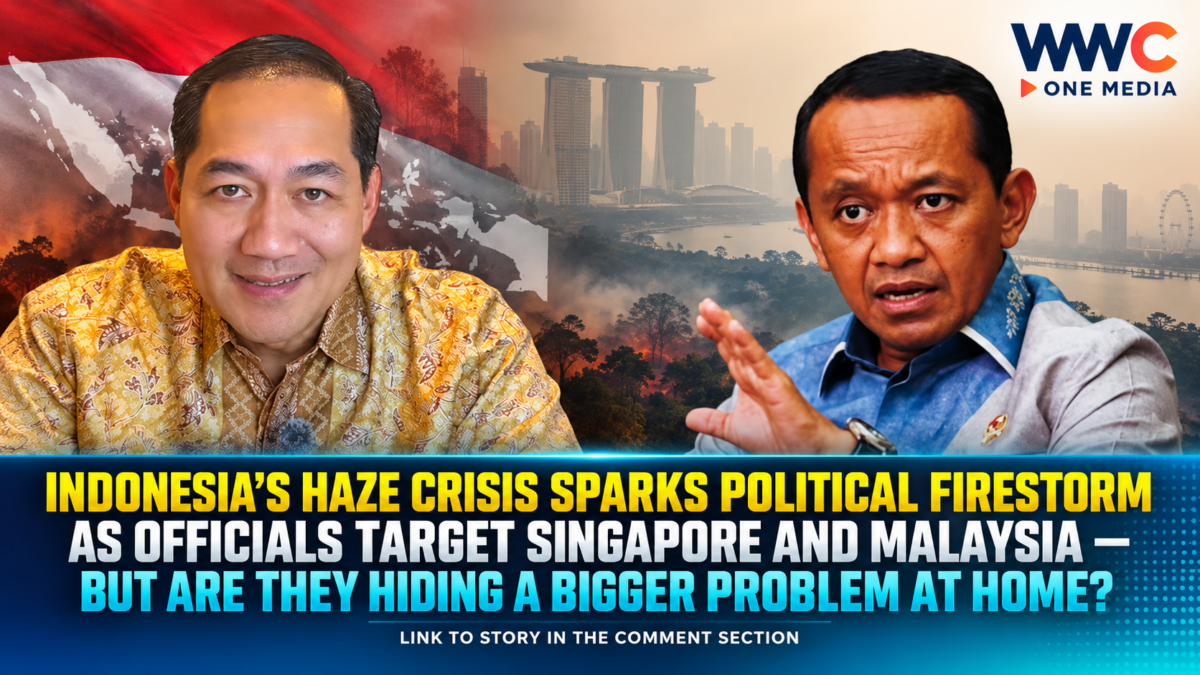
While toxic smoke continues to affect millions across the region, outspoken Indonesian political figures have turned their attention to neighbouring Singapore and Malaysia, raising concerns over energy exports, foreign investors and responsibility for the haze.
But analysts interviewed by Channel NewsAsia (CNA) suggest the increasingly confrontational statements may be driven more by domestic political calculations than by a fundamental change in Indonesia’s diplomatic strategy.
Their assessment points to a broader struggle involving economic insecurity, resource nationalism and public expectations of President Prabowo Subianto’s administration.
Indonesian leaders intensify rhetoric against neighbours
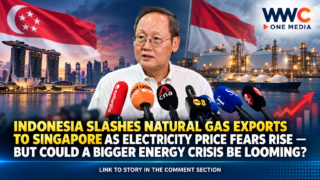
One of the most significant developments came on October 22, when Indonesian Coordinating Minister for Downstreaming and Energy Transition Bahlil Lahadalia raised the possibility of reviewing gas export arrangements with countries that he considered uncooperative or disrespectful toward Indonesia.
Although Bahlil did not explicitly identify Singapore or Malaysia as targets, his remarks heightened questions about whether diplomatic friction could eventually affect regional energy relationships.
Singapore has historically relied partly on imported natural gas from Indonesia, making the issue economically significant for both countries.
However, a warning about reviewing contracts should not be confused with an actual decision to terminate gas exports. No such cancellation was established in the reporting reviewed.
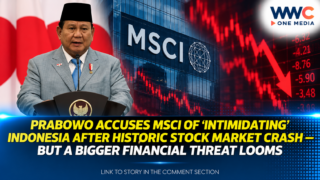
Another controversy emerged when former Indonesian Trade Minister Muhammad Lutfi accused Singapore’s state-linked investment institutions, Temasek and GIC, of attempting to influence global index provider MSCI against Indonesia’s equity market.
Both Temasek and GIC denied those allegations. No independently substantiated evidence establishing the alleged market interference was presented in the reporting reviewed.
Lutfi also criticised Malaysian lawmaker Syed Saddiq Abdul Rahman after the latter called for stronger ASEAN pressure on Indonesia over the haze.
The exchange highlighted how an environmental emergency has become entangled with issues of national pride, financial markets and diplomatic influence.
Analysts see political pressure behind growing nationalist attacks
Experts at Singapore’s ISEAS–Yusof Ishak Institute and S. Rajaratnam School of International Studies believe some of the confrontational statements are designed to resonate with Indonesians facing economic hardship.
Made Supriatma, a visiting fellow at ISEAS, told CNA that Indonesian households were experiencing growing financial pressure even without the country facing a full-scale economic crisis.
In that environment, redirecting public dissatisfaction toward perceived foreign critics can provide an appealing political message while avoiding uncomfortable questions about domestic governance.
Julia Lau, another ISEAS researcher, noted that appealing to national pride during periods of economic difficulty has long featured in Indonesia’s political landscape.
Meanwhile, RSIS researcher Muhammad Garda Ramadhito linked the latest exchanges to resource nationalism, particularly Jakarta’s interest in securing greater control over strategic commodities and energy supplies.
These assessments are interpretations offered by political analysts, rather than proof that individual politicians deliberately coordinated a campaign to distract the public.
Indonesia’s environmental emergency grows more severe
Behind the political exchanges lies a worsening humanitarian and environmental emergency.
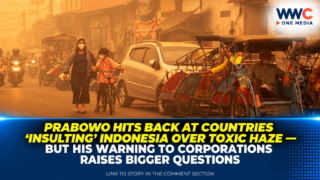
According to Reuters reporting published October 15, extensive forest and peatland fires on Sumatra and Borneo have produced hazardous smoke across Southeast Asia.
Intensifying El Niño conditions, exceptionally dry weather and extreme heat have made the fires more difficult to contain.
The crisis has affected public health, schools, transportation and business activity across several countries.
An October 24 Associated Press report cited Indonesian health authorities recording more than 333,470 cases of acute respiratory illness across seven affected provinces since mid-August.
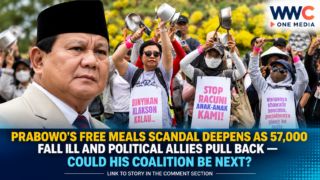
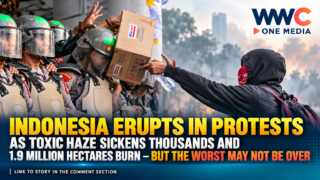
Student demonstrations have also spread across Indonesian cities, with protesters demanding stronger firefighting measures, government accountability and an emergency declaration.
AP reported that more than 500 demonstrators assembled in Palangkaraya on October 23 to protest the handling of the emergency.
These developments underline the scale of public concern inside Indonesia itself, where communities living closest to burning forests and peatlands face particularly severe exposure to toxic smoke.
Singapore and Malaysia choose diplomacy over confrontation
Despite increasingly heated statements by individual Indonesian officials and former politicians, Singapore and Malaysia have generally pursued a more measured diplomatic approach.
Singapore’s Senior Minister K Shanmugam expressed disappointment over an Indonesian official’s suggestion that Singapore benefits from oxygen produced by Indonesian forests, even when no haze is present.
Nevertheless, Shanmugam also acknowledged the efforts of President Prabowo’s administration to address the fires.
Malaysia’s Prime Minister Anwar Ibrahim similarly engaged Prabowo directly as both governments faced pressure to respond to worsening pollution.
Analysts say this approach reflects ASEAN’s longstanding preference for dialogue and diplomatic engagement rather than public confrontation.
Such restraint is particularly important because regional cooperation is needed to investigate suspected illegal burning, enforce environmental regulations and prevent future outbreaks.
Could Indonesia’s gas export warning backfire?
The possibility of restricting gas exports introduces another layer of uncertainty into the dispute.
Indonesia’s government has been prioritising domestic industrial development through its downstreaming strategy, which seeks to process more natural resources locally rather than exporting raw materials.
Redirecting natural gas toward Indonesian industries could support that strategy.
However, economists and regional analysts caution that reducing established export relationships could also create financial risks.
Selling gas domestically at lower prices could affect revenues, while industrial demand may not expand quickly enough to absorb redirected supplies.
Singapore, meanwhile, has diversified its natural gas supply sources, reducing its dependence on any single exporting country.
The economic relationship between the two neighbours therefore creates strong incentives to avoid a prolonged confrontation.
Prabowo’s administration faces a delicate balancing act
Although political criticism has intensified, analysts cited by CNA cautioned against treating every provocative statement as official Indonesian foreign policy.
They pointed to the more cooperative conduct of Prabowo’s administration and senior Indonesian diplomatic figures.
Former Deputy Foreign Minister Dino Patti Djalal, for instance, defended the importance of maintaining a constructive relationship with Singapore and rejected suggestions of a Singaporean conspiracy against Indonesia’s financial market.
There is, however, a degree of tension in Jakarta’s messaging.
In separate remarks on October 21, Prabowo criticised countries he said were insulting Indonesia over the wildfire emergency, according to CNA reporting.
That makes it important to distinguish between the president’s broader nationalist language and any specific endorsement of allegations against Singaporean institutions or threats to terminate bilateral gas arrangements.
What happens next for ASEAN?
The haze crisis has exposed a difficult challenge for Southeast Asia: environmental damage originating in one country can impose serious health and economic costs across national borders.
As public frustration increases, political leaders may face growing pressure to make forceful statements rather than pursue slower, less visible solutions.
Yet experts warn that nationalist confrontation could undermine the very regional cooperation required to combat recurring forest and peatland fires.
Effective prevention will depend on stronger enforcement against illegal burning, improved peatland management, transparent corporate accountability and sustained coordination among ASEAN governments.
For Indonesia, the challenge is to demonstrate that it can protect its own citizens while fulfilling responsibilities to neighbouring countries affected by cross-border pollution.
For Singapore and Malaysia, the task is to press for meaningful action without escalating the dispute into a wider diplomatic confrontation.
The central question now is whether Southeast Asia’s governments can turn a politically charged environmental disaster into lasting cooperation — or whether the battle over who is responsible will overshadow the urgent work of stopping the fires.