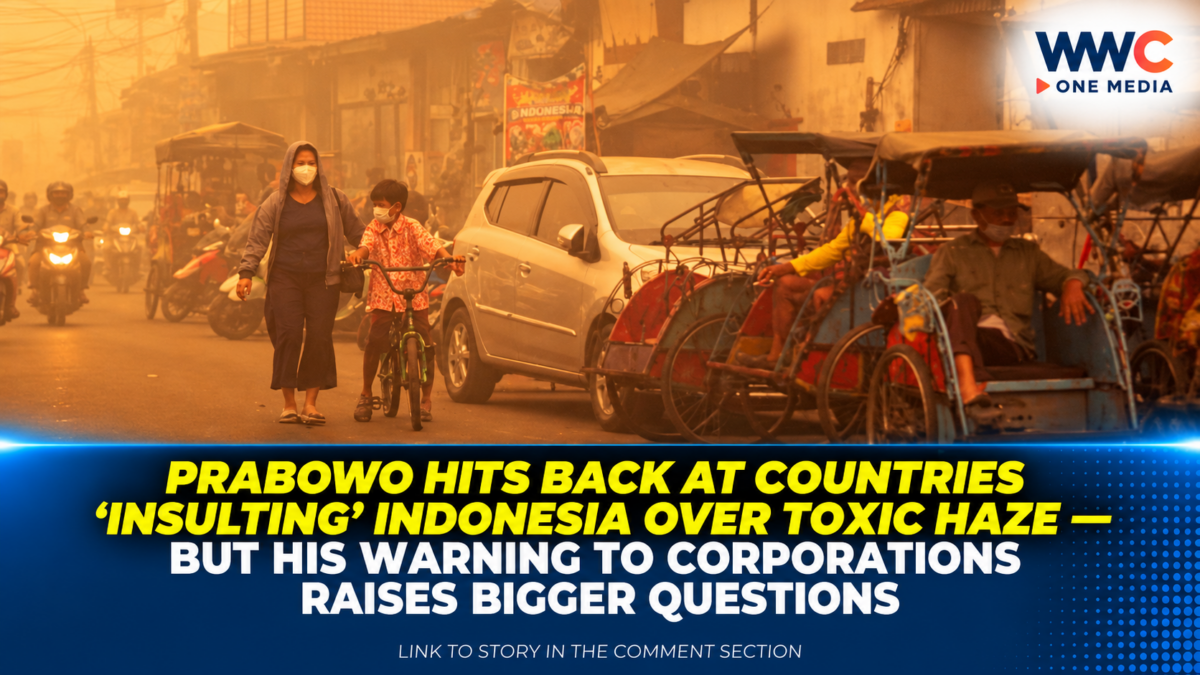
JAKARTA, INDONESIA — Indonesian President Prabowo Subianto has delivered a forceful response to countries criticizing Indonesia over the devastating forest fires that have spread toxic haze across Southeast Asia, warning that his government could publicly expose companies responsible for the environmental crisis.
Speaking during a Cabinet meeting on Wednesday, October 21, Prabowo criticized foreign countries he said had insulted Indonesia as the nation struggles to contain widespread fires affecting millions of people.
But beyond his remarks about foreign criticism, the president issued another significant warning: companies found responsible for illegally setting fires could face the revocation of their operating licenses.
His comments came as smoke from Indonesian forest and peatland fires continued to affect neighboring Singapore, Malaysia and Timor-Leste, prompting heightened health warnings and regional diplomatic pressure.
The escalating dispute has become more than an environmental emergency. It is now testing regional cooperation, corporate accountability and relations among members of the Association of Southeast Asian Nations (ASEAN).
The biggest question is whether Indonesia’s promised investigations will lead to concrete action against companies responsible for illegal burning.
Prabowo Warns Countries Criticizing Indonesia
During Wednesday’s Cabinet meeting, Prabowo took aim at foreign criticism of Indonesia’s handling of the fires.
He said his country had shown patience despite repeated criticism and promised to disclose information about corporations implicated in the crisis once investigators had gathered sufficient evidence.
Importantly, Prabowo did not identify the countries he was criticizing.
He also did not publicly name the companies he believed might be responsible.
That distinction matters because his remarks should not automatically be interpreted as a direct accusation against Singapore, Malaysia or any other specific government.
His comments followed growing regional frustration, including remarks by a Malaysian lawmaker who had called for Indonesia to be treated as an international outcast over the haze problem.
Regional leaders, meanwhile, have continued offering assistance and urging cooperation.
Prabowo’s message combined a defense of Indonesia’s national dignity with a promise of tougher enforcement against environmental wrongdoing.
More Than 1.9 Million Hectares Reportedly Burned
The scale of Indonesia’s wildfire emergency is enormous.
According to the independent satellite-monitoring initiative Nusantara Atlas, more than 1.9 million hectares of land were affected by fires between January and September 2026.
INDEPENDENT SATELLITE MONITORING ESTIMATE
1.9 million+ hectares
Reported fire-affected area in Indonesia, January–September 2026.Source: Nusantara Atlas, as reported by AFP/CNA. This is not presented as an official government-confirmed figure or as a measure exclusively of forest cover destroyed.
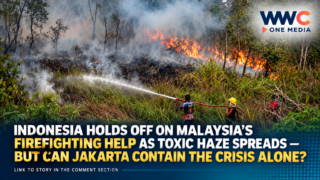
The fires have burned across parts of Sumatra and Kalimantan, where forest, agricultural land and carbon-rich peatlands are particularly vulnerable during extended dry periods.
Peat fires are especially difficult to extinguish because burning can continue underground, even when surface flames appear to have disappeared.
That allows smoke to persist for extended periods and makes firefighting operations more complicated.
Separate estimates of affected land have varied depending on monitoring dates, satellite methods and definitions. They should not be combined into a single definitive figure without clarification.
Why Indonesia’s Fires Have Become a Regional Health Emergency
The fires have generated thick smoke containing fine particulate matter, including PM2.5, which can penetrate deep into the respiratory system.
The haze has affected communities within Indonesia and spread into neighboring countries as wind patterns transport smoke across national boundaries.
Reuters reported that Indonesian health authorities recorded approximately 283,270 respiratory illness cases across seven provinces by October 13.
The crisis has also disrupted schools, transportation and outdoor activities across Southeast Asia.
In Singapore, pollution readings reached their highest levels of the year, while Timor-Leste temporarily suspended in-person classes because of deteriorating air quality.
Respiratory cases reported
These figures underscore that the disaster is not merely a diplomatic disagreement. It has already affected public health and everyday life for large numbers of people.
President Orders Police, Prosecutors and Military to Investigate
Prabowo also announced a wider investigation into the origins of the fires.
He instructed Indonesia’s police, Attorney General’s Office and Ministry of Forestry to work with the armed forces and intelligence services.
The president suggested that deliberate fire-setting had contributed to the crisis and described such actions in particularly severe terms.
He characterized intentional burning that endangers public health as a grave environmental offence and warned that companies violating the law could lose their licenses.
However, these remarks represent the president’s accusations and proposed enforcement measures.
They do not establish that every company associated with a fire has committed an offence.
Determining responsibility requires evidence, investigation and appropriate legal procedures.
Singapore Steps Up Pressure on Companies Linked to Haze
While Prabowo defended Indonesia against foreign criticism, Singapore has been intensifying its own enforcement response.
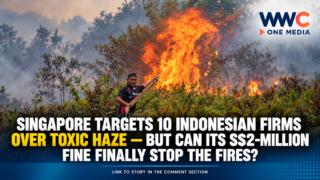
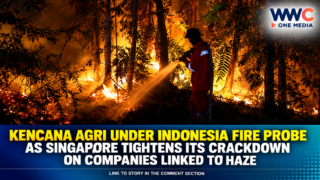
On October 20, Singapore announced additional preventive notices to three companies operating in Kalimantan.
The companies identified by Associated Press were PT Buana Megatama Jaya, PT Mananjung Hayak and PT Baratama Putra Perkasa.
The additional notices brought the reported number of Indonesian companies targeted under Singapore’s Transboundary Haze Pollution Act to 10.
The notices require companies to take preventive measures, including dealing with fires and submitting fire-prevention plans.
Receiving a preventive notice is not the same as being found legally responsible for causing the haze.
Singapore’s authorities have emphasized that companies may face further enforcement action if they fail to comply with applicable requirements.
Senior Minister K. Shanmugam also criticized remarks from an Indonesian official who suggested that Singapore should appreciate oxygen supplied by Indonesian forests when haze was absent.
However, Shanmugam separately welcomed Prabowo’s efforts to tackle the fires.
This distinction shows that criticism of particular remarks and enforcement practices does not necessarily mean a breakdown in government-to-government cooperation.
The El Niño Factor: Why the Fires Are So Difficult to Control
Indonesia’s fire season has been made more dangerous by severe drought associated with the El Niño climate phenomenon.
El Niño can reduce rainfall across parts of Indonesia, leaving vegetation and peatlands highly vulnerable to ignition.
But weather alone does not explain the crisis.
Environmental specialists have also pointed to human activities, particularly slash-and-burn land clearing and the drainage of peatlands for agriculture.
When carbon-rich peatlands dry out, fires can spread underground and continue smoldering for long periods.
Those underground fires can release large quantities of smoke and greenhouse gases.
The relationship between climate and land management is therefore crucial: extreme drought increases fire risk, while poor land-clearing and peatland practices can substantially worsen the damage.
What Other International News Outlets Are Reporting
| News outlet | Additional information |
|---|---|
| Reuters, October 15 | Explained how El Niño, peatland fires and agricultural land clearing intensified the Southeast Asian haze crisis. |
| Associated Press, October 20 | Reported Singapore’s additional preventive notices to companies associated with the Kalimantan fire situation. |
| The Guardian, October 16 | Examined growing frustration in neighboring countries and calls for corporate accountability. |
| Reuters, October 13 | Reported Prabowo’s earlier order to mobilize more firefighting resources as criticism intensified. |
| Channel NewsAsia, October 19 | Reported Shanmugam’s criticism of an Indonesian official’s remarks while acknowledging Prabowo’s actions. |
Can ASEAN Resolve the Transboundary Haze Crisis?
The haze emergency has prompted renewed attention to cooperation among ASEAN member states.
Cross-border air pollution presents a difficult governance problem because fires may occur in one country while the health and economic consequences are felt in several others.
Indonesia maintains authority over law enforcement and firefighting operations within its territory.
Neighboring countries can offer resources, exchange data, investigate companies subject to their own laws and pursue regional agreements.
The challenge lies in turning those efforts into effective prevention.
Even when firefighting assistance reduces active fires, future haze episodes remain possible unless the underlying causes of illegal burning and degraded peatlands are addressed.
Why This Matters to the Philippines
The Philippines has also experienced periods of concern over haze transported across parts of Southeast Asia.
Smoke movement depends on prevailing winds, the intensity and location of fires, and weather conditions.
The current emergency illustrates why regional pollution monitoring and timely public health communication matter to every ASEAN member.
For the Philippines, the broader implications include possible air-quality concerns, agricultural disruption and the importance of regional climate cooperation.
However, this does not mean all areas of the Philippines are currently experiencing hazardous smoke from Indonesia. Local conditions need to be established through actual monitoring.
The Bigger Question: Will Companies Actually Lose Their Licenses?
Prabowo’s strongest warning was directed at businesses that investigators may find responsible for illegal fires.
Revoking company licenses would represent a substantial enforcement measure, especially where forestry, plantations and agricultural operations are involved.
But announcing the possibility of sanctions is only the beginning.
The eventual outcome will depend on credible investigations, the identification of responsible parties and evidence that supports legal action.
Whether those measures can prevent future haze crises is a separate question requiring longer-term assessment.
The bottom line: President Prabowo has sharply criticized unnamed countries over their response to Indonesia’s wildfire crisis while ordering investigations into possible deliberate burning. With haze affecting multiple ASEAN nations, attention is now turning to whether corporate accountability and regional cooperation can produce lasting improvements.