MANILA, PHILIPPINES — After years of devastating typhoons, floods, droughts and coastal destruction, the Philippines is developing a new national strategy to address a costly reality: Some of the damage caused by climate change can no longer be prevented, even when communities prepare.
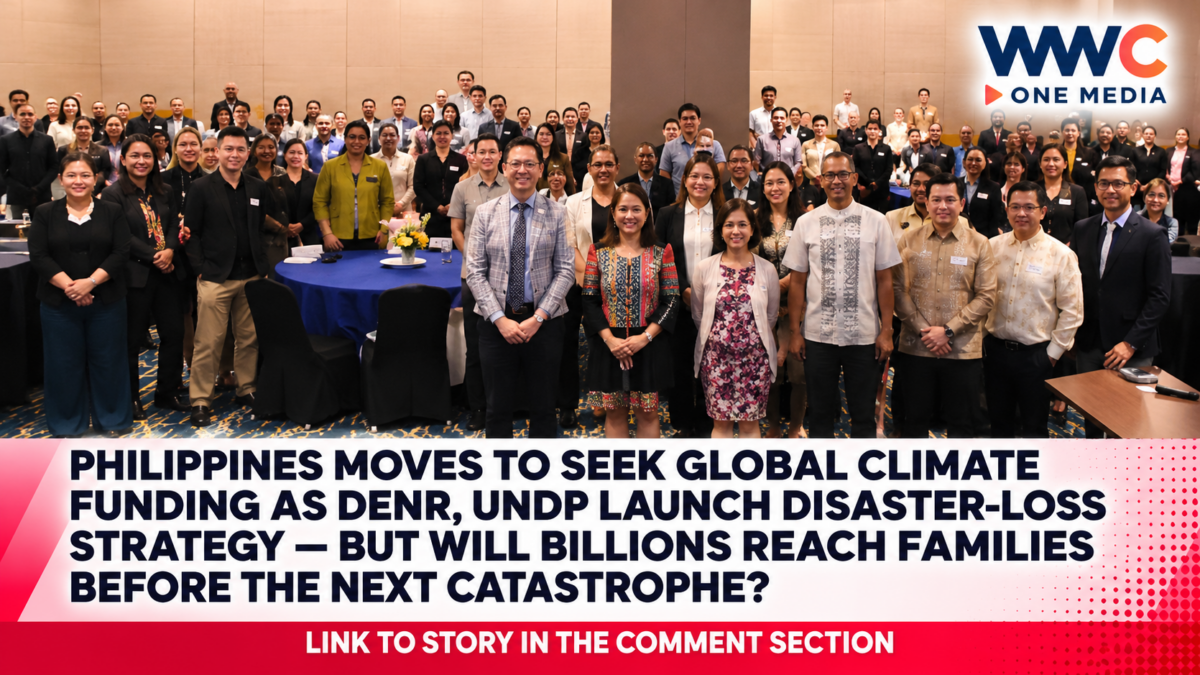
The Department of Environment and Natural Resources (DENR), Climate Change Commission (CCC) and United Nations Development Programme (UNDP) Philippines are working together on a National Climate-related Loss and Damage Framework and Strategy.
Announced on November 7, the initiative seeks to coordinate government agencies and international development partners, improve access to climate financing and provide more effective support to communities facing environmental disasters.
The programme comes as the Philippines strengthens its position in international climate negotiations and serves as host of the governing board of the global Fund for Responding to Loss and Damage.
But there is a crucial distinction.
The government has announced a plan to improve access to assistance—not a newly approved multibillion-peso compensation package for disaster victims.
For families who have repeatedly lost homes, farms and businesses to extreme weather, the central question is whether another national framework can produce tangible help before the next catastrophe.
DENR, Climate Change Commission and UNDP Join Forces
Environment Secretary Juan Miguel Cuna said the Philippines needs a stronger response to climate impacts that go beyond communities’ ability to adapt.
These include typhoon-damaged homes, devastated farms, disrupted livelihoods and other losses that may take years to recover from.
Some consequences cannot be fully measured in pesos.
Families may lose ancestral homes, communities may be displaced and important cultural or environmental resources may disappear.
The proposed strategy will guide how government agencies, development partners and other stakeholders work together to address these challenges.
Its principal objectives include improving coordination, identifying gaps in assistance, strengthening access to climate finance and building more reliable information systems.
The initiative also seeks to ensure that support is directed toward people and communities most affected by climate-related disasters.
But the effectiveness of the framework will depend on its eventual implementation.
What Is Climate-Related Loss and Damage?
Climate-related loss and damage refers to harmful consequences of climate change that are not prevented or fully addressed through mitigation and adaptation.
Mitigation involves reducing greenhouse gas emissions to limit future warming.
Adaptation includes measures such as stronger infrastructure, improved flood defenses, drought-resistant crops and more effective early-warning systems.
Loss and damage concerns consequences that still occur despite efforts to reduce risks.
For example, a community may build stronger flood protection but still suffer extensive destruction during an exceptionally severe storm.
A farmer may change planting methods yet lose an entire harvest during prolonged drought.
A coastal village may experience permanent land loss associated with rising sea levels.
Some losses can be assigned monetary values.
Others, including cultural heritage and community identity, are much harder to quantify.
That makes loss and damage a complex policy issue involving disaster recovery, economic planning, environmental protection and social justice.
A New Coordination Group Will Bring Government Agencies Together
The government has convened the first meeting of the Development Partners Coordination Group on Climate-related Loss and Damage.
The group is co-chaired by DENR, CCC and UNDP Philippines.
It is intended to align technical support, financing and institutional assistance with national priorities.
Participating agencies include the Department of Economy, Planning, and Development; Office of Civil Defense; Department of Social Welfare and Development; Department of Science and Technology; Department of the Interior and Local Government; Department of Agriculture; and National Commission on Indigenous Peoples.
The arrangement recognizes that disaster losses cannot be handled by one department alone.
Farm losses require agricultural expertise.
Destroyed homes and infrastructure require recovery planning.
Displaced families need social protection.
Local governments need reliable information, technical capacity and funding.
The goal is to reduce overlapping programmes and address gaps that leave vulnerable communities without adequate support.
International Organizations Will Lead Specialized Workstreams
Additional reporting by Context.ph and The Manila Times identified two principal groups of workstreams.
One focuses on sector-specific needs and local implementation, involving the International Organization for Migration, Food and Agriculture Organization and UNDP.
The other focuses on institutional systems and capacity-building, involving Germany’s development agency GIZ, UN-Habitat and UNDP.
These arrangements are intended to support policy development, financing solutions, local programmes and stronger institutions.
The approach could help government agencies produce more consistent assessments of climate-related damage.
For example, agricultural losses, displacement and infrastructure destruction may currently be recorded through different administrative systems.
A coordinated framework could make those assessments easier to compare and use when preparing funding proposals.
However, the government has not announced a completed nationwide compensation formula or a specific date when disaster-affected households will receive payments under the new framework.
Why the Philippines Wants Greater Access to Global Climate Funding
The Philippines faces major climate risks despite accounting for a relatively small share of historical global greenhouse gas emissions.
That imbalance has made climate justice a recurring priority in Philippine international diplomacy.
The country has argued that developing nations facing severe climate impacts require greater financial and technical support.
In 2024, the Philippines was selected to host the governing board of the global Fund for Responding to Loss and Damage.
The fund was established through international climate negotiations to help particularly vulnerable developing countries respond to climate-related losses.
The Philippines subsequently enacted legislation recognizing the board’s legal capacity and signed a host-country agreement.
Hosting the board gives the country an important administrative and diplomatic role.
But it does not mean the Philippines controls the fund, owns its resources or automatically receives a particular allocation.
Funding decisions remain subject to the fund’s governance arrangements, eligibility requirements and approval procedures.
The proposed national framework could help Philippine institutions better identify priorities and prepare credible financing proposals.
Climate Finance Must Move Beyond International Promises
At a July 2026 meeting of the global fund’s board in Metro Manila, Environment Secretary Cuna called for faster progress in delivering support to climate-vulnerable countries.
The discussions reflected a persistent international challenge.
Creating a fund is only the first step.
Resources must be mobilized, projects assessed and assistance distributed effectively.
A November 2026 analysis published by the University of the Philippines College of Law also examined concerns about whether available funding would be sufficient to address mounting climate losses.
The analysis raised questions about how global contributions should be shared among countries with different historical emissions and financial capacities.
These are important considerations for the Philippines.
A national framework may strengthen access to international support.
But financing cannot be treated as guaranteed until funding commitments and project approvals are confirmed.
For disaster-affected communities, the real test will be whether assistance is timely, transparent and appropriate to their needs.
Drought-Stricken Farmers Show Why the Framework Matters
The Philippines is already confronting climate-related pressures on agriculture.
Prolonged dry conditions associated with El Niño have damaged crops and disrupted livelihoods in several regions.
As WWC ONE MEDIA reported in its November 4 investigation of Davao farmers’ El Niño losses, authorities had recorded approximately ₱584.68 million in agricultural damage affecting 6,205 farmers and 6,634 hectares.
Those figures reflect a particular regional assessment, not total national climate losses.
They nevertheless illustrate why accurate damage documentation matters.
Farmers need timely assistance, but officials must first determine who has been affected, what was lost and which programmes apply.
A stronger national system could potentially help coordinate agricultural assessments with recovery financing.
It would not replace existing government relief or crop insurance programmes.
Nor would every El Niño-related loss automatically qualify for compensation from an international climate fund.
Eligibility would depend on applicable rules and evidence.
Water Shortages Reveal Another Growing Threat
Climate-related losses are not limited to damaged crops.
Communities can also face shortages of safe and reliable water.
As WWC ONE MEDIA reported on emergency water rationing in Manay, Davao Oriental, local officials have been delivering water to affected residents while assessing alternative supplies.
The situation demonstrates how prolonged dry conditions can disrupt essential services.
Water scarcity affects households, sanitation, agriculture and local businesses.
It can also increase the financial burden on families that need to purchase or transport water.
A coordinated loss-and-damage framework could help identify these wider social and economic impacts.
But individual climate events require careful assessment.
Not every water shortage can be attributed solely to human-caused climate change, and each locality may face additional infrastructure and management challenges.
Up to 85 Provinces Have Faced Forecast Dry-Condition Risks
The scale of potential climate exposure is particularly concerning.
As WWC ONE MEDIA reported in its analysis of PAGASA’s El Niño outlook, forecasts identified up to 85 provinces that could experience dry conditions, dry spells or drought over different periods through March 2027.
That is a forecast risk, not confirmation that every province is simultaneously experiencing severe drought.
For national planners, however, the warning highlights the need to prepare across multiple sectors.
Water shortages can affect irrigation.
Weaker harvests may threaten agricultural earnings.
Higher temperatures may increase demand for electricity.
The combined consequences can extend into food security, public health and household finances.
That interconnected risk is precisely why the DENR, CCC and UNDP are pursuing a multiagency approach.
Climate Recovery Must Also Protect Workers and Livelihoods
Climate disasters can interrupt employment even when they do not directly destroy homes.
Farmworkers may lose income when crops fail.
Transport operators may face road closures.
Small businesses can be forced to suspend operations following floods or water shortages.
As WWC ONE MEDIA reported when a labor group called for an updated national El Niño response plan, the effects of prolonged dry weather may extend beyond agriculture into food prices, employment and essential services.
A national loss-and-damage strategy should therefore consider households whose livelihoods are disrupted indirectly.
That may involve better socioeconomic assessments and coordination among local governments and national agencies.
But the new initiative has not established a universal income-replacement benefit for all workers affected by climate events.
Such a measure would require separate policy and funding decisions.
Philippines Strengthens Its Climate Commitment Ahead of COP31
The new loss-and-damage initiative comes alongside another major climate policy development.
On November 6, UNDP announced that the Philippines had submitted its updated 2026 Nationally Determined Contribution under the Paris Agreement.
The country committed to a 75% net reduction and/or avoidance of projected cumulative greenhouse gas emissions for 2025–2035, measured against a business-as-usual scenario.
Of that target, 7 percentage points are unconditional and intended to be pursued primarily through domestic resources.
The remaining 68 percentage points depend on international financing, technology and capacity-building.
The updated commitment covers energy, transport, agriculture, waste, industrial processes and product use, and forestry and other land use.
The strategy includes clearer measures for implementation and greater attention to adaptation and social inclusion.
It also comes ahead of COP31, scheduled to begin on November 9 in Antalya, Türkiye.
But mitigation commitments and loss-and-damage finance address different challenges.
Reducing emissions helps limit future climate risks.
Loss-and-damage policies address harm that has already occurred or cannot be fully avoided.
Both are needed.
Will Vulnerable Communities Actually Receive Support?
The most important question concerns implementation.
Government agencies and international partners must establish how the new strategy will identify affected communities, measure losses and determine priorities.
Local governments will need technical support to document damage consistently.
Communities should be able to understand the programmes available to them and how assistance decisions are made.
Transparency will be essential, particularly where funds come from different national and international sources.
A credible framework should also consider vulnerable groups, including low-income families, Indigenous Peoples, persons with disabilities and people living in disaster-prone coastal or agricultural areas.
The aim is not simply to produce another national planning document.
It is to improve the government’s capacity to respond when prevention and adaptation measures are no longer enough.
Yet the November 7 announcement does not include an approved implementation budget, household payment schedule or final set of eligibility criteria.
Those details remain to be developed.
The Bigger Challenge: Turning Climate Justice Into Real Recovery
For the Philippines, the new initiative represents an opportunity to connect international climate diplomacy with domestic needs.
The country has advocated stronger global support for nations facing severe climate impacts.
It also hosts the governing board of the international loss-and-damage fund.
The next challenge is translating those roles into practical programmes.
That will require accurate climate data, effective institutions, transparent financing and coordination with local communities.
International assistance can supplement domestic resources.
But it cannot replace sound land-use planning, disaster preparedness, environmental protection and accountable public spending.
Recovery efforts must also recognize that some losses cannot be completely reversed.
Rebuilding a house does not necessarily restore a lost livelihood.
Replacing infrastructure cannot fully compensate for cultural heritage or the displacement of an entire community.
The new strategy therefore needs to address both financial damage and less tangible human consequences.
The Bottom Line: A New Climate Strategy, but No Guaranteed Payout Yet
The DENR, Climate Change Commission and UNDP Philippines are developing a national framework for climate-related loss and damage.
The initiative aims to improve coordination, strengthen climate financing, support local implementation and protect communities suffering from disasters and long-term environmental changes.
A new coordination group has begun organizing government agencies and development partners.
The programme could also strengthen the Philippines’ ability to engage with the global Fund for Responding to Loss and Damage.
However, no specific national compensation package has been approved under the announcement.
No confirmed amount has been allocated directly to Filipino households through the proposed framework.
The government’s next challenge is ensuring that the strategy produces measurable improvements in disaster recovery and financial support.
And as stronger typhoons, devastating floods and prolonged droughts threaten the homes and livelihoods of millions of Filipinos, one question now confronts the Marcos administration and its international partners: Will the Philippines finally turn climate-finance promises into meaningful protection for vulnerable communities—or will families still be waiting for help when the next disaster strikes?