HONG KONG / MANILA, PHILIPPINES — November 7, 2026 | WWC ONE MEDIA | Global Lifestyle, Food, Travel and Restaurant Business
British pub food is undergoing a sophisticated transformation in the heart of Hong Kong, where a new two-storey gastropub is challenging the idea that classic comfort dishes belong exclusively in casual neighborhood bars.
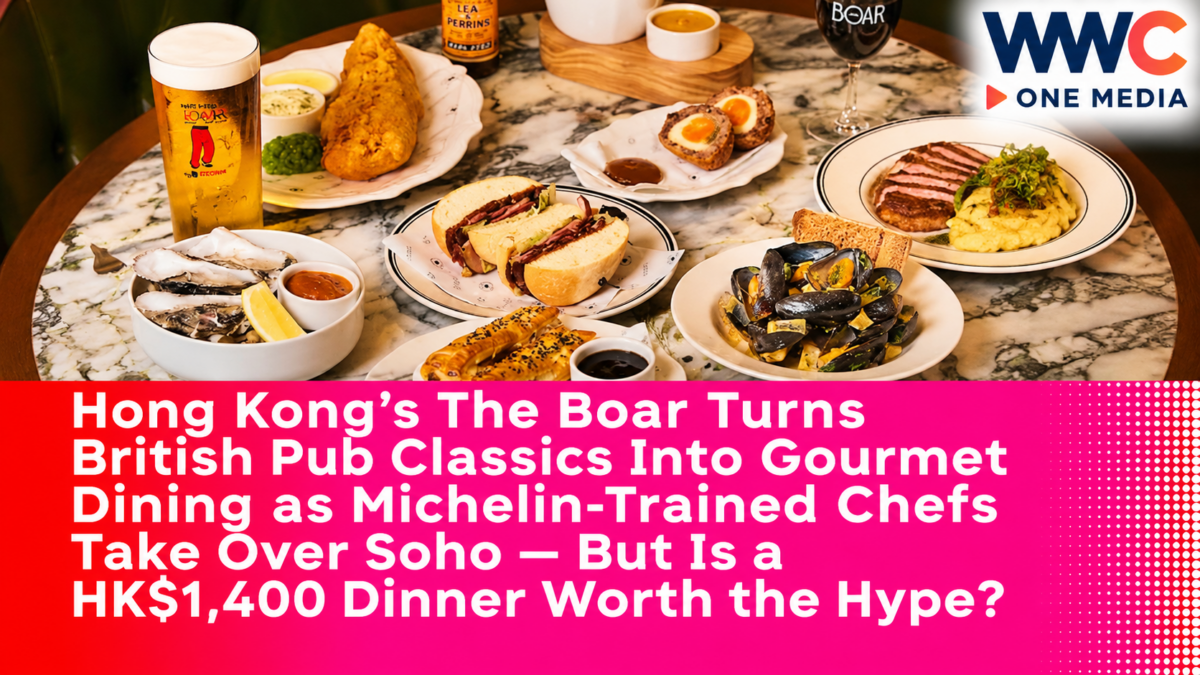
The Boar, located at 55 Elgin Street in Soho, is blending traditional British cooking with fine-dining techniques, turning familiar favorites such as Scotch eggs, fish and chips, Sunday roasts and sticky toffee pudding into the foundation of a more ambitious restaurant experience.
The venue opened on September 1, 2026, and has already attracted attention from Hong Kong’s food publications, including Bloomberg, the South China Morning Post, Tatler Asia, Time Out and Foodie.
Its formula is built around two different dining experiences.
Downstairs, guests enter a lively British public house serving familiar dishes and casual meals.
Upstairs, a more intimate dining room offers seasonal cooking developed by chefs with experience in prominent Michelin-starred restaurants.
The project comes from Big Top Hospitality, the restaurant group behind established Hong Kong venues including Bourke’s, Honky Tonks Tavern, Twist Pasta Bar and Terracotta Lamma.
The Boar’s ambition is straightforward: demonstrate that British pub cooking can be comforting, technically accomplished and worthy of serious attention from food enthusiasts.
But that ambition comes with a price.
A November 2 review by Foodie estimated that dinner for two in the upstairs dining room could cost approximately HK$1,200 to HK$1,400, depending on the order.
That places the restaurant’s more elaborate experience well above the price of an ordinary neighborhood pub meal.
As The Boar attracts attention for its blend of familiar flavors and refined techniques, the biggest question is whether diners will embrace upscale British comfort food—or decide that the best pub meals should remain simple and affordable.
The Boar Brings a Traditional British Public House to Hong Kong
The Boar was created by British restaurateur Matt Richardson, founder and managing director of Big Top Hospitality.
Richardson, originally from Milton Keynes in England, has lived in Hong Kong for several years and developed a portfolio of dining establishments across the city.
His latest venture is particularly personal.
Rather than building another restaurant around an international trend, Richardson wanted to recreate elements of the British public-house experience.
That includes a welcoming atmosphere, familiar food, an emphasis on well-prepared drinks and a setting where people can spend time talking with friends.
The name also connects the United Kingdom and Hong Kong.
Wild boars are found in both places, giving the restaurant a recognizable symbol that reflects Richardson’s British background and his adopted home.
The venue occupies two floors on Elgin Street, an established dining destination in Central’s Soho neighborhood.
Its ground-floor public house is designed for casual visits, while the upstairs dining room offers a quieter experience focused on food.
Michelin-Trained Chefs Bring Fine-Dining Skills to Pub Classics
One of The Boar’s strongest selling points is its culinary team.
Executive chef Graham Long has worked in respected London kitchens, including Gordon Ramsay at Claridge’s and Pied à Terre.
Head chef Jake Bennett has experience in restaurants associated with British chef Simon Rogan, including the acclaimed L’Enclume in England’s Lake District.
Bennett also worked at The Baker and The Bottleman in Hong Kong.
Their combined backgrounds give the restaurant an opportunity to approach traditional pub dishes with techniques more commonly associated with fine dining.
But the kitchen is not simply attempting to make every dish elaborate.
Its stated approach emphasizes seasonal ingredients, careful preparation and familiar flavors.
Foodie’s November 2 review highlighted the restaurant’s use of locally sourced produce alongside recognizable British ingredients.
The kitchen also prepares numerous components in-house, including condiments.
That attention to detail helps distinguish its food from more conventional pub menus.
However, culinary credentials are not a substitute for consistency.
A restaurant’s long-term reputation depends on how well dishes are prepared and served across repeated visits, not solely on where its chefs previously worked.
Scotch Eggs and Fish and Chips Lead the Downstairs Menu
The public-house menu concentrates on dishes familiar to British diners.
Among the highlights are Scotch eggs, Welsh rarebit, prawn cocktail toast, loaded jacket potatoes and beer-battered cod and chips.
Published menu prices have included:
- Scotch egg — HK$98
- Welsh rarebit — HK$88
- Beer-battered cod and chips — HK$228
- Sticky toffee pudding — HK$88
These prices come from contemporary dining coverage and may change.
The Scotch egg is particularly representative of The Boar’s approach.
The restaurant’s version incorporates black pudding and house-made brown sauce, giving a traditional dish a richer flavor profile.
Welsh rarebit provides another example of recognizable British comfort food, built around a savory cheese-based preparation served with bread.
Fish and chips remains a central part of the menu, reflecting the restaurant’s interest in making familiar classics carefully rather than abandoning them for more fashionable dishes.
The approach may appeal to expatriates seeking nostalgic flavors as well as local diners interested in exploring British cuisine.
Upstairs, the Menu Becomes More Ambitious
The Boar’s first-floor dining room offers a different experience.
Rather than concentrating on quick pub meals, it presents a smaller selection of seasonal dishes designed for a longer dinner.
Foodie’s independent review highlighted cured sea trout, slow-roasted carrots, celeriac and mushroom Wellington, and roasted rack of lamb.
The cured sea trout, listed at HK$218, combined smoked fish with horseradish cream and pickled cucumber.
A slow-roasted carrot starter, priced at HK$198, brought together hazelnuts, chicory, Branston Pickle and goat curd.
Those combinations demonstrate the kitchen’s focus on contrasts in flavor and texture.
For the main course, the celeriac and mushroom Wellington offered a meat-free interpretation of a traditional British dish.
The roasted rack of lamb, listed at HK$428, used Australian lamb with a rich preparation and redcurrant sauce.
The reviewer’s assessment was favorable, particularly toward the seasonal vegetables and lamb.
But those comments represent Foodie’s own dining experience rather than an independently established consensus about every dish.
A HK$788 Dry-Aged Duck Demonstrates the Restaurant’s Ambition
Among the more elaborate dishes associated with The Boar is a roasted 14-day dry-aged duck.
Earlier menu coverage listed the preparation at HK$788.
Sassy Hong Kong described a preparation involving repeated blanching, dry-aging and a honey-vinegar glaze before roasting.
Dry-aging is a technique used to develop flavor and modify the texture of certain meats.
It also requires careful temperature control and handling.
The inclusion of such a dish illustrates why The Boar’s upstairs menu is positioned differently from ordinary pub food.
The restaurant is combining British culinary traditions with more labor-intensive preparation.
Other published dishes have included pork cheek and lobster pie and terrines featuring premium ingredients.
However, menu items are seasonal and may not always be available.
The HK$788 duck should therefore be treated as a documented menu example, not a guarantee that the dish is offered every night.
Can Comfort Food Justify Fine-Dining Prices?
The Boar’s two dining formats raise an important question about value.
Downstairs, customers can order familiar British dishes at individual menu prices.
Upstairs, dinner can become substantially more expensive depending on the dishes selected.
Foodie estimated HK$1,200 to HK$1,400 for two diners in the first-floor restaurant.
That figure is not a mandatory set-menu charge.
It reflects an estimated total based on the dining experience reviewed.
For some guests, the additional expense may be justified by ingredients, preparation, service and the dining-room atmosphere.
Others may prefer the lower-key public-house experience.
The distinction matters because upscale restaurants compete on more than flavor.
Customers also assess portion sizes, service, presentation, comfort and whether the overall meal feels worth the price.
WWC ONE MEDIA explored this challenge in Fine Dining Is Chasing “World’s Best” Rankings While Diners Chase Value — But the Prestige Race May Be Breaking the Restaurant Model.
That analysis examined the growing tension between culinary prestige and customers’ expectations of value.
The Boar offers an interesting alternative by combining an accessible pub atmosphere with a more elaborate upstairs restaurant.
Whether the model succeeds commercially will depend on its ability to attract repeat customers.
British Desserts Keep the Comfort-Food Tradition Alive
Dessert provides another connection to traditional British cooking.
Sticky toffee pudding, one of the restaurant’s signature offerings, has been listed at HK$88.
The dish features a rich sponge dessert with a sweet toffee-style sauce.
The restaurant’s version uses black treacle butterscotch sauce.
Foodie also reviewed a strawberry trifle priced at HK$98.
Its preparation included elderflower cream, almond sponge and vanilla custard.
These desserts reinforce the restaurant’s identity.
Rather than relying exclusively on unusual ingredients, the kitchen builds its menu around recognizable dishes associated with British home cooking.
The techniques and presentation may be refined, but the underlying flavor combinations are intended to remain familiar.
That combination of nostalgia and culinary ambition is central to The Boar’s appeal.
The Restaurant Wants Conversation, Not Television Screens
The Boar’s concept extends beyond the food.
Its ground-floor space features an elegant wooden bar, traditional pub-inspired furnishings and an emphasis on social interaction.
Cathay Pacific’s November restaurant guide highlighted the absence of television screens.
Instead of organizing the experience around televised sports or other entertainment, the venue encourages guests to focus on conversation.
That detail helps explain the restaurant’s positioning.
The Boar is not simply trying to recreate the appearance of a British bar.
It wants to offer the social experience associated with a neighborhood public house.
Richardson also spent time in Dublin studying the preparation and service of Guinness before the restaurant opened.
The venue’s beverage program includes local and international beers, alongside other drinks.
For visitors more interested in dining than drinking, the restaurant also offers lunch and Sunday roast options.
The combination gives customers several reasons to visit throughout the week.
Hong Kong’s Dining Scene Is Embracing New Interpretations of Comfort Food
The Boar is part of a broader shift in Hong Kong’s restaurant industry.
Chefs are increasingly reinterpreting familiar dishes using techniques associated with higher-end cooking.
The trend extends well beyond British cuisine.
WWC ONE MEDIA recently examined a comparable concept in Hong Kong’s YuSang Reinvents Korean Comfort Food With Luxury Twists — But Is a HK$1,400 Dinner Worth the Hype?.
YuSang takes recognizable Korean dishes and adds premium ingredients, contemporary presentation and an upscale dining format.
The Boar follows a different culinary tradition but faces a similar challenge.
Both restaurants must demonstrate that the additional preparation, ingredients and experience justify their prices.
For Hong Kong diners, the result is greater variety.
But novelty does not automatically guarantee customer loyalty.
Restaurants need to deliver consistency, hospitality and value after the initial publicity fades.
Michelin Experience Does Not Mean The Boar Has a Michelin Star
The restaurant’s chefs bring considerable experience from renowned dining establishments.
However, the distinction between a chef’s professional background and a restaurant’s own awards is important.
The Boar should not be described as Michelin-starred simply because members of its kitchen team previously worked in Michelin-recognized restaurants.
No Michelin Star for The Boar was confirmed in the sources reviewed.
The distinction also matters for readers comparing culinary recognition across Asia.
WWC ONE MEDIA previously reported on Taipei’s Mume Regains Michelin Star — Then Takes Taiwanese Indigenous Cuisine in a Bold New Direction.
That restaurant’s recognition belongs to the establishment itself, under the relevant Michelin Guide selection.
For The Boar, the documented story is its chefs’ experience, critical attention and distinctive British pub concept—not a Michelin award it has not been shown to hold.
Why This Trend Matters to Philippine Restaurants
The Boar’s approach also offers useful context for the Philippine dining industry.
Filipino cuisine includes many familiar comfort dishes that chefs are increasingly reinterpreting through contemporary techniques.
Restaurants can attract attention by elevating traditional flavors while preserving the qualities diners recognize.
But the business challenge remains the same: customers must believe the experience delivers sufficient value.
WWC ONE MEDIA examined the growing sophistication of regional dining in Cebu Restaurants Earn Michelin Guide 2027 Recognition as 20 Establishments Make the List — See the Complete Lineup.
The report highlighted the range of restaurants receiving international recognition, from traditional local food establishments to contemporary concepts.
The Boar’s business model is not directly connected to those Philippine restaurants.
Nevertheless, it illustrates how familiar food traditions can support different levels of dining experience.
Premium presentation is one approach.
Accessible prices, strong flavors and reliable hospitality are others.
Successful restaurants must understand which combination their customers actually want.
What Visitors Should Know Before Dining at The Boar
The Boar is located at 55 Elgin Street, Soho, Central, Hong Kong.
The ground-floor public house is open daily from noon until late, according to its official website.
Its weekday lunch set runs from noon to 2:30 p.m., while the restaurant lists a weekday happy hour from 3 p.m. to 7 p.m.
A traditional Sunday roast is offered from noon to 2:30 p.m.
The upstairs dining room is listed as open Thursday through Saturday evenings from 6 p.m.
Customers should check the current schedule before visiting, particularly when booking the upstairs experience.
The restaurant’s official contact number is +852 5681 8894.
Reservations can be arranged through its website.
For diners budgeting a visit, published examples range from HK$88 desserts to more elaborate main dishes costing several hundred Hong Kong dollars.
The upstairs price guide of HK$1,200–HK$1,400 for two comes from Foodie’s review and is not a fixed package price.
Guests should verify current menus, service charges and availability directly with the restaurant.
The Bigger Question: Can The Boar Make British Pub Food a Serious Culinary Attraction?
The Boar is offering Hong Kong diners an unusual combination.
Its ground floor celebrates traditional pub culture with familiar dishes, a welcoming atmosphere and a strong sense of British identity.
Upstairs, chefs with experience in respected fine-dining kitchens are turning seasonal ingredients into more elaborate interpretations of classic food.
The restaurant’s opening has attracted attention from several major dining publications.
Its menu demonstrates that British cooking can be more varied than the stereotypes often associated with pub food.
But recognition and ambition are only the beginning.
The restaurant must maintain quality, manage costs and persuade guests to return.
The central challenge is balancing two expectations: the simplicity associated with comfort food and the craftsmanship expected from a premium restaurant.
For some diners, The Boar’s appeal will be an excellent Scotch egg or a plate of fish and chips.
For others, it will be a sophisticated dinner featuring seasonal vegetables, carefully prepared meat and traditional desserts.
As The Boar brings Michelin-trained chefs, dry-aged duck and refined British classics to Hong Kong’s Soho dining scene, one question could define its future: Will this ambitious gastropub prove that traditional British comfort food deserves a place among the city’s most exciting restaurants—or will diners decide that a truly great pub meal should never need a fine-dining price tag?