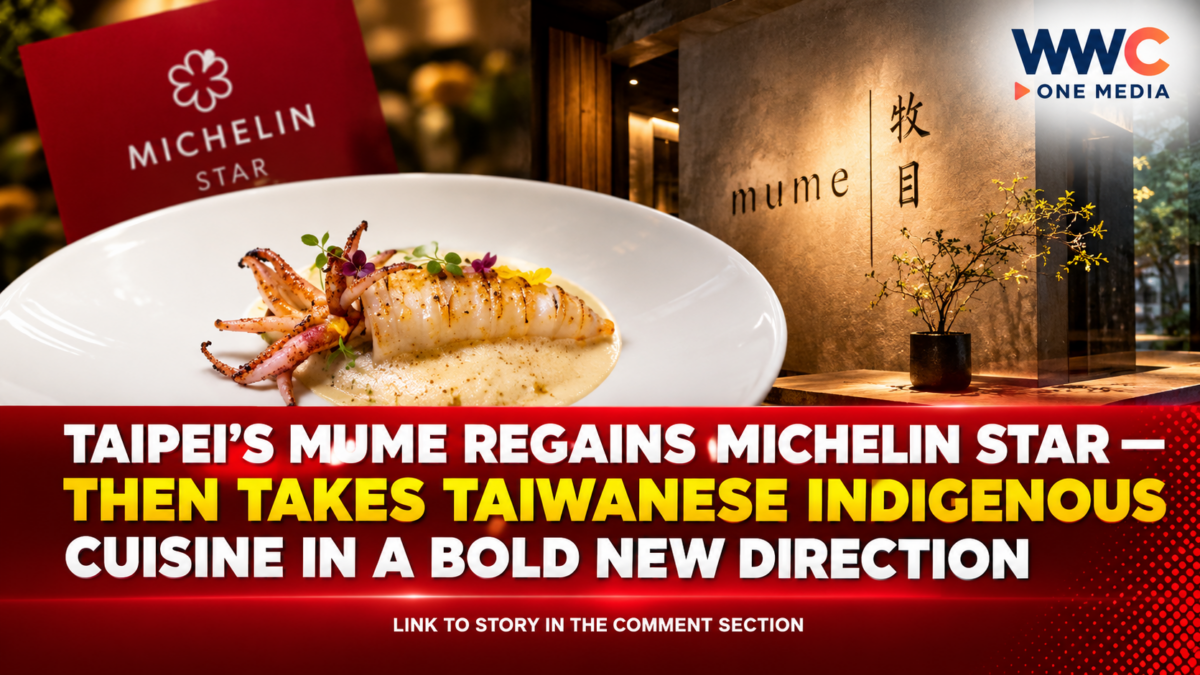
A decade after opening its doors, Taipei fine-dining restaurant Mume is entering a new chapter — one that looks beyond modern European techniques and deeper into Taiwan’s Indigenous culinary heritage.
The restaurant, founded in 2014, regained its Michelin star in 2026 after a five-year absence, marking a major milestone as its team explores how native ingredients and Austronesian food traditions can shape its identity for the years ahead.
From Fine Dining to Taiwan’s Indigenous Food Heritage
Mume’s culinary team, led by Culinary Director Kai Ward, has been exploring Indigenous food traditions in communities across Hualien, Yilan and Taichung.
Rather than simply adding unfamiliar ingredients to sophisticated dishes, Ward said the team has focused on understanding the cultural context, traditions and rituals connected to the foods.
The exploration has involved conversations with farmers, fishermen and scholars, giving the restaurant a closer look at ingredients and food practices that have historically been less accessible to fine-dining kitchens.
Ward, who is Australian, said his own familiarity with Indigenous culture in Australia has contributed to his interest in Taiwan’s native food traditions.
Indigenous Ingredients Meet Modern Techniques
Mume’s latest summer menu transforms those influences through contemporary culinary techniques.
The meal begins with a bite inspired by a traditional Indigenous millet donut, paired with fermented tofu and maitake mushrooms.
Seafood courses include Yilan blush prawns with pomelo and Matsu mussels with sweet summer bamboo shoots and lardo.
Other dishes feature leopard coral grouper with chayote shoots, daylilies and lily bulbs, while squid is paired with Penghu XO sauce and water bamboo.
The main course combines Wagyu strip loin with white water snowflake greens and preserved green chili. The accompanying rice incorporates Tainan No. 11 rice, prickly ash, chicken fat, celery and a cold-extracted shiitake broth.
Dessert continues the Indigenous-inspired theme, pairing millet koji with Eureka lemon and bee pollen.
Even the Tableware Tells a Story
The concept extends beyond what’s placed on the plate.
Mume has incorporated hand-woven bamboo cups, locally made ceramics and custom knives into the dining experience, reflecting the restaurant’s broader attempt to connect food with Taiwanese craftsmanship and cultural traditions.
The team has also reinterpreted Paolyta, a familiar Taiwanese tonic drink, as a nonalcoholic, caffeine-free gummy for selected guests — a playful reference to elements of local working-class and Indigenous culture.
A New Chapter After a Decade
For Mume, the renewed Michelin recognition comes at a significant point in its history.
After 10 years of operation, the restaurant is using its international fine-dining platform to investigate what makes Taiwanese cuisine distinctive — not simply by reproducing traditional dishes, but by examining the ingredients, techniques and cultural stories behind them.
That approach has led the restaurant toward Indigenous and Austronesian culinary heritage, giving its next chapter a distinctly Taiwan-focused direction.
Mume’s evolution reflects a broader question facing contemporary Taiwanese cuisine: How can local culinary traditions be presented to the world without losing the cultural meaning behind them?
And with its Michelin star back and Indigenous ingredients taking center stage, Mume appears ready to explore that question one plate at a time.
WWC ONE MEDIA G,A