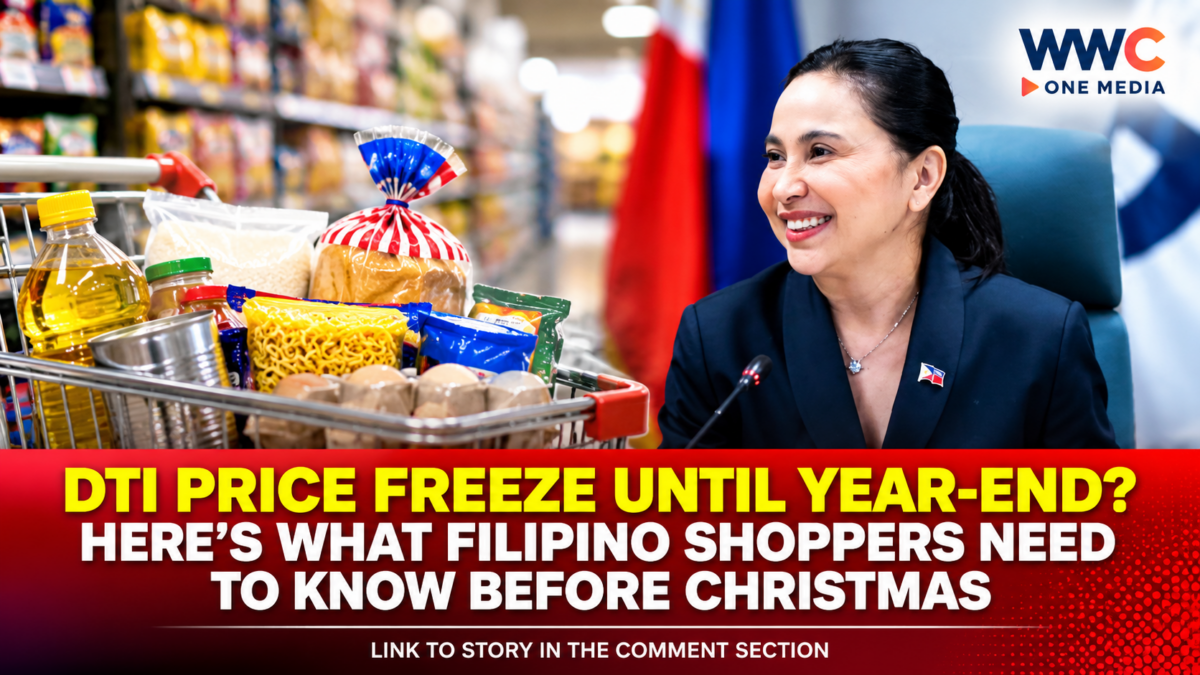
MANILA, Philippines — Filipino consumers are getting fresh assurances that prices of basic necessities and prime commodities will remain stable as the country approaches the holiday season, with the Department of Trade and Industry (DTI) intensifying its coordination with manufacturers and retailers to help prevent unnecessary price increases.
The latest developments come as the government seeks to protect household budgets amid concerns about inflation, supply disruptions and the potential effects of the approaching El Niño conditions.
In an October 19 report by the Philippine Information Agency, President Ferdinand Marcos Jr. instructed the DTI to take the necessary steps to keep prices stable as the country prepares for the expected impact of Super El Niño. Trade Secretary Ma. Cristina Roque said the government was coordinating closely with manufacturers and retailers to maintain adequate supplies.
The latest assurance follows earlier reports that the administration had directed the DTI to maintain stable prices of basic goods through the end of 2025. That earlier directive, however, should not automatically be interpreted as a new blanket price freeze for every product in 2026.
Which basic goods are being monitored?
The DTI monitors selected basic necessities and prime commodities, including products commonly purchased by Filipino households.
These include:
- Canned sardines and canned meat
- Coffee and processed milk
- Instant noodles and bread
- Bottled drinking water
- Salt and condiments
- Laundry soap and toilet soap
- Candles and other covered household necessities
According to The Philippine Star on October 21, Roque said prices of candles and other basic goods remained stable ahead of All Saints’ Day and All Souls’ Day. The agency had also not received requests for price adjustments at that time.
The DTI planned to meet with manufacturers and inspect selected production facilities to check inventories and ensure sufficient supply.
Does a price freeze mean all products cannot become more expensive?
Not necessarily. Consumers should distinguish between an agreement to maintain prices, the DTI’s suggested retail prices (SRPs), and a legally imposed price freeze or price ceiling.
Under Republic Act No. 7581, or the Price Act, the government has mechanisms to protect consumers against unreasonable price increases, hoarding and profiteering. The law also provides for automatic price control on basic necessities in areas placed under a state of calamity, subject to the law’s conditions and applicable duration.
Meanwhile, suggested retail prices serve as guides for consumers and businesses. Their existence does not, by itself, mean every retailer is legally prohibited from changing a product’s price.
The precise coverage of any price freeze therefore depends on the applicable government directive, the products included and whether a statutory price-control measure is in effect.
DTI keeps watch on supply amid El Niño concerns
The government’s price-monitoring efforts are also taking place as authorities prepare for possible water shortages and other disruptions associated with El Niño.
In its October 19 report, the Philippine Information Agency quoted Roque as saying that bottled-water supplies remained sufficient and that there was no immediate need to impose a separate price freeze on bottled water because prices were stable.
The DTI has also urged consumers not to panic-buy or hoard essential products while the government coordinates with suppliers to maintain market availability.
These developments highlight why price monitoring involves more than checking price tags: authorities must also assess manufacturers’ inventories, distribution and the availability of goods in retail outlets.
What should consumers do?
Filipino shoppers can protect their budgets by checking the DTI’s latest SRP bulletin, comparing prices across stores and keeping receipts for purchases.
Consumers who suspect overpricing or violations of an applicable price freeze can report the matter to the DTI through its official consumer-assistance channels. Reports should include the store’s location, product name, price displayed and receipt or other supporting evidence, when available.
For now, the government’s message is that monitored basic goods remain adequately supplied and prices are stable. Whether that stability continues through the Christmas season will depend on supply conditions, production costs, retailer compliance and any subsequent government action.
The bottom line: The DTI’s latest assurances offer some relief to Filipino families, but shoppers should check the current official price bulletin and the exact terms of any applicable price-control order before assuming every essential product is covered by a legally binding freeze.