JAKARTA, Indonesia — October 20, 2026
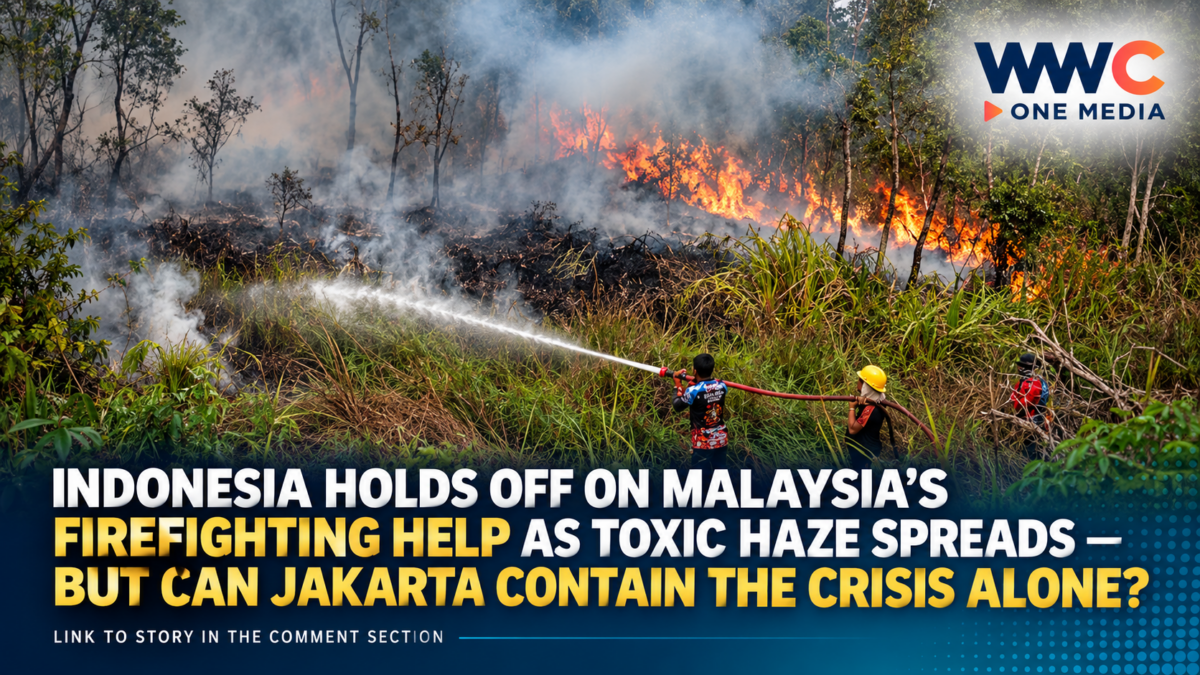
Indonesia is holding off on deploying foreign firefighting assistance despite escalating forest and land fires that have blanketed parts of Southeast Asia in hazardous smoke, raising fresh questions about whether Jakarta can contain one of the region’s most serious environmental emergencies without additional international support.
The decision comes as Malaysia and Singapore remain prepared to help fight fires that have ravaged parts of Indonesia, particularly Sumatra and Kalimantan, triggering serious air pollution, respiratory illnesses, school closures and flight disruptions.
Indonesia’s Coordinating Minister for Political and Security Affairs, Dudung Abdurachman, said on Monday, October 19, that the government still has sufficient domestic resources to tackle the fires and has not declared the situation a national disaster.
His comments suggest that while international assistance has received presidential approval in principle, its actual deployment remains subject to further government decisions and operational coordination.
Malaysia Offers Aircraft and Personnel — But Deployment Remains Uncertain
Malaysia has offered significant firefighting support, including a Bombardier CL-415MP water-bombing aircraft, three helicopters and a team of emergency personnel.
The offer dates back to September, when Malaysian Deputy Prime Minister Ahmad Zahid Hamidi discussed assistance with Indonesian President Prabowo Subianto.
At the time, Malaysian officials reported that Prabowo had welcomed the proposal.
However, Dudung’s latest remarks indicate that Indonesia is not yet ready to proceed with foreign deployments, arguing that technical challenges must also be considered before international teams can operate effectively.
The uncertainty has complicated regional cooperation, with Malaysia facing worsening air quality as smoke from Indonesia crosses national borders.
Malaysian Prime Minister Anwar Ibrahim has reiterated his country’s willingness to assist and proposed stronger ASEAN-wide cooperation to improve firefighting preparedness and responses to transboundary haze.
A Regional Haze Crisis With Hundreds of Thousands Falling Ill
The scale of the disaster is becoming increasingly difficult to ignore.
According to Reuters, more than 283,000 respiratory illness cases had been reported across seven Indonesian provinces as of mid-October, as prolonged drought and widespread fires drove pollution levels to dangerous extremes.
The crisis has also disrupted daily life, forced school closures and delayed nearly 2,000 flights across Indonesia.
The fires have spread through forested areas and carbon-rich peatlands, where flames can smoulder underground and become extremely difficult to extinguish.
Smoke has travelled beyond Indonesia, affecting Malaysia and Singapore and renewing concerns across Southeast Asia over the economic, environmental and public health consequences of recurring transboundary haze.
Why the Fires Are So Difficult to Stop
Scientists and environmental specialists have pointed to exceptionally dry conditions associated with a powerful El Niño event, which has intensified drought and increased the risk of rapidly spreading wildfires.
But weather is only part of the story.
Land clearing using fire, agricultural expansion, degraded peatlands and failures in environmental enforcement have contributed to recurring fire emergencies in Indonesia.
The Financial Times has reported that Indonesia is experiencing its worst fire season in approximately a decade, with extensive burned areas, damage to wildlife habitats and mounting pressure on communities living near the affected forests.
Authorities have responded with a massive firefighting operation involving approximately 60,000 personnel, aerial firefighting and weather-modification efforts.
However, the vast geography of the affected regions, limited access to remote fire zones and underground peat fires continue to complicate containment.
Singapore Steps Up Pressure as Regional Frustration Grows
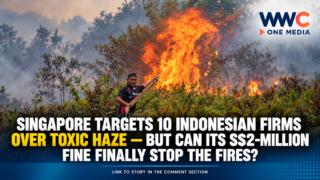
Singapore has also intensified its response to the haze, including regulatory action against companies suspected of links to fire-affected areas.
Under Singapore’s Transboundary Haze Pollution Act, companies can face enforcement measures if their activities contribute to haze pollution affecting the country.
Singaporean authorities have issued preventive notices to additional Indonesian companies, requiring action to prevent or extinguish fires and strengthen fire prevention plans. Such notices do not, by themselves, establish legal wrongdoing.
Senior Minister K. Shanmugam has acknowledged efforts by the Prabowo administration, including action against slash-and-burn practices and moves to strengthen Indonesia’s firefighting response.
The broader concern remains whether national enforcement and regional cooperation can deliver lasting results rather than another temporary response to a recurring disaster.
Can ASEAN Prevent the Next Haze Emergency?
The crisis is also testing the effectiveness of ASEAN’s regional framework for addressing transboundary haze pollution.
Indonesia, Malaysia and Singapore share an interest in preventing fires and protecting public health, but their ability to coordinate resources depends on timely decisions, diplomatic cooperation and effective enforcement.
For Malaysia and Singapore, the consequences extend beyond Indonesian territory. Smoke affects air quality, public health, schools, tourism and economic activity across national borders.
For Indonesia, the challenge is both immediate and long-term: extinguishing ongoing fires while tackling the agricultural practices, environmental degradation and enforcement weaknesses that allow similar emergencies to return.
As the region waits for sustained rainfall to help suppress the blazes, Indonesia’s decision to hold off on foreign assistance raises an increasingly urgent question.
Can Jakarta bring the fires under control using its own resources, or will the continuing spread of toxic haze force a more coordinated international response?
For millions of Southeast Asians breathing polluted air, the answer could determine how much longer the crisis continues.