SANGGAU, Indonesia — A prolonged drought driven by an exceptionally strong El Niño weather pattern is disrupting Indonesia’s palm oil industry, leaving thousands of smallholder farmers unable to sell their harvests as falling river levels prevent shipments from reaching processing mills.
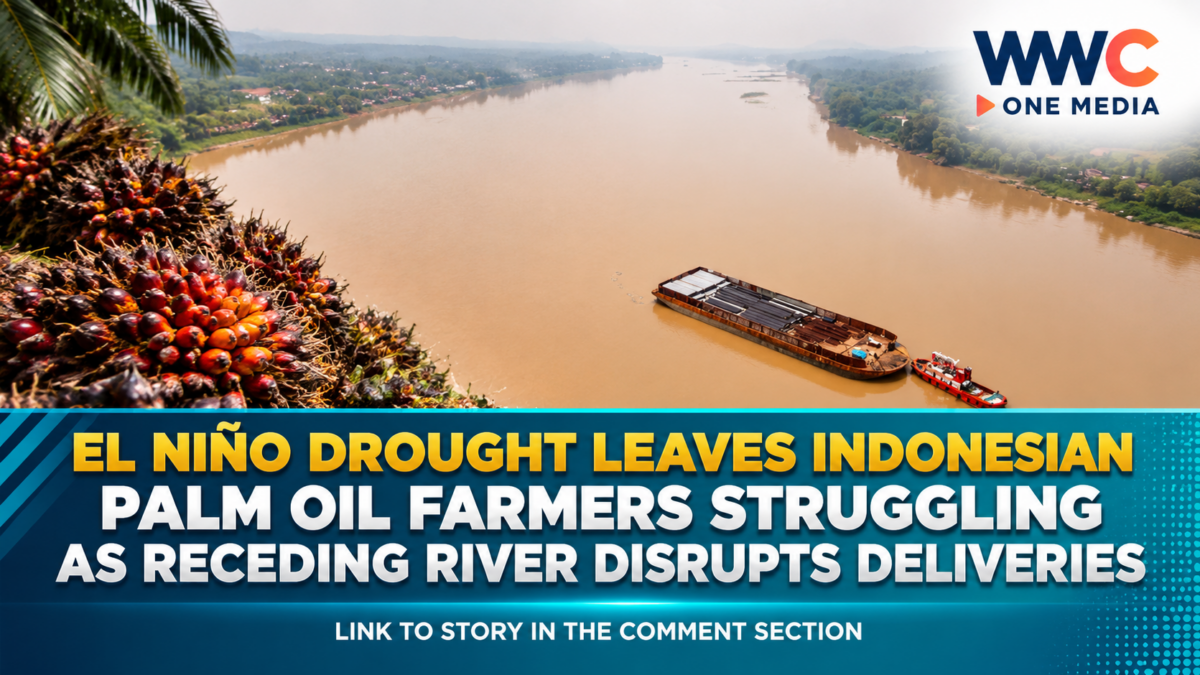
In West Kalimantan, the receding waters of the Kapuas River, Indonesia’s longest river, have caused sandbanks to emerge and left barges and tugboats stranded. The waterway is a crucial transport route for the province’s palm oil industry, carrying around 40 per cent of its output.
The disruption has forced mills to reduce purchases of fresh palm fruit bunches because their storage tanks are filling up with processed oil that cannot be transported to buyers.
Supendi, a 33-year-old palm fruit farmer, experienced the consequences firsthand earlier this month. He drove to a mill in Sanggau with seven tonnes of fruit harvested from his small farm and neighbouring plots, but after waiting four days, he was told the facility could not accept the delivery.
With his produce at risk of rotting, Supendi was left searching for another buyer.
West Kalimantan accounts for about 11 per cent of Indonesia’s palm oil production. Analysts estimate that output across Indonesian Borneo could decline by 12 per cent to 15 per cent in the fourth quarter because of the drought-related disruptions.
River Levels Disrupt a Critical Transport Route
The Kapuas River stretches approximately 1,143km and serves as a major transportation corridor for palm oil produced in West Kalimantan.
As water levels have fallen, exposed sandbanks have obstructed vessels carrying commodities. Although trucks offer an alternative, they transport smaller loads and are more expensive to operate.
Dian Kurniawan, a manager at the Multi Prima Entakai palm oil mill in Sanggau, said the facility had sharply reduced its purchases of fresh fruit bunches. Its purchases fell to 10,000 tonnes in September, compared with 30,000 tonnes processed in July.
By Oct 1, the mill was holding 8,200 tonnes of crude palm oil, close to its storage capacity of 8,500 tonnes.
Dian said shipments that previously moved efficiently by river were now taking longer by road. The mill could ordinarily transport 2,000 tonnes in four days by its usual method, but truck deliveries could reach only about 100 tonnes daily.
Road transport also costs approximately three times as much, adding to the financial pressure on producers and processors.
Farmers Face Falling Incomes and Rotting Crops
The transport bottleneck has hit smallholder farmers particularly hard because they depend on regular sales to cover household expenses and maintain their plantations.
Aris Supratman, who heads the West Kalimantan office of the Indonesian Palm Oil Association, estimated that 13 of the province’s 50 palm oil mills had been affected by the disruption, representing roughly half of its processing capacity.
He said the province’s palm oil supply fell by around 11 per cent in September compared with August as deliveries backed up.
The Indonesian Palm Oil Association has also lowered its forecast for national palm oil production in 2026 by 2.9 per cent, citing the effects of dry weather on fruit development.
For farmers, the consequences extend beyond unsold harvests. Indra Rustandi, who leads the West Kalimantan branch of a smallholder farmers’ group, said some growers had cut fertiliser use by as much as 70 per cent to reduce expenses after losing income.
Another farmer, 63-year-old Rahmat Wiyono, said he had spent hours travelling to find mills willing to buy his fruit. On some occasions, he received offers of just 2,650 rupiah per kilogram, compared with 3,400 rupiah from his usual mill.
Some farmers have gone without a harvest for two months and are turning to alternative sources of income, including selling homemade cakes and doughnuts.
El Niño Intensifies Drought and Wildfires
The current El Niño pattern, caused by unusually warm sea-surface temperatures in the Pacific Ocean, is bringing hotter and drier conditions to parts of Southeast Asia.
In Indonesia, the prolonged dry spell has depleted rivers and wells while increasing the risk of forest and peatland fires across Borneo and Sumatra. The fires have produced thick haze that has spread across parts of the region, including Malaysia and Singapore.
Indonesia’s weather agency expects the rainy season to begin in November, later than the usual October start. The delay could prolong the disruption to river transport and complicate efforts to contain the country’s wildfires.
Previous El Niño-related droughts in 2015 and 2018 also affected local farmers, but residents said the current episode has lasted longer and pushed the Kapuas River to exceptionally low levels.
Until sustained rainfall returns and shipping conditions improve, palm oil mills are likely to remain under pressure from limited storage capacity and delayed deliveries.
For West Kalimantan’s smallholders, the crisis demonstrates how extreme weather can disrupt the entire agricultural supply chain — from harvesting and transport to processing and income — even when crops are ready for sale.