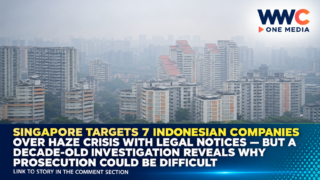
Singapore’s worsening haze conditions are disrupting public activities, forcing event organisers to reconsider outdoor programmes as air quality concerns raise questions about public safety.
The impact extends beyond routine outdoor activities, with sporting events and community gatherings also facing potential interruptions as authorities and organisers monitor the Pollutant Standards Index (PSI).
For residents, the situation highlights how quickly regional haze can affect everyday life in Singapore, particularly when pollution levels rise and prolonged exposure becomes a concern for people exercising, working or attending outdoor events.
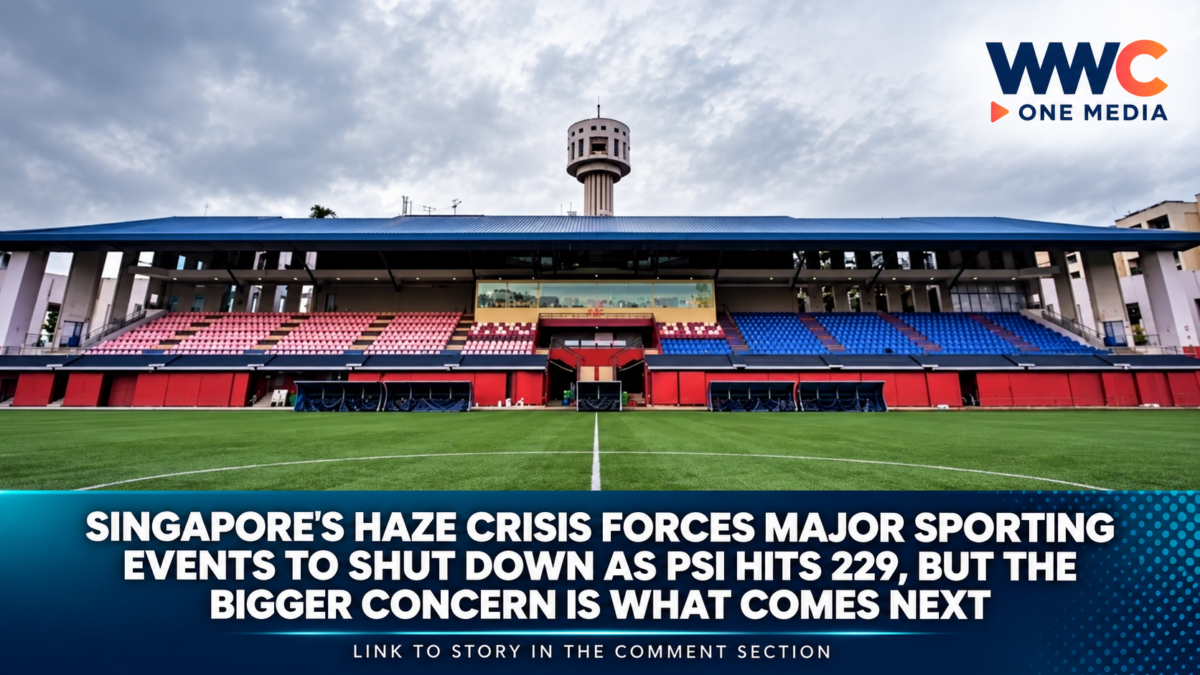
The affected fixtures were the Singapore FA Cup final and the third-place play-off, both scheduled for October 17 at Jurong East Stadium. The decision was made after the western region’s PSI exceeded 200, breaching the safety requirements for amateur football matches.
The FA Cup final was expected to feature Police Sports Association and Gymkhana Gaulois, while South Avenue and Bishan Barx were scheduled to compete in the third-place play-off. The Football Association of Singapore (FAS) said the matches would be rescheduled, with new dates to be announced later.
PSI Reaches 229 as Singapore Faces Worsening Haze
The postponement came after Singapore’s 24-hour PSI climbed to 229 on Friday, October 16, marking the highest reading recorded in 2026 at that point.
Although air quality improved on Saturday morning, readings remained within the unhealthy range, keeping concerns over outdoor activities alive.
Under Singapore’s haze management guidelines, amateur football matches can proceed only when the 24-hour PSI forecast is 200 or below and the one-hour PM2.5 reading falls within the normal or elevated categories.
Professional football competitions have different operating thresholds, while youth football faces even stricter restrictions to protect younger players from exposure to polluted air.
CNA
+1
Major Sporting and Community Events Also Hit
The FA Cup postponement is part of a wider disruption affecting Singapore’s sporting and community calendar.
The Great Eastern Women’s Run, originally scheduled for November 1, was cancelled because of concerns over participants’ health and safety. The event normally attracts thousands of runners.
The ISCA Run 2026, scheduled for October 17 at Gardens by the Bay, was also cancelled. Organisers cited unpredictable haze conditions and concerns for nearly 3,000 participants and attendees.
Meanwhile, The Purple Parade, originally scheduled for October 24, was postponed to the first half of 2027. The annual gathering celebrates the contributions and abilities of persons with disabilities and promotes greater inclusion.
Indonesian Wildfires Behind the Regional Haze Crisis
The worsening air quality is linked to smoke from forest and peatland fires in Indonesia, particularly in Kalimantan and Sumatra.
Regional reports indicate that prolonged dry conditions and intense El Niño-related weather have contributed to the spread of wildfires, allowing smoke to travel across national borders and affect neighbouring countries.
A Reuters report published on October 14 highlighted the severity of the regional pollution crisis, with Singapore recording a peak PM2.5 concentration of 284 micrograms per cubic metre that day. The pollution also forced authorities in East Timor to suspend in-person classes temporarily.
The continuing fires have created challenges for authorities attempting to contain the smoke, while neighbouring countries face the consequences of deteriorating air quality.
Health Concerns Take Priority Over Outdoor Activities
Singapore’s National Environment Agency has advised residents to adjust their outdoor activities according to pollution levels and individual health conditions.
When the 24-hour PSI reaches the very unhealthy category, healthy individuals are advised to avoid prolonged or strenuous outdoor physical exertion. Children, elderly residents, pregnant women and people with chronic heart or lung conditions should take additional precautions.
The agency also recommends monitoring one-hour PM2.5 readings when making immediate decisions about outdoor activities, as these provide a more direct indication of short-term exposure risks.
For sports organisers, the cancellations and postponements demonstrate the growing challenges of holding large outdoor gatherings during periods of regional haze.
With several major events already affected, Singapore’s air quality remains a significant concern for athletes, spectators, event organisers and residents.
The rescheduling of the FA Cup matches will depend on conditions meeting the required safety standards, while the broader haze situation will remain closely tied to developments surrounding the fires in Indonesia.