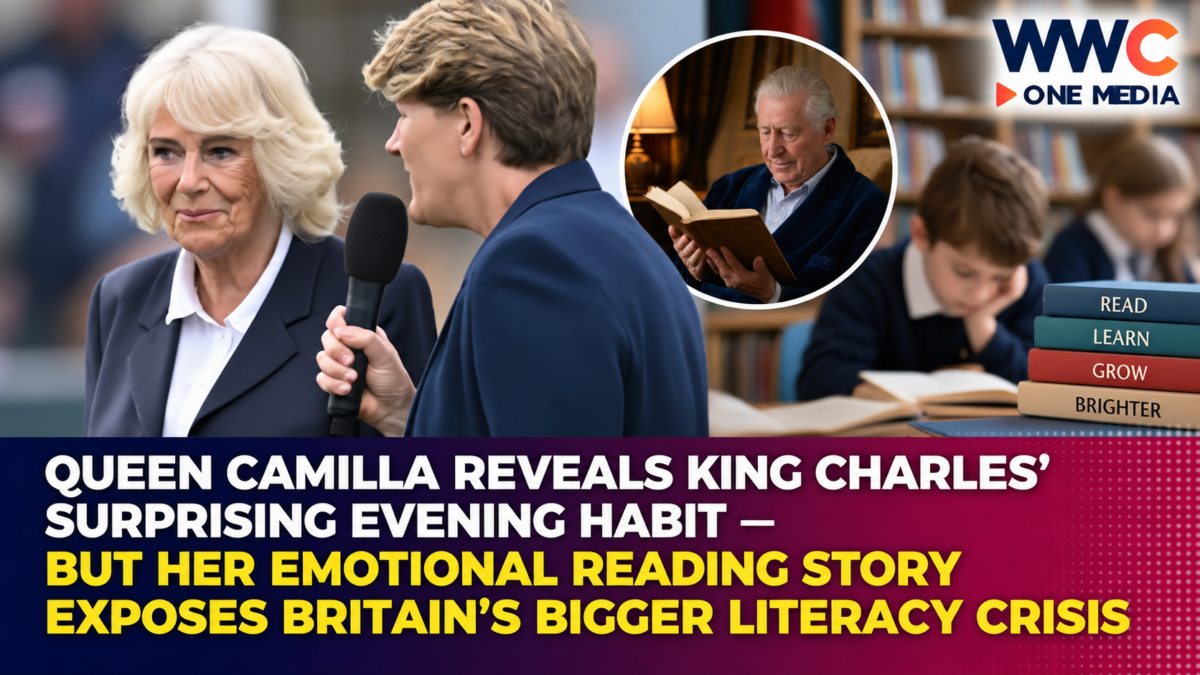
LONDON, United Kingdom — Britain’s Queen Camilla has offered a rare and surprisingly personal glimpse into life with King Charles III, revealing how their quiet evenings at Clarence House often turn into moments of unexpected laughter, emotional tears and a shared love of books.
The 79-year-old Queen opened up about the royal couple’s private reading routine in a new BBC documentary, The Book That Changed My Life, scheduled to air on October 14, 2026.
But behind the affectionate stories of Charles laughing over humorous novels and Camilla becoming emotional while reading lies a more serious concern: Britain’s struggle to encourage children and teenagers to read for pleasure.
The documentary arrives as literacy campaigners warn that young people’s enthusiasm for books remains far below levels recorded a decade ago.
For Camilla, the mission is no longer simply about celebrating literature. It is about persuading a new generation that books can change lives.
King Charles’ Reading Habit Makes Queen Camilla Laugh — and Sometimes Lose Her Place
Despite their demanding royal schedules, King Charles and Queen Camilla maintain a simple evening tradition.
Before dinner, the couple spend time sitting quietly together and reading.
Camilla revealed that the peaceful routine does not always remain silent.
Charles occasionally bursts into laughter while reading something amusing, leaving his wife struggling to concentrate on her own book.
The Queen said she can often identify what he is reading from his reaction.
The King is particularly fond of the humorous works of British author P.G. Wodehouse, best known for the Jeeves and Wooster stories.
He also enjoys biographies.
Camilla, meanwhile, prefers historical fiction and thrillers, genres that can sometimes leave her deeply emotional.
The revelation provides an unusually domestic portrait of the royal couple, showing that even their private routines involve the same small interruptions familiar to many households.
Queen Camilla Says Books Have Been Her Greatest Teachers
For Camilla, reading has been a lifelong passion rather than a recent interest associated with royal duties.
In the BBC documentary, she explains that books became a particularly important part of her education after she left school at a relatively young age.
Through literature, she discovered different personalities, historical periods, cultures and experiences.
She believes reading allows people to understand lives beyond their own while providing relief from personal worries.
The Queen also describes reading as a valuable source of relaxation and emotional comfort.
Her comments explain why she has made the promotion of literacy one of her most recognizable charitable commitments.
Rather than presenting books solely as educational tools, Camilla emphasizes their ability to entertain, inspire and provide a temporary escape from everyday stress.
Her Father’s Prisoner-of-War Experience Shaped Her Love of Reading
One of the documentary’s most personal revelations involves Camilla’s late father, Major Bruce Shand.
Shand served during the Second World War and spent more than two years as a prisoner of war in Germany.
Camilla recalled how reading helped him cope with captivity during a difficult period of his life.
Her father later documented his wartime experiences in a memoir titled Previous Engagements.
The book became particularly meaningful to Camilla because it connected her family’s personal history with the wider events of the war.
His experience reinforced her belief that literature can provide emotional strength even under extraordinary circumstances.
The story also illustrates how books can preserve memories and connect generations.
For the Queen, reading is not simply a private hobby. It is closely connected to her family history and her understanding of resilience.
From Pandemic Book Club to The Queen’s Reading Room
Camilla’s literacy campaign expanded significantly during the COVID-19 pandemic.
In January 2021, she launched an online book club originally known as The Duchess of Cornwall’s Reading Room.
The initiative encouraged readers to discover new titles, discuss literature and engage with authors through digital platforms.
Its popularity eventually led to the establishment of The Queen’s Reading Room as a charity in 2023.
The organization promotes reading for pleasure through literary events, author interviews, educational activities and partnerships.
Its mission is based on the idea that books can contribute to personal development, emotional wellbeing and stronger connections between people.
The charity also collaborates with literacy organizations working to improve reading engagement.
The latest BBC documentary extends that mission by featuring people whose lives have been shaped by books.
Britain’s Reading Crisis: Only One in Three Children Enjoyed Books in 2025
The documentary comes against the backdrop of troubling research on children’s reading habits.
According to the National Literacy Trust’s 2025 survey, only 32.7% of British children and young people aged eight to 18 said they enjoyed reading in their free time.
That was the lowest level recorded since the organization began measuring reading enjoyment in 2005.
The same survey found that just 18.7% of respondents in that age group reported reading something daily outside school.
Researchers gathered responses from more than 114,000 children and young people aged five to 18.
The findings raised concerns about declining engagement with books and the potential consequences for literacy development and educational opportunities.
However, more recent research offers a small sign of improvement.
The National Literacy Trust’s 2026 findings show reading enjoyment among eight- to 18-year-olds rising to 36.1%, while daily reading increased to 20.3%.
Although the figures represent progress, they remain considerably below levels recorded a decade earlier.
The latest data suggest that the challenge is not simply reversing a single year’s decline but rebuilding a sustained culture of reading among young people.
What Is Driving the Decline in Reading for Pleasure?
There is no single established explanation for why fewer young people report enjoying reading.
Children and teenagers now have access to a wide range of entertainment and digital activities, including social media, streaming services, gaming and online video.
These activities compete for leisure time, although digital technology can also provide new ways to discover stories and books.
The National Literacy Trust’s research shows that personal interest plays a major role in encouraging young readers.
Its 2025 survey found that 38.1% of children and young people aged eight to 18 were motivated to read when material related to a favorite film or television series.
Another 37.1% were encouraged when reading material matched their interests or hobbies.
The findings suggest that allowing young people to choose appealing content may help increase engagement.
Comics, graphic novels, fiction, fan fiction and other forms of reading can all provide entry points into a broader reading habit.
For literacy advocates, the challenge is making reading enjoyable and relevant rather than treating it exclusively as a school requirement.
BBC Documentary Explores How Books Transform Ordinary Lives
The Book That Changed My Life goes beyond the royal couple’s reading habits.
The program follows Camilla as she meets people whose personal experiences demonstrate the influence of literature.
According to additional reporting by the Press Association, the documentary features a former prisoner, a heavy goods vehicle driver, a man who experienced depression following a domestic incident and a roadside café owner.
Their stories explore how books can provide comfort, motivation, new perspectives and opportunities for personal change.
The documentary aims to demonstrate that reading can benefit people from different backgrounds and circumstances.
By highlighting individual experiences, it seeks to make the value of literature more relatable to viewers.
Camilla’s participation connects these personal stories with the broader work of The Queen’s Reading Room and its literacy partners.
King Charles’ Favorite Authors Reveal a Lighter Side of the Monarch
While the documentary focuses heavily on literacy, its glimpse into the King’s private life is likely to attract public attention.
Charles’ enthusiasm for biographies reflects a long-standing interest in history and the lives of prominent individuals.
His fondness for P.G. Wodehouse reveals a lighter side.
Wodehouse’s novels are known for their elaborate comic situations, eccentric characters and witty dialogue.
The Jeeves and Wooster stories follow the misadventures of Bertie Wooster and his resourceful valet, Jeeves.
For Camilla, the King’s audible amusement has become a recognizable feature of their shared reading time.
The image contrasts with the formal public appearances normally associated with the British monarchy.
It also reinforces the Queen’s message that reading is not merely an academic activity.
Books can be funny, emotional and deeply entertaining.
Reading Offers Comfort During a Challenging Period for the Royal Family
The Queen’s comments come during a period of continued challenges for the British monarchy.
King Charles has been receiving treatment for cancer, while the royal family has faced further public scrutiny involving Andrew Mountbatten-Windsor and other family matters.
Against that background, the couple’s reading routine provides a glimpse of how they spend quieter moments away from official engagements.
Camilla has described books as a way to become absorbed in other people’s experiences rather than focusing entirely on one’s own concerns.
However, the documentary does not establish that reading is a medical treatment or a substitute for professional support.
Its emphasis is on the personal comfort, enjoyment and sense of connection that literature can provide.
For the Queen, those benefits help explain why encouraging people to read remains an important part of her public work.
The Queen’s Literacy Mission Extends Beyond Buckingham Palace
Camilla’s efforts are part of a wider campaign involving charities, educators, publishers and government partners.
The Queen’s Reading Room works alongside organizations including the National Literacy Trust to promote greater engagement with books.
These initiatives seek to make reading more accessible and encourage people to develop lasting habits.
The National Literacy Trust’s research suggests that promoting reading enjoyment requires more than simply telling children that books are good for them.
Young people are more likely to engage when they can choose stories that reflect their interests and experiences.
Reading initiatives therefore have opportunities to work with schools, families, libraries and community organizations to introduce children to different kinds of material.
For policymakers, the challenge is ensuring that reading opportunities remain accessible while helping children discover literature they genuinely enjoy.
The success of these efforts will depend on sustained participation and measurable improvements in reading engagement.
The Bigger Picture: Can Britain Rediscover Its Love of Books?
The latest research shows that Britain’s reading challenge remains serious despite a modest improvement in 2026.
Only slightly more than one-third of surveyed young people aged eight to 18 said they enjoyed reading in their free time.
The figures suggest a significant gap between the educational importance of literacy and the extent to which children find reading pleasurable.
Camilla’s campaign attempts to address that gap by presenting literature as something enjoyable, meaningful and accessible.
Her personal stories may attract public interest because of her royal position.
But the broader objective is to encourage people to develop a relationship with books that continues throughout their lives.
Whether the documentary inspires lasting change will be difficult to measure immediately.
Its contribution will be clearer if it encourages families, schools and communities to create more opportunities for voluntary reading.
THE BOTTOM LINE
Queen Camilla has revealed how she and King Charles spend quiet evenings reading together, with the monarch’s laughter over humorous novels sometimes interrupting her concentration.
The intimate glimpse into royal life forms part of a BBC documentary exploring the emotional and educational value of books.
Camilla also shares how reading shaped her own education and helped her father endure imprisonment during the Second World War.
But the program’s central concern extends well beyond the royal household.
Britain continues to face a significant challenge in encouraging children and teenagers to enjoy reading.
Although the National Literacy Trust recorded a modest improvement in 2026, participation remains far below historical levels.
For Queen Camilla, the King’s laughter and her own tears demonstrate the emotional power of books — but the bigger challenge is persuading a generation of young people to experience that same joy for themselves.
The royal couple may have found comfort and happiness in their evening reading ritual. The question now is whether Britain can inspire millions of young readers to do the same.