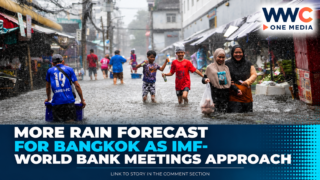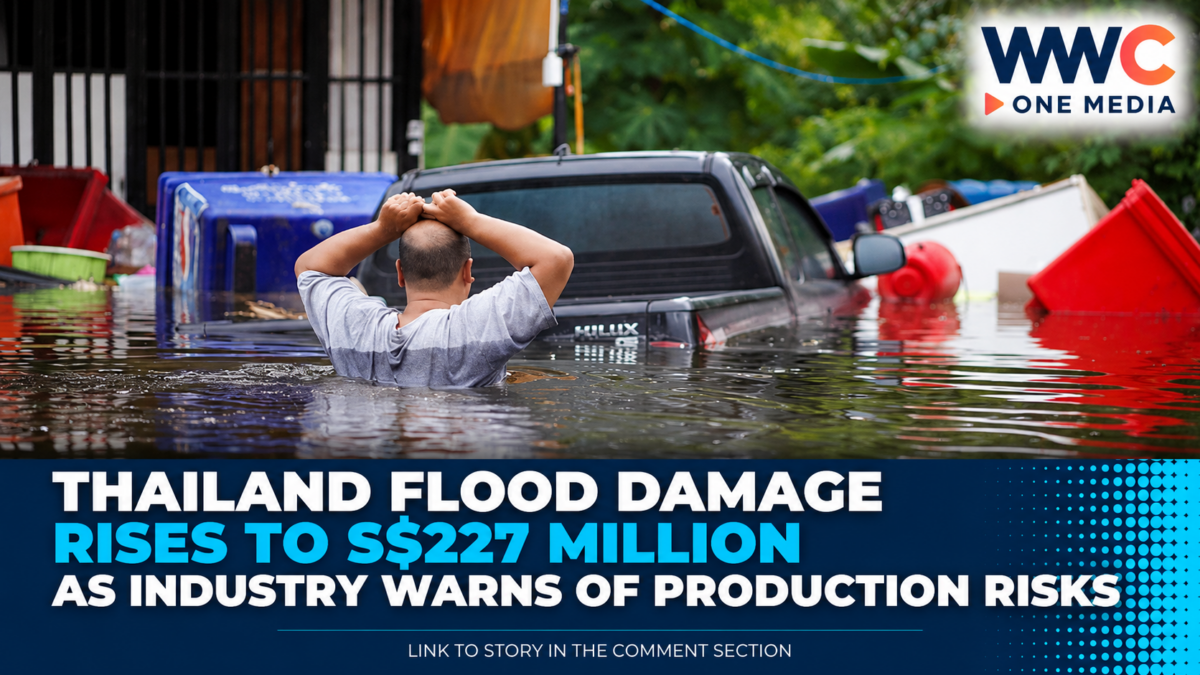
BANGKOK, Thailand — Thailand’s industrial sector has suffered an estimated 6 billion baht (S$227 million) in damage from widespread flooding, more than six times the industry’s initial assessment last week, as authorities warn that continued rain could cause further disruption.
The latest estimate from the Federation of Thai Industries (FTI) covers flooding that has affected Bangkok and 14 other provinces since last month. The federation’s initial estimate had put industrial losses at about 1 billion baht.
The worsening assessment comes as Thailand continues to deal with the effects of heavy rainfall and flooding that have affected millions of people, damaged businesses and disrupted transport and supply chains.
Automotive industry faces supply concerns
One of the immediate concerns is the impact on Thailand’s important automotive manufacturing sector.
FTI Secretary-General Panitarn Pavarolavidya said automotive assembly plants currently have enough parts in inventory to continue production only until Oct. 12 if supply disruptions persist.
That does not mean factories will necessarily shut down after that date. Rather, the warning highlights the potential for flooding to disrupt the flow of components if affected suppliers and transport routes cannot resume normal operations.
Thailand is a major regional manufacturing hub for automobiles and automotive components, meaning disruptions at individual suppliers can potentially affect production further along the supply chain.
Damage estimate jumps from 1 billion baht
The latest FTI figure represents a sharp increase from the federation’s assessment just a week earlier.
The initial estimate of around 1 billion baht covered damage in Bangkok and 14 other provinces. As more businesses reported losses, the FTI revised the figure to 6 billion baht.
The damage includes more than just flooded factory buildings.
Businesses can face losses involving machinery, equipment, raw materials, finished goods and delivery operations. Even after floodwaters recede, factories may need to clean and inspect electrical systems and machinery before production can safely restart.
The FTI has established a flood-response “war room” to coordinate assessments and assistance with provincial industry councils and business networks.
Businesses seek financial relief
The industry federation has also outlined measures it wants the government to consider as businesses begin repairing damaged facilities and restarting operations.
These include low-interest loans, debt repayment holidays and tax and fee relief.
The FTI is also seeking greater flexibility over delivery deadlines and penalties when companies cannot fulfil orders because flooding has disrupted factories, suppliers or transport routes.
The federation’s recovery plan is divided into three stages: responding before flooding, providing assistance while businesses are affected and helping companies restore operations once water levels fall.
The approach recognises that a factory cannot simply reopen when floodwater disappears. Electrical systems, machinery, buildings and supply chains all have to be checked and restored.
Thousands of businesses affected
The industrial damage estimate is separate from a broader assessment of businesses affected by the floods.
Thailand’s Industry Ministry reported that 4,216 businesses across 55 provinces had been affected as of Oct. 2, with preliminary damage estimated at 147.84 million baht. Most of those businesses were small and medium-sized enterprises.
The ministry’s assessment included 126 industrial factories, 4,006 SMEs, 82 community enterprises and two mining operations.
The figures from the Industry Ministry and FTI cover different assessments and should not be added together directly.
The Industry Ministry also found that 95% of surveyed flood-hit businesses required financial assistance, prompting preparations for emergency financing and repayment relief.
Flooding is also affecting food supplies
The economic consequences of the flooding extend beyond factories.
Thailand’s government has asked companies to reduce egg exports by 30% to 50% until December after flooding caused significant losses among poultry farms and disrupted domestic egg supplies.
The measure is intended to ensure sufficient supplies for the domestic market while producers recover.
The disruption demonstrates how the floods are affecting multiple parts of the economy, from industrial manufacturing and logistics to agriculture and food distribution.
Millions affected by flooding
The industrial losses are occurring against a broader humanitarian and infrastructure crisis.
Thailand’s Interior Ministry said the floods, which began on Sept. 16, had killed 31 people as of Oct. 5. More than 3.5 million people had been affected nationwide, according to disaster-management authorities.
Bangkok was among the areas hit hardest, with several neighbourhoods inundated after days of heavy rainfall.
Although conditions in parts of the capital have improved, some low-lying areas remained waterlogged, while authorities continued draining major canals and deploying additional pumps to reduce the risk of further flooding.
The government has also approved more than 4.1 billion baht in emergency funding for flood recovery.
More rain could add to the damage
The immediate economic concern is that Thailand’s flood crisis may not yet be over.
The country’s meteorological authorities have warned of additional heavy rain and thunderstorms, with central, eastern and southern areas — including Bangkok — facing further rainfall risks.
More rain could slow the recovery of already damaged businesses and increase pressure on drainage systems and transportation networks.
It could also make it more difficult for factories to receive components or ship finished products, potentially extending disruptions through supply chains.
Thailand’s economy faces another setback
The flooding comes at a difficult time for Thailand’s economy, which is already dealing with sluggish growth and elevated living costs.
A Reuters survey reported that Thai consumer confidence fell in September for the first time in four months, with respondents citing flooding, the slow economic recovery and high living costs among the factors weighing on sentiment.
For businesses, the longer-term impact will depend on how quickly factories, suppliers, transport operators and workers can return to normal operations.
The FTI has said recovery must extend beyond individual factories to include the wider network of suppliers, workers and logistics providers that keep production moving.
Industry warns of wider supply-chain impact
The jump in estimated industrial damage from 1 billion to 6 billion baht underscores how quickly the economic consequences of a major flood can expand as more businesses assess their losses.
While automotive plants currently have sufficient parts to continue operating through Oct. 12, the situation will depend on whether suppliers and transport networks can recover quickly.
With more rain still forecast, Thai manufacturers are now facing a race against time: protect remaining operations, restore damaged facilities and keep critical supply chains moving before shortages translate into wider production disruptions.
For Thailand, the floods are no longer only a disaster-management challenge. They are increasingly becoming a business, supply-chain and economic recovery challenge as well.