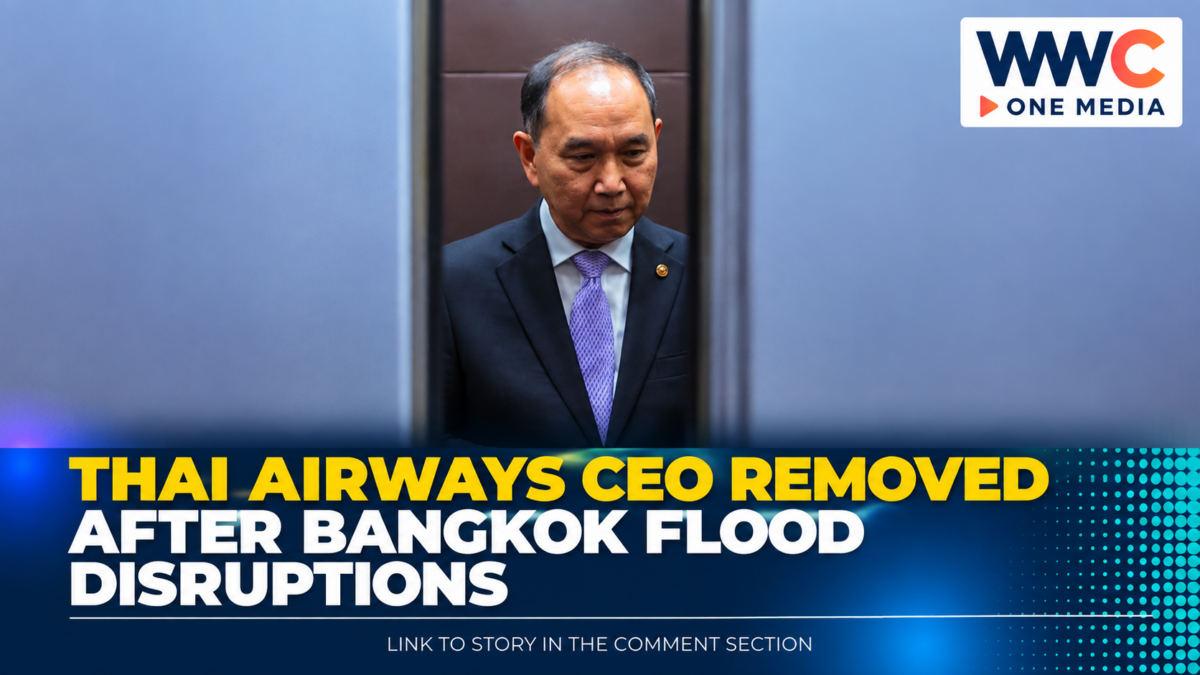
Thai Airways chief executive Chai Eamsiri has been removed from his position following the airline’s chaotic response to severe flooding in Bangkok, which disrupted flights, cargo operations and baggage handling at Suvarnabhumi Airport.
Chai said on Oct. 2 that the airline’s board had relieved him of his duties after a special meeting. He said the board did not give him a specific reason but indicated that it wanted to examine possible gaps and mistakes in the company’s handling of the crisis.
Thai Airways later confirmed in a filing to the stock exchange that Chai had been suspended while the company conducts a fact-finding investigation and reviews its crisis-management procedures. Director Sumrid Sumneing was appointed acting chief executive.
The leadership change followed widespread disruption at Bangkok’s main airport after heavy rainfall caused severe flooding across the capital. Thai Airways was forced to cancel dozens of flights and temporarily suspend cargo operations, with some employees unable to reach the airport because of the flooding.
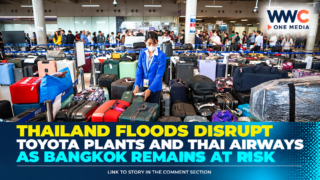
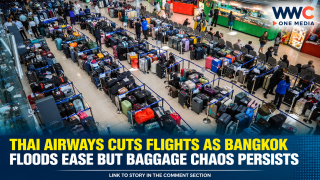
The disruption also created a major baggage backlog at Suvarnabhumi Airport. The situation became severe enough for Thailand’s Air Force to assist in clearing bags that passengers had been unable to collect from their flights.
Bangkok received about 320 millimetres of rain over three days, roughly equivalent to the amount of rainfall the city normally receives throughout an entire September. The flooding was serious enough for Bangkok to be declared a disaster-affected area.
The airline’s response also drew criticism from Tourism Minister Surasak Phancharoenworakul, who publicly questioned the management’s handling of the disruption and said those unable to address the situation should consider resigning.
Chai had publicly apologised for the problems at Suvarnabhumi and had been working to restore normal operations. Thai Airways said it was attempting to recover its flight schedule while addressing the baggage and cargo backlogs caused by the flooding.
The board’s action now places the airline’s crisis-management procedures under formal review. The investigation is expected to examine how the company prepared for the flooding, managed staffing and ground operations, and responded once airport disruptions began.
Chai had spent more than four decades with Thai Airways. He joined the airline in 1985 and rose through various positions before becoming chief financial officer and later being appointed chief executive in 2023.
The leadership change comes at an important period for Thai Airways. The airline entered bankruptcy-protected restructuring in 2020, reducing its workforce and fleet as part of a major financial overhaul. It subsequently completed its debt restructuring programme, with its shares returning to trading in August 2026.
As of June 30, Thai Airways operated 84 aircraft serving 61 destinations across 27 countries. The company is now tasked with restoring regular operations while the board reviews the events surrounding the flood-related disruption.
The removal of Chai separates the immediate operational response from the longer-term investigation into what went wrong. Thai Airways said the fact-finding process and review of its crisis-management procedures will proceed as the airline works to stabilize services following the Bangkok floods.