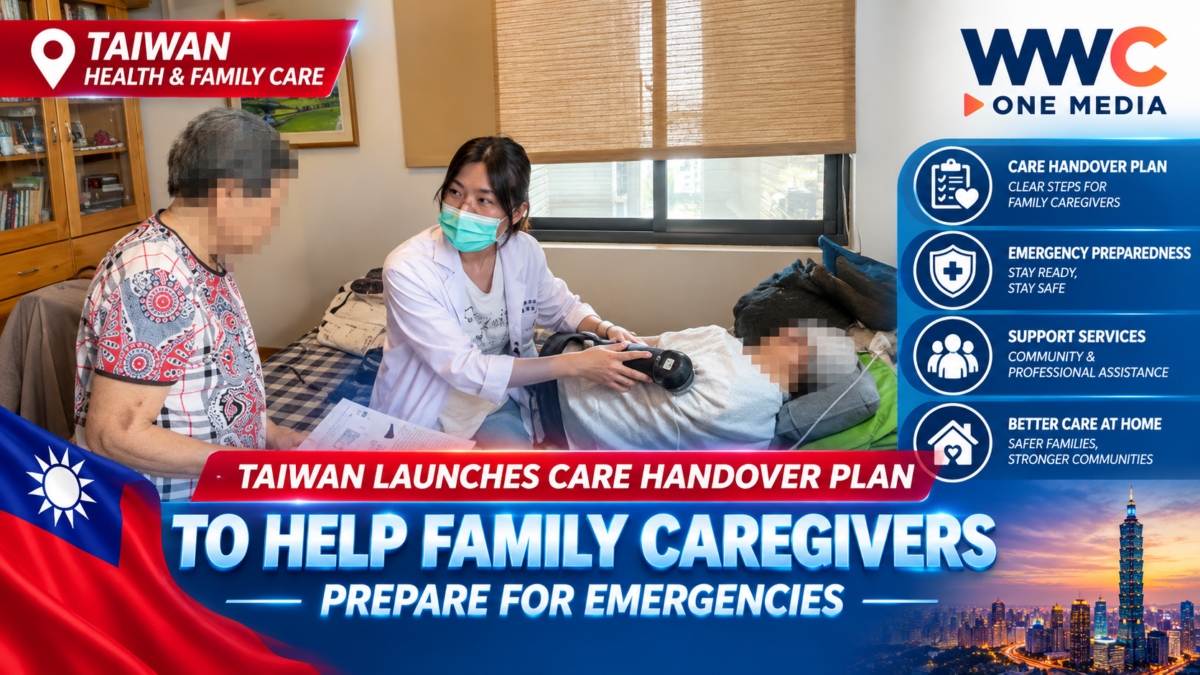
TAIPEI — Taiwan is rolling out a new Care Handover Plan aimed at helping family caregivers prepare for emergencies and prevent caregiving responsibilities from falling entirely on one person.
The Ministry of Health and Welfare announced the initiative on September 29, encouraging families to establish backup arrangements before an unexpected illness, emergency or other disruption leaves them without someone able to take over care.
The initiative comes as government data show that 24.4% of first-time callers to a family caregiver support hotline last year reported having no one available to take over their caregiving responsibilities.
Taiwan Wants Families to Build a Backup Care Network
Under the new program, family caregivers can work with caregiver support sites and professionals to organize key information about the person receiving care and divide responsibilities among relatives, friends and professional services.
Deputy Health and Welfare Minister Lu Chien-te said Taiwan now has a community-based integrated care service network covering about 16,000 locations, while 191 family caregiver support sites have been established nationwide.
Families can also seek assistance through Taiwan’s 1966 Long-Term Care Service Hotline and the 0800-50-7272 Family Caregiver Care Hotline.
Why Caregivers Often Struggle to Hand Over Responsibility
The ministry said some family caregivers hesitate to let others take over because they worry that another person will not understand the care recipient’s daily routines, preferences, personality or individual needs.
Others may feel that, as family members, they are personally responsible for providing the care themselves.
The new plan attempts to address both concerns by making the handover process more organized rather than leaving families to improvise when an emergency occurs.
Three Things Families Are Encouraged to Prepare
The Care Handover Plan focuses on three major areas.
First: Information about the person receiving care.
Families can record details such as daily routines, habits, personality and previous occupation to help a replacement caregiver understand the individual’s needs.
Second: Caregiving responsibilities.
Families are encouraged to map out their weekly or monthly care requirements and determine when relatives, friends or professional services can provide assistance.
Third: Emergency and support contacts.
Important contact information can include family members, medical professionals, service providers and long-term-care specialists.
Together, the information is intended to make it easier for someone else to step in when the primary caregiver is unavailable.
One Family’s Experience Shows the Cost of Doing Everything Alone
The ministry highlighted the experience of a 62-year-old woman who cared for her mother, who had dementia, by herself for more than a decade.
The prolonged physical demands of caregiving eventually contributed to severe body aches and insomnia.
After receiving medical advice and assistance from a family caregiver specialist, she gradually began using home-care and respite services.
With additional support, she eventually regained more control over her own life and later earned a caregiver certificate and began working as a caregiver for other families.
Caregiving Doesn’t Have to Mean One Person Does Everything
The Taiwan Association of Family Caregivers emphasized that bringing other people into a caregiving arrangement does not mean abandoning responsibility.
Instead, building a support network can help ensure that care continues even when the primary caregiver becomes unavailable.
That message is at the center of Taiwan’s new initiative: prepare the handover before it becomes an emergency.
The government is encouraging families to identify backup caregivers, understand available community resources and make use of long-term-care services before a crisis occurs.
A New Approach to Taiwan’s Caregiving Challenge
Taiwan’s Care Handover Plan reflects a broader shift toward treating caregiving as a shared responsibility rather than something that automatically falls on one family member.
With thousands of community care locations and hundreds of caregiver support sites already operating nationwide, the government is encouraging families to connect with those resources earlier.
For families caring for older relatives or people with long-term care needs, the biggest question may no longer be who can provide all the care alone, but whether a reliable support network is ready before the main caregiver needs help themselves.
WWC ONE MEDIA G,A