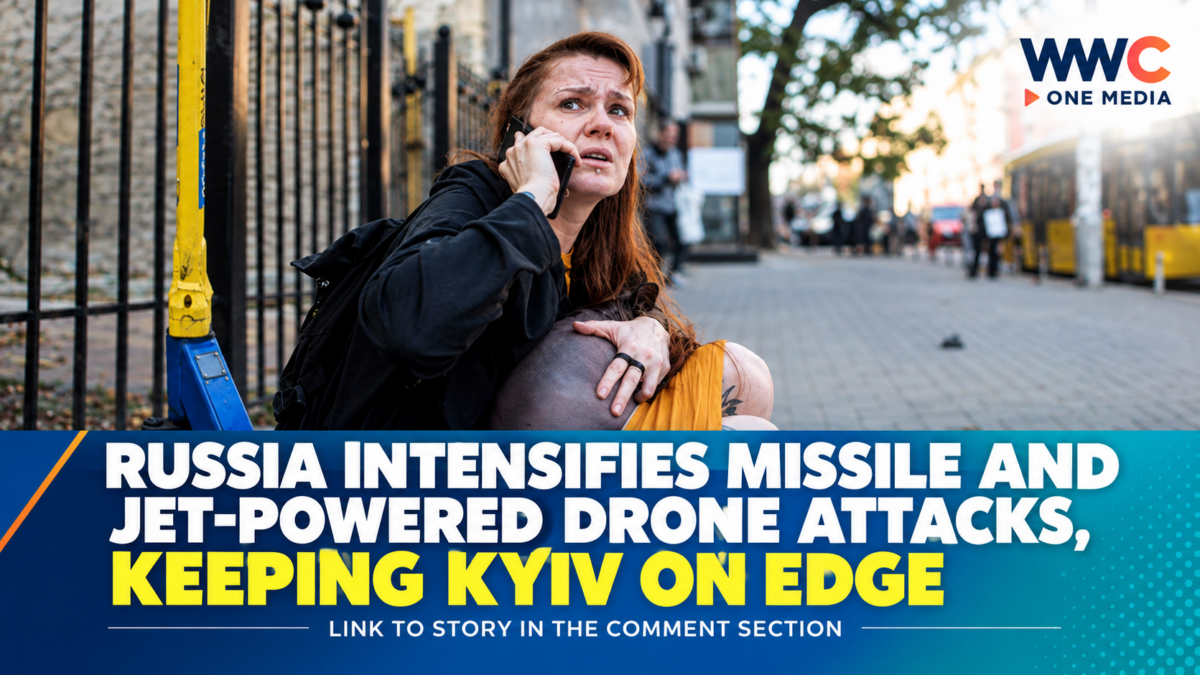
Russia has intensified its aerial attacks on Ukraine, combining ballistic missiles with faster jet-powered drones in a campaign that has placed Kyiv and other Ukrainian cities under sustained pressure.
Ukrainian authorities said the attacks have become increasingly difficult to counter as Russia deploys drones capable of flying faster and at higher altitudes than many of the systems previously used. Ukraine has been developing new interceptor drones in response, but expanding their production and deployment will take time.
The attacks have also exposed shortages in Ukraine’s air-defense capabilities, particularly systems capable of intercepting ballistic missiles. Ukrainian officials have repeatedly sought additional Western air-defense equipment as Russian strikes continue.
Kyiv has experienced frequent air-raid alerts in recent weeks. Ukrainian officials said there had been more than 235 alerts since late August, lasting a combined 261 hours, disrupting schools, transportation and other aspects of daily life.
The latest wave has also focused heavily on energy infrastructure. On Sept. 30, Russia launched a major missile and drone assault against power facilities around Kyiv and other regions, prompting emergency electricity cuts and disrupting public transportation and water services.
Ukraine’s Air Force said it intercepted 254 of 285 drones during that assault, including a large number of the faster jet-powered models. A ballistic missile attack was also reported. Ukrainian officials said critical infrastructure was damaged in several regions.
The attacks have raised concerns in Ukraine about the coming winter, when damage to electricity and heating infrastructure could have a greater impact on civilians. Ukrainian authorities have been checking backup power systems and preparing additional protective measures at critical facilities.
The intensified aerial campaign follows several days of attacks on Kyiv and other Ukrainian cities. On Sept. 28, a Russian drone strike on the National Academy of Sciences in central Kyiv killed two people, while attacks across Ukraine killed at least 10 and injured more than 80, according to Ukrainian officials cited in reports.
Russia has said its strikes target military and strategic infrastructure. Moscow has also claimed attacks on data centers, drone facilities, power infrastructure and port facilities. Reuters reported that some of the Russian claims about specific targets could not be independently verified.
Ukraine has meanwhile continued launching long-range drone strikes against targets inside Russia, including oil facilities and defense-related sites, as both sides seek to damage the other’s military and economic capabilities.
The escalation comes as diplomatic efforts to end the war remain stalled. Russia and Ukraine continue to disagree over territory and the conditions for a ceasefire, while U.S.-backed efforts to facilitate negotiations have yet to produce a broader settlement.
With winter approaching, Ukraine faces the combined challenge of protecting its population from increasingly sophisticated aerial attacks while maintaining electricity, heating and other essential services. The effectiveness of its air-defense network and its ability to expand domestic interceptor production will remain important factors in the months ahead.