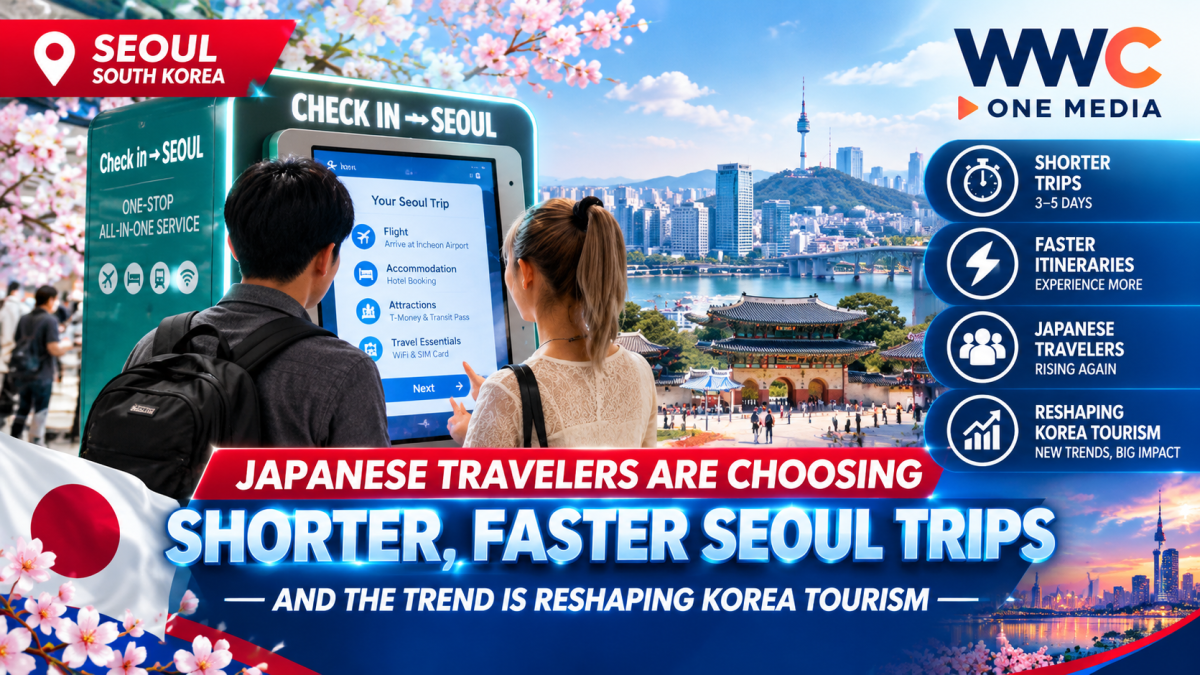
Seoul is becoming a destination that Japanese travelers can experience in just a few days — and that shorter-trip trend is gaining momentum.
Rather than spending extended periods abroad, many Japanese visitors are increasingly looking toward quick, condensed Seoul getaways, taking advantage of the short distance between the two countries and Seoul’s concentration of food, shopping, entertainment and cultural attractions.
The shift comes as Japanese tourism to Korea reaches record levels in 2026. Through July, 2.28 million Japanese visitors traveled to Korea, an 18.8 percent increase from a year earlier. Japanese travelers accounted for 28 percent of all Japanese outbound travelers, the highest share on record, according to Korea’s Ministry of Culture, Sports and Tourism.
Seoul’s Biggest Advantage: More Experiences in Less Time
For travelers with limited vacation time, Seoul offers an unusual combination of accessibility and variety.
Visitors can move from traditional markets and historic sites to K-pop-related attractions, Korean food, cosmetics and shopping districts within a relatively compact metropolitan area.
Seoul is also promoting its day-and-night tourism appeal, highlighting late-night shopping, restaurants, entertainment and public transportation as part of its campaign to attract Japanese visitors.
At Tourism EXPO Japan 2026 in Tokyo, the Seoul Tourism Organization showcased the capital under the theme “Day and Night in Seoul for All Ages,” emphasizing the city’s nighttime culture and transportation network. The event attracted roughly 130,000 visitors, while Seoul’s pavilion welcomed about 3,200 members of the public.
K-Culture Continues to Pull Japanese Visitors
The growing popularity of Korean culture is another major factor behind the tourism surge.
K-pop, Korean dramas, food and beauty products continue to attract Japanese consumers, creating a travel connection that extends beyond traditional sightseeing.
Korea’s tourism authorities have also expanded campaigns beyond Seoul, promoting destinations such as Busan, Jeju and Cheongju. Japanese arrivals through those regional airports increased substantially following targeted promotional campaigns, according to the Korea Tourism Organization.
The appeal of Korean beauty products is particularly notable. Korean brands accounted for 33.5 percent of Japan’s imported cosmetics market in the first quarter of 2026, according to the tourism ministry’s figures cited by The Korea Times.
Airlines Are Making Quick Korea Trips Easier
Travel patterns are also being supported by air connectivity.
Weekly Korea-Japan flight capacity reached 349,000 seats, up 2.4 percent from the end of 2025, as airlines shifted some long-haul capacity toward shorter routes, according to Korean tourism officials.
That connectivity makes Seoul particularly suitable for travelers looking for shorter international breaks.
Instead of treating Korea as a once-in-a-lifetime destination requiring a lengthy itinerary, travelers can increasingly view Seoul as a nearby destination that can be revisited repeatedly.
Seoul Wants Visitors to Explore Beyond the Usual Hotspots
The city’s tourism strategy is also evolving.
While destinations such as Myeong-dong, N Seoul Tower and COEX remain popular among foreign visitors, Seoul has been highlighting a wider range of experiences, including traditional markets, filming locations, parks and hiking trails.
A Seoul city analysis of foreign-tourist activity found growing interest in locations beyond the capital’s traditional tourist centers, including Dongdaemun Design Plaza, Naksan Park, Achasan Mountain and Gwanaksan Mountain.
For Japanese visitors taking shorter trips, that creates a different challenge: fitting more experiences into less time.
A Tourism Boom Built Around Convenience
The rise of short Seoul trips reflects a broader change in how nearby international travel can work.
With strong air connectivity, cultural familiarity and an enormous concentration of attractions, Seoul can offer Japanese travelers a high number of experiences without requiring a long vacation.
Korea welcomed 12.8 million foreign tourists during the first seven months of 2026, a 21.3 percent increase from the same period a year earlier. Japanese travelers were among the strongest contributors to that growth.
Seoul’s latest tourism campaign suggests the city wants to capitalize on that momentum by selling not just individual attractions, but an entire day-to-night urban experience.
For Japanese travelers, the message is increasingly clear: Seoul does not necessarily require a long holiday.
And as short, repeat visits become more prominent, the next question is whether Seoul can turn quick getaways into an even deeper and more sustained tourism boom.
WWC ONE MEDIA G,A