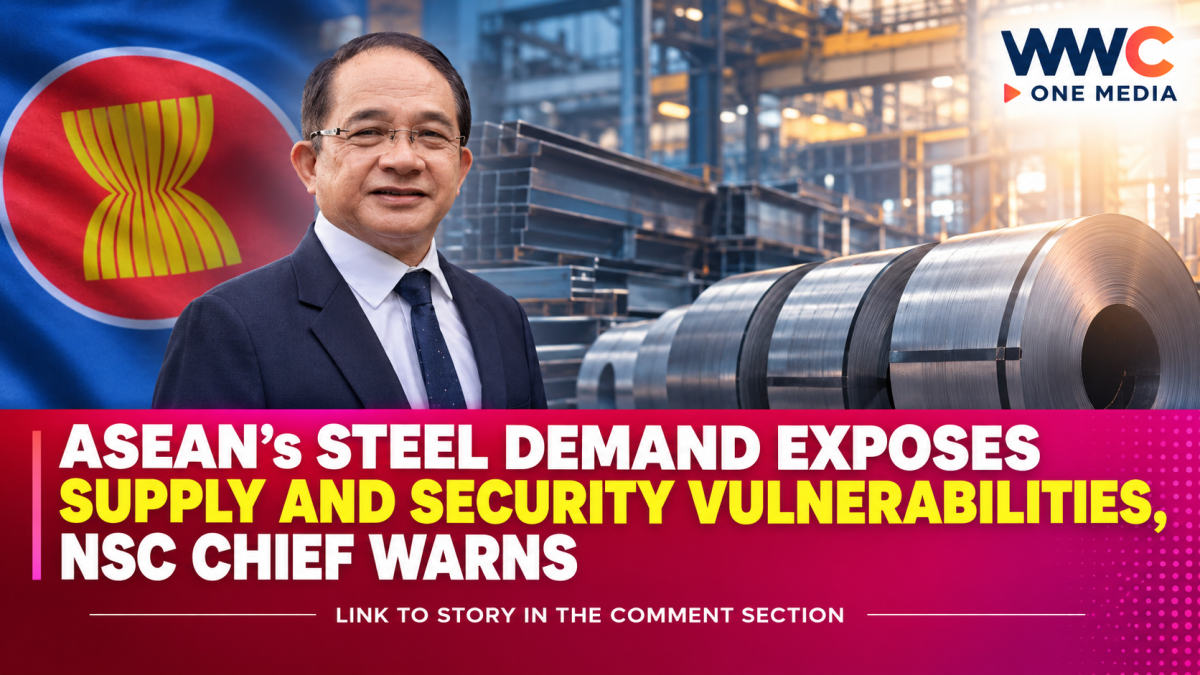
ASEAN’s rapid economic and infrastructure growth is driving stronger demand for steel, but the region faces vulnerabilities because its steel supply chains remain exposed to concentrated sources, volatile input costs and uneven production capabilities.
National Security Council Director General Eduardo Año described the situation as a “steel paradox,” with Southeast Asia needing more steel to support infrastructure, energy and industrial expansion while facing challenges in securing reliable and resilient supplies.
The issue goes beyond industrial production. Steel is considered critical to infrastructure, transportation, energy facilities and defense, making disruptions potentially significant for both economic activity and national security.
For the Philippines, the dependence is particularly relevant because the country imports about 70% of the high-grade finished steel required by its armed forces, according to Año. He also warned that the quality of steel used in buildings, bridges, roads and ports has direct implications for public safety, particularly in disaster-prone countries.
ASEAN’s steel challenge is being compounded by volatile energy and raw-material prices, differences in quality standards and increasingly demanding environmental and carbon requirements. These pressures could make it more difficult for countries to secure affordable and dependable supplies as construction and industrial activity expands.
Año proposed greater “resilient interdependence” rather than complete self-sufficiency. Under this approach, ASEAN economies would remain open to international trade while reducing excessive dependence on a single supplier, transportation route, technology or production center.
The proposed approach would include diversifying sources of raw materials and energy, strengthening domestic production capabilities, improving logistics and reserves, and developing trusted partnerships among regional economies.
The goal would not be for every ASEAN member to produce all the steel it needs. Instead, countries could connect their respective industrial capabilities and resources to create a more reliable regional supply network.
As ASEAN chair in 2026, the Philippines is positioned to support discussions on a regional steel resilience roadmap involving governments, businesses, researchers, financial institutions and other stakeholders.
The broader challenge is ensuring that ASEAN’s economic expansion is supported by supply chains capable of withstanding disruptions. For a region investing heavily in infrastructure and industrial capacity, reliable access to steel is increasingly tied not only to growth but also to resilience and public safety.