Ayala Corp. is placing greater emphasis on social infrastructure as the group expands initiatives spanning healthcare, education, community development and livelihood, linking its business operations with efforts aimed at addressing wider needs across Philippine communities.
The strategy, carried under the Alagang Ayala platform, brings together several businesses and programs designed to strengthen access to essential services while creating opportunities for long-term economic participation.
The group’s approach reflects a broader view of infrastructure that extends beyond roads, buildings and transport systems. Healthcare facilities, schools, connectivity, financial services, housing and community spaces can also shape how people live, work and participate in the economy.
Ayala formalized its focus on these areas earlier this year when it appointed Paolo Maximo F. Borromeo as chief social infrastructure officer. Borromeo, who also heads Ayala Healthcare Holdings, oversees the group’s social infrastructure businesses, including healthcare, education, community development and livelihood programs, as well as sustainability, state affairs and external communications.
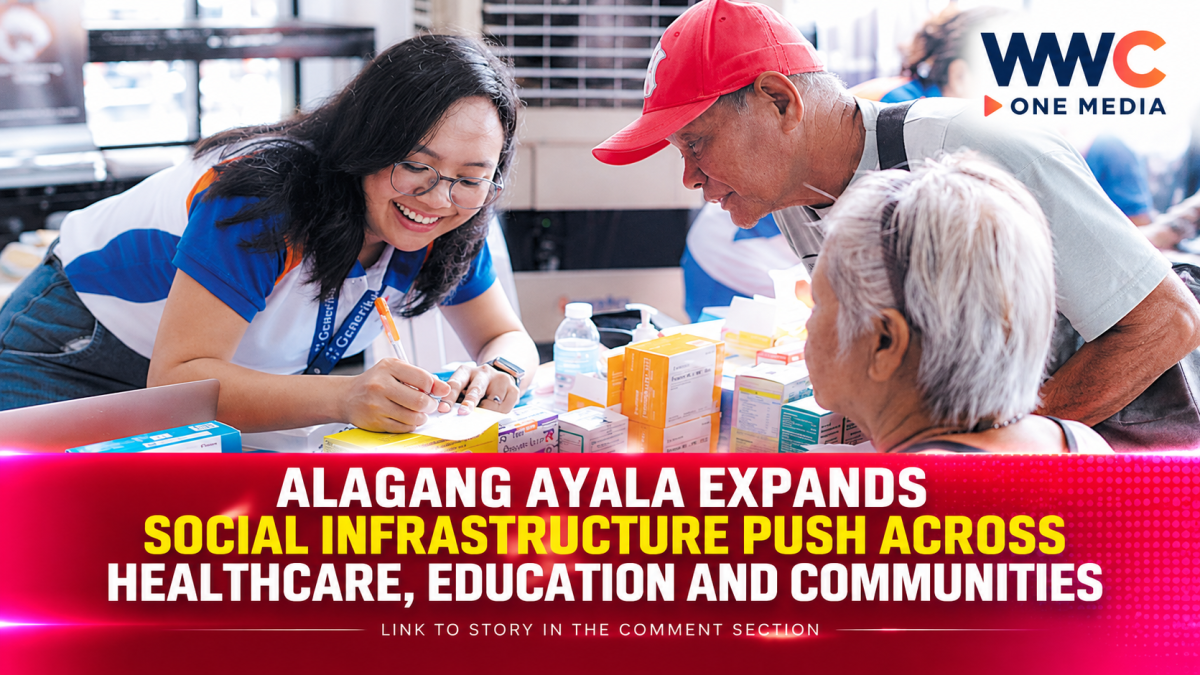
Healthcare is one of the most visible components of the strategy.
Through AC Health, Ayala has continued building and expanding healthcare facilities and services, with the broader objective of improving access to medical care while developing businesses that can operate sustainably over the long term.
The group has also connected healthcare with its wider community-development strategy, recognizing that access to hospitals and medical services is closely linked to where people live, work and travel.
Education represents another part of the social infrastructure platform.
Ayala has interests in education and skills development, areas that can influence workforce readiness as industries become increasingly technology-driven. Building stronger links between education, employment and business can help address skills gaps while giving young Filipinos more pathways into the formal economy.
The group’s approach also extends into community development and livelihood.
Rather than treating social programs as isolated charitable activities, Ayala has increasingly emphasized initiatives that can create longer-term economic participation. This includes supporting communities around its business operations and developing platforms that connect people with employment, entrepreneurship and essential services.
That approach is also visible in Ayala Land’s development strategy.
The property arm has been expanding mixed-use estates designed to bring workplaces, housing, retail, schools, healthcare and transportation closer together. Its “15-minute city” framework is being applied across 53 sustainable estates, with the goal of creating communities where essential services can be reached within relatively short distances.
The model is particularly relevant in Metro Manila, where long commutes and congestion impose substantial costs on workers and businesses.
Developments such as Makati, Bonifacio Global City, Vertis North, Arca South and Vermosa are being planned as integrated districts where employment, commerce and everyday services are located within connected communities. Transport infrastructure is also being incorporated into the model, including the One Ayala Terminal, which links Makati’s business district with public transportation networks.
The same philosophy is being applied to emerging growth centers outside the capital.
Ayala Land’s Nuvali development in Laguna, for example, is being expanded through Metro Nuvali, a planned 200-hectare district divided into Lakeside, Central and Civic areas. The development is intended to create another major employment and commercial center in Southern Luzon while incorporating transportation, residential, retail and civic functions.
Sustainability is another major component of Ayala’s broader social infrastructure agenda.
The group has been investing in renewable energy and energy-efficiency initiatives across its businesses. ACEN’s renewable portfolio has reached 7 gigawatts, while Ayala said 119 facilities sourcing electricity from renewable sources collectively avoid about 329,000 tons of carbon emissions annually and generate more than ₱191 million in electricity savings.
Ayala Malls has also expanded renewable-energy use, with about 98% of its malls operating on renewable energy, according to the group.
These investments demonstrate how infrastructure can intersect with both social and commercial objectives. More efficient buildings can reduce operating costs, renewable energy can provide greater protection from fuel-price volatility, and reliable connectivity can help households and businesses remain productive.
Connectivity is another important part of that equation.
Globe, an Ayala group company, has expanded digital services intended to provide households with more affordable access to high-speed internet. Reliable connectivity has become increasingly important for education, remote work, digital commerce and access to government and financial services.
Logistics also forms part of the group’s broader infrastructure ecosystem.
AC Logistics has been deploying renewable energy across warehouses and cold-chain facilities, while also electrifying portions of its delivery fleet and redesigning its network to reduce fuel dependence. These measures are intended to improve efficiency and reliability while helping businesses manage transportation and supply-chain costs.
The business dimension remains central to the strategy.
For Ayala, social infrastructure is not positioned separately from economic development. Healthcare facilities, education, transportation, housing, energy and connectivity all support the functioning of businesses and communities. Better access to these services can, in turn, expand the potential customer and workforce base for companies operating in the same areas.
The approach also comes as the Philippines continues to face a substantial infrastructure gap.
The government’s 2026 infrastructure spending target is equivalent to about 4.3% of gross domestic product, or roughly ₱1.3 trillion, while public-private partnerships are increasingly being used to supplement government resources. The country’s PPP pipeline reached 252 projects worth about ₱3.16 trillion in May, with transport accounting for the largest number of projects.
Private-sector participation therefore remains an important part of the country’s infrastructure-development landscape.
Ayala Chairman Jaime Augusto Zobel de Ayala has also called for a stronger public-private partnership framework, arguing that greater private-sector participation could help bring additional capital and accountability into infrastructure development.
For Ayala, the social infrastructure push provides another way to connect its businesses with the country’s longer-term development needs.
The challenge is ensuring that these initiatives deliver benefits that extend beyond individual projects. Healthcare must remain accessible, education must translate into useful skills, communities must create viable livelihoods, and infrastructure must improve productivity rather than simply add physical assets.
As Ayala expands Alagang Ayala across healthcare, education, community development, sustainability and livelihood programs, the strategy reflects a broader shift in how large Philippine companies are approaching nation-building.
The bigger question now is whether the integration of social infrastructure with Ayala’s business platforms can create measurable improvements in access, productivity and economic opportunity while remaining commercially sustainable over the long term.