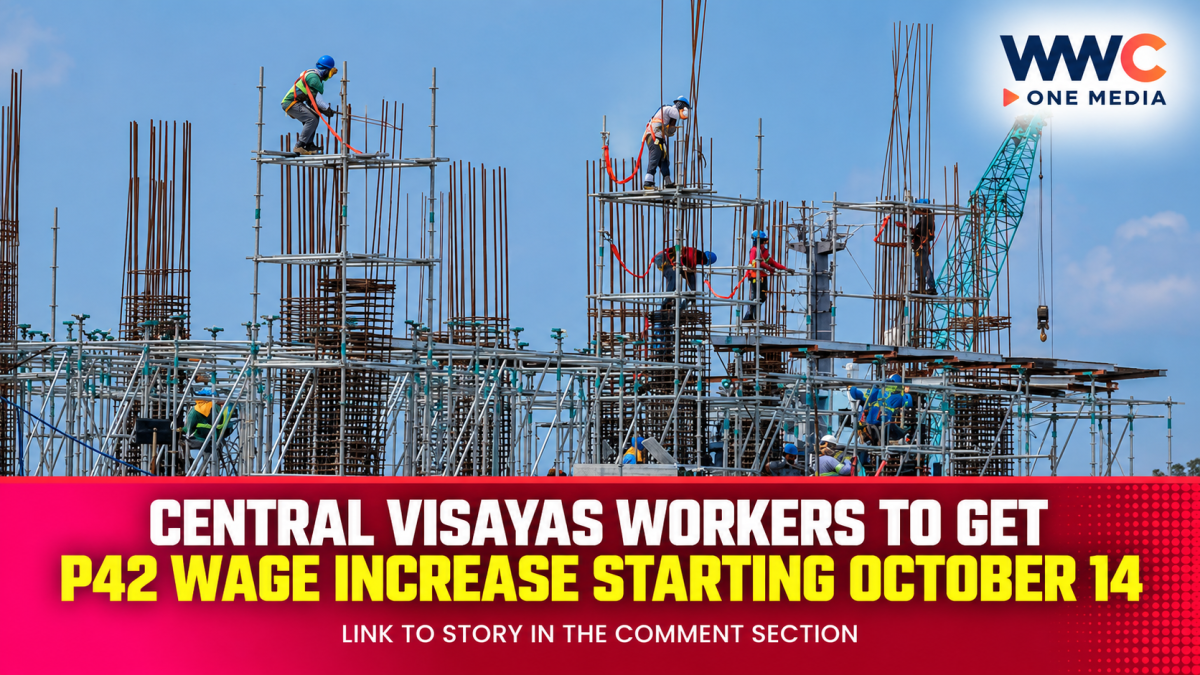
MANILA — Minimum wage earners in Central Visayas will receive a ₱42 daily wage increase starting Oct. 14, 2026, after the National Wages and Productivity Commission affirmed the latest wage order for the region.
The increase will raise the minimum daily wage to ₱582 in Class A areas, including Expanded Metro Cebu, and to ₱542 in Class B areas. The adjustment covers private-sector workers in Cebu, Bohol, Negros Oriental and Siquijor.
The new wage order was unanimously affirmed by the NWPC during its Sept. 26 deliberation, with five commissioners present and two absent. The Regional Tripartite Wages and Productivity Board VII will proceed with publication of the order, after which the new rates will take effect following the required publication period.
The adjustment represents an additional ₱1,092 in basic pay per month for a minimum wage worker who works 26 days. The increase is expected to benefit more than 337,000 private-sector workers, although other reports citing labor officials have placed the number of affected minimum wage earners at nearly 385,000.
For workers in Expanded Metro Cebu, the minimum wage will rise from ₱540 to ₱582 per day. In other covered areas classified under Class B, the rate will increase from ₱500 to ₱542. The previous rates took effect in October 2025 after the region’s earlier wage adjustment.
Domestic workers will also receive an increase under the new wage order, with the minimum monthly pay for kasambahays set to rise from ₱7,000 to ₱7,500.
The wage adjustment follows consultations and public hearings involving labor groups, employers and other stakeholders across Central Visayas. Wage officials said the determination considered socioeconomic indicators, workers’ basic needs and families’ requirements, as well as employers’ capacity to absorb higher labor costs.
The announcement comes as workers continue to face higher living costs. The Trade Union Congress of the Philippines has questioned whether the ₱42 increase is sufficient to address the region’s cost-of-living pressures and has pointed to a much higher estimated family living wage. That is the labor group’s assessment, rather than an official determination of the adequacy of the new minimum wage.
Employers, particularly micro, small and medium enterprises, will also need to adjust payroll systems and operating costs once the new rates take effect. Labor authorities have said qualified establishments facing financial difficulties may seek applicable exemptions under existing rules, while government assistance programs are also being prepared for eligible businesses.
The timing is also notable because the Central Visayas increase follows a separate ₱60 daily minimum-wage adjustment in Metro Manila, which took effect on Sept. 27. The two wage orders reflect separate regional wage-setting processes and different local economic conditions.
For employees, the additional ₱42 per working day will provide a higher statutory wage floor beginning in October. For employers, the adjustment means higher mandatory labor costs that will need to be incorporated into payroll and business planning.
The bigger issue now is how the new wage floor will affect household purchasing power, business costs and employment conditions across Central Visayas as the increase takes effect on Oct. 14.