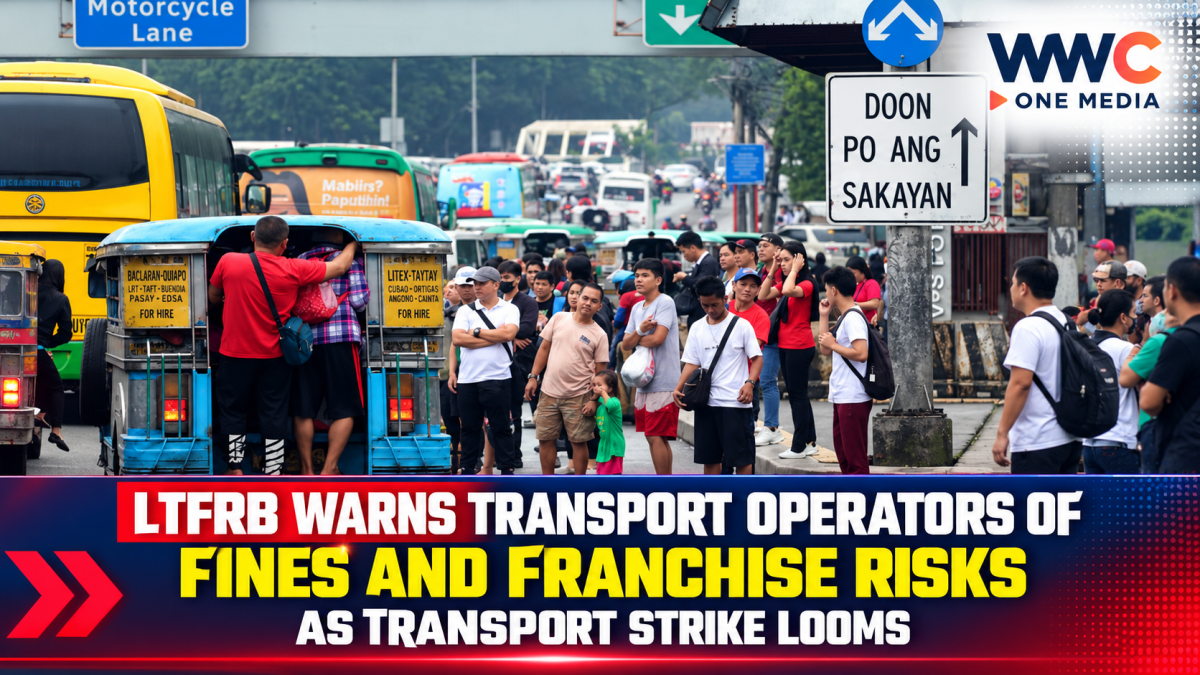
The Land Transportation Franchising and Regulatory Board (LTFRB) has warned public utility vehicle operators that they could face fines, suspension or even franchise cancellation if they fail to provide the transport services required under their franchises during the planned nationwide strike.
The warning comes as transport groups prepare for a fresh round of protests over soaring fuel prices, with the timing coinciding with the implementation of higher public transport fares beginning Sept. 28.
LTFRB Acting Chairman Greg Pua Jr. said operators whose fleets significantly stop operating could be issued show-cause orders and face a minimum fine of ₱5,000 for a first offense. He said subsequent violations could result in stronger sanctions, including suspension and cancellation of franchises.
The agency’s warning is based on the conditions attached to public transport franchises, which require operators to maintain their authorized services. Under the LTFRB’s abandonment rules, operators could face cancellation if less than 60% of a fleet continues operating for a specified period.
The issue is particularly significant because the planned strike comes as commuters are also preparing for higher fares.
Under the newly approved fare adjustments, the minimum fare for traditional jeepneys will rise from ₱13 to ₱14 for the first four kilometers, while the charge for every succeeding kilometer will increase to ₱2 from ₱1.80.
For modern public utility jeepneys, the minimum fare will increase to ₱17 from ₱15, while the succeeding-kilometer charge will rise to ₱2.40 from ₱2.20. Fare adjustments will also apply to other public transport services, including buses, taxis and UV Express vehicles.
The fare increase was approved after months of pressure from transport operators and drivers, who have argued that rapidly rising diesel and gasoline prices have significantly increased operating costs.
Transport groups, however, have continued to push for additional relief. Manibela is scheduled to hold a three-day strike from Sept. 28 to 30, while PISTON has announced a separate two-day nationwide protest on Sept. 29 and 30.
The groups have argued that the approved fare increase does not fully offset the impact of higher fuel costs. Their protests therefore place the government in the difficult position of addressing transport-sector operating expenses while also limiting the additional burden placed on commuters.
The government has been pursuing several measures alongside the fare adjustment. Earlier this month, programs including fuel subsidies, service contracting, free rides and other forms of assistance for public transport were granted exemptions from the election-related spending ban, allowing them to continue.
Authorities are also preparing for the possibility that the strike could disrupt commuters across Metro Manila and other areas.
The National Capital Region Police Office said police districts and stations would coordinate with local governments and transport authorities to assist passengers and maintain order in areas expected to experience shortages of public transportation. Police officials also called on participants to keep demonstrations peaceful and respect operators and drivers who choose to continue serving passengers.
Another issue emerging alongside the strike is the implementation of the new fare matrix.
Transport authorities have reminded operators and drivers that the appropriate updated fare guide must be displayed inside their vehicles. The fare matrix is intended to show passengers the authorized rates and help prevent disputes over the newly approved fares.
The simultaneous arrival of the fare hike and transport strike could therefore create a complicated situation for commuters. Passengers who find available vehicles may have to pay the new rates, while those in areas heavily affected by the strike could face longer waiting times or limited transportation options.
For operators, meanwhile, the LTFRB warning creates another layer of pressure. They must weigh the financial impact of continuing operations against the possible regulatory consequences of failing to meet franchise requirements.
The dispute also reflects the broader challenge facing Philippine public transportation as fuel prices remain elevated. Transport groups are seeking measures that can keep their businesses viable, while government agencies are trying to maintain reliable services and prevent excessive increases from being passed on to commuters.
The immediate focus will now be on how extensively operators participate in the strike and how authorities determine whether individual franchises have failed to meet their service obligations.
With higher fares taking effect at the same time as organized protests, the coming days could become a major test of how the government balances commuter costs, transport-sector survival and the enforcement of franchise rules.