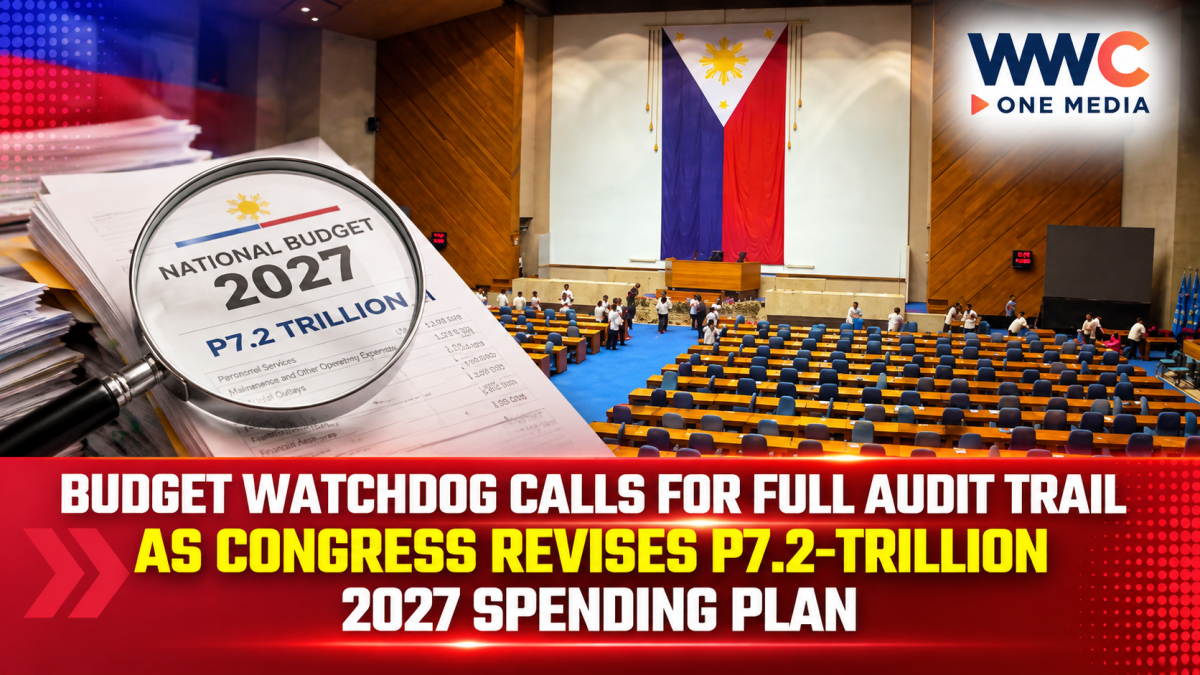
MANILA — A budget watchdog is calling for a complete audit trail showing every amendment, insertion and deletion made to the Philippines’ proposed 2027 national budget, arguing that the public should be able to track how spending proposals change from the National Expenditure Program to the final General Appropriations Act.
The call comes as Congress works through the proposed ₱7.2-trillion national budget for 2027. The House of Representatives completed nine days of plenary deliberations on Sept. 25, examining the appropriations of hundreds of government agencies and state institutions before the measure moves toward the next stages of the legislative process.
The People’s Budget Coalition said a transparent record should show the original budget proposal, subsequent congressional amendments and the final appropriations approved by both chambers. Such a system would make it easier to determine which projects or allocations were added, removed or modified during the legislative process.
The demand comes amid heightened scrutiny of changes to the proposed 2027 spending plan. The watchdog had previously identified hundreds of billions of pesos in budget items it considered deserving of further scrutiny, including infrastructure allocations and other spending categories. Those classifications are the coalition’s assessment and do not by themselves establish that the flagged items are improper or unlawful.
An audit trail would provide a chronological record of budget changes rather than showing only the final version approved by lawmakers. That distinction matters because amendments can substantially alter the location, scope or funding level of individual programs and projects as the budget passes through Congress.
The House has said additional safeguards are being considered as lawmakers prepare the 2027 General Appropriations Act. These include clearer reportorial requirements, stronger standards for evaluating the use of funds and continued coordination with the Department of Budget and Management.
Infrastructure spending has been one of the areas receiving particular attention. During budget deliberations, lawmakers examined project documentation and implementation requirements, while the House leadership said documentary requirements for infrastructure projects included in the General Appropriations Bill and eventual appropriations law would have to meet established standards.
The transparency issue also comes as the government develops digital tools for tracking public spending. A blockchain-based budget transparency system launched for the 2026 General Appropriations Act is intended to create a permanent digital record covering budget approval, spending, disbursement and reporting. The system is designed to allow government agencies and the public to track budget information and preserve the history of official records.
For the 2027 budget, a comparable amendment-level record could provide another layer of visibility by allowing citizens to see not only how much money was ultimately appropriated, but also how and when particular allocations changed during congressional deliberations.
The House completed its plenary examination of the proposed ₱7.2-trillion budget after reviewing the spending proposals of 245 departments, agencies, attached agencies and government-owned and controlled corporations, along with 113 state universities and colleges. The Senate will conduct its own examination before the two chambers reconcile their respective versions.
A full audit trail would therefore become most useful once the budget moves through both chambers, because changes can continue during committee deliberations, plenary debates and the bicameral conference process before the final appropriations law is enacted.
For taxpayers, the central issue is traceability: being able to follow a peso from the government’s original spending proposal through congressional amendments and ultimately to the programs and projects authorized for implementation.
The bigger question now is whether lawmakers and budget agencies will provide the level of amendment-by-amendment documentation needed to make the ₱7.2-trillion spending plan fully traceable from its original proposal to the final 2027 budget.