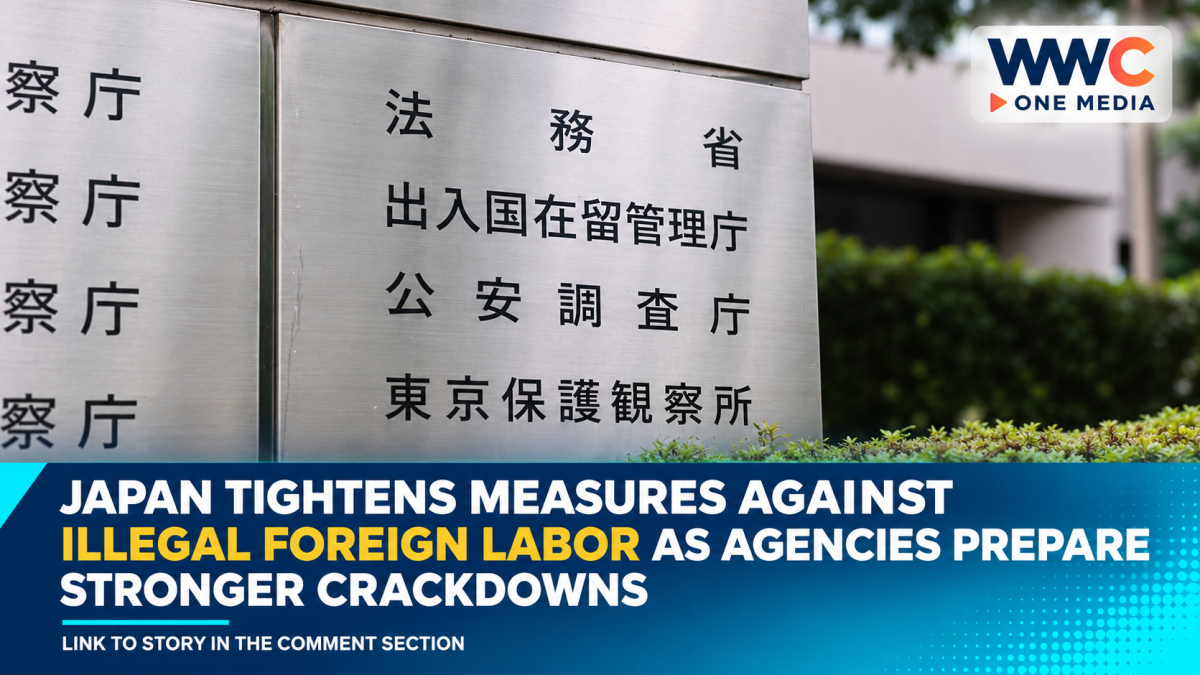
Japan’s Immigration Services Agency is preparing to work more closely with other government bodies to combat the illegal employment of foreign nationals, as authorities intensify efforts to identify unlawful work and strengthen enforcement.
The agency said more than 70% of foreign nationals who faced deportation procedures and other related measures in 2025 were found to have worked illegally, highlighting the link between immigration violations and unauthorized employment.
Under the new approach, the Immigration Services Agency plans to expand cooperation with other ministries and agencies, including joint investigations targeting employers and intermediaries involved in illegal employment. The government is also strengthening measures aimed at identifying foreign nationals working outside the conditions of their residence status.
The crackdown comes as Japan continues to experience strong demand for foreign labor amid demographic and workforce pressures. At the same time, authorities have been tightening enforcement against people who violate immigration rules and businesses that employ them unlawfully.
Japan’s broader immigration enforcement program also includes stronger action against overstayers. The number of foreign nationals known to be staying illegally fell to 68,488 as of Jan. 1, down from about 74,863 a year earlier.
The government is also expanding digital and cyber-related enforcement. Immigration authorities have been considering stronger monitoring of social media and online platforms to identify suspected violations, including the use or distribution of forged residence cards. A dedicated unit has been proposed to strengthen this work.
Employers and brokers are also facing tougher penalties. Under measures announced earlier this year, the maximum penalty for those who cause foreign nationals to work illegally or arrange unauthorized employment is scheduled to rise from up to three years in prison or a ¥3 million fine to up to five years in prison or a ¥5 million fine from April 2027.
Authorities said 13,435 foreign nationals were found to have worked illegally in 2025, representing 72.9% of those subject to deportation procedures and other measures that year.
Japan’s labor authorities, meanwhile, continue to promote legal employment of foreign workers while urging employers to comply with reporting and employment-management requirements. The government’s policy therefore combines efforts to support legitimate foreign employment with stricter action against unauthorized work.
The expanded cooperation between immigration officials and other government agencies signals that Japan’s response to illegal foreign labor is moving beyond immigration enforcement alone. Employers, brokers and foreign workers who violate the rules could face closer scrutiny as authorities strengthen inspections, information sharing and online monitoring.