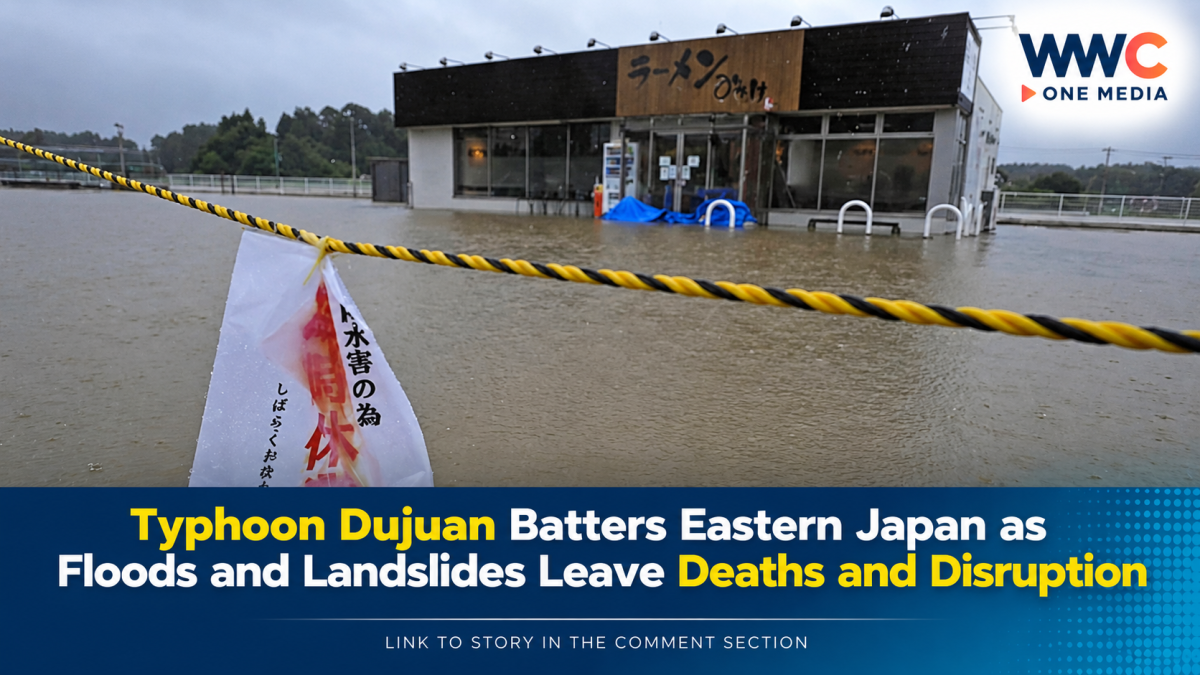
Typhoon Dujuan has battered eastern Japan with torrential rain and powerful winds, triggering floods and landslides, disrupting transport and leaving communities around Tokyo and the Kanto region facing a dangerous aftermath.
The storm approached Japan’s Pacific coast on Sept. 21, with the Japan Meteorological Agency warning that conditions could deteriorate rapidly as Dujuan moved toward the Kanto region, which includes Tokyo. Some parts of the Izu Islands had already received more than 300mm of rain before the storm’s closest approach.
Oshima in the Izu Islands was placed under Japan’s highest-level landslide special warning after rainfall reached about 600mm in 24 hours. Authorities warned that landslides may already have occurred in vulnerable areas and urged residents to take immediate action to protect their lives.
The extreme rainfall also caused flooding and landslides in Chiba and Kanagawa prefectures. Roads were inundated, rivers overflowed and homes were damaged, while rescue teams searched areas hit by landslides south and east of Tokyo.
By Sept. 22, at least two people had been confirmed dead and four others were reported missing in connection with landslides caused by the storm, according to Japanese public broadcaster NHK. Nearly 50,000 homes had also lost electricity as the storm disrupted infrastructure.
The storm caused major travel disruption. Hundreds of flights were cancelled, while railway and highway services were suspended or restricted in affected areas. More than one million people were also under evacuation advisories as authorities responded to flooding and landslide threats.
The disruption extended beyond daily travel. An equestrian event at the Asian Games in Aichi Prefecture was postponed because of the approaching storm, while other activities and transport services were affected by the severe weather.
Although Dujuan has begun moving northeastward away from Japan and into the Pacific, the danger has not immediately disappeared. Authorities have warned that saturated ground can remain highly vulnerable to landslides even after the heaviest rain has passed.
The focus is now shifting from the storm’s approach to the difficult recovery ahead, as emergency crews assess damaged homes and infrastructure while residents remain alert for further flooding, landslides and transport disruptions.