
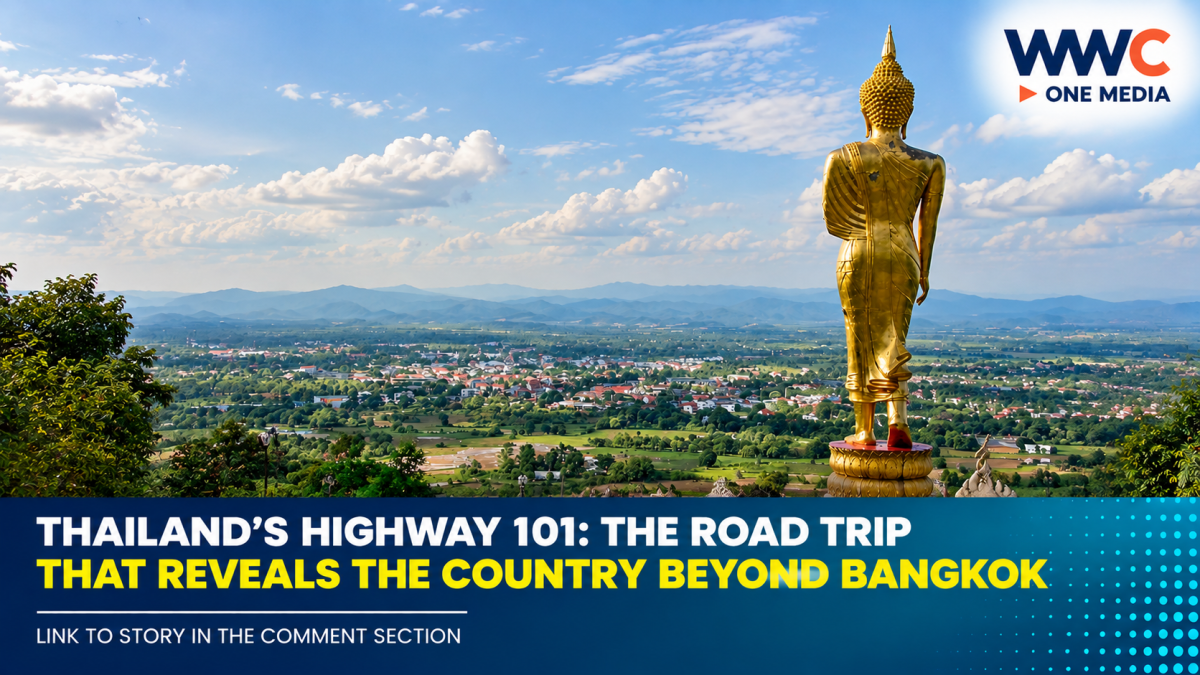
BANGKOK — Forget the crowded tourist routes for a moment. One of Thailand’s most revealing journeys begins on a quieter road, where ancient kingdoms, rural communities, temples, mountains and everyday Thai life unfold mile after mile.
Thailand’s Highway 101 offers a road trip through the country’s history and culture — connecting destinations that can easily be overlooked when travelers stick to Bangkok, Chiang Mai or the most famous beach resorts.
The national highway runs through parts of central and northern Thailand, including Kamphaeng Phet, Sukhothai, Uttaradit, Phrae and Nan, before reaching the country’s northern frontier near Laos.
Rather than being simply a road connecting destinations, Highway 101 can be viewed as a journey through different chapters of Thailand’s past and present.
From ancient kingdoms to rural Thailand
One of the route’s biggest attractions is Sukhothai, the heartland of the historic Sukhothai Kingdom.
The region contains the ruins of the ancient city of Sukhothai and other historic settlements associated with the kingdom. The Sukhothai and Si Satchanalai historical areas are UNESCO World Heritage sites, giving travelers an opportunity to see some of Thailand’s most important archaeological and cultural heritage.
Highway 101 passes through several districts of Sukhothai province, including Si Satchanalai, Sawankhalok, Si Samrong and Mueang Sukhothai, before continuing north.
That makes the highway particularly interesting for travelers who want to combine sightseeing with a deeper understanding of how Thailand’s regional history developed.
The road gets quieter — and more scenic
North of the major historical centers, the journey gradually shifts toward smaller communities and countryside.
The route through northern Thailand passes rolling hills, agricultural areas and forested landscapes. Travel guides describe sections of Highway 101 as climbing through rural terrain, including areas associated with cotton fields and teak plantations.
The slower pace is part of the attraction.
Instead of rushing from one famous attraction to another, travelers can stop in towns, visit local temples, explore markets and experience landscapes that rarely appear in the standard Thailand vacation itinerary.
Phrae adds another layer of history
Further north, Highway 101 reaches Phrae, a province long associated with Thailand’s northern cultural traditions.
Phrae is particularly known for its historic architecture and connection to the region’s teak industry. The city and surrounding province offer another perspective on northern Thai history, before the highway continues toward Nan.
The route also provides access to religious and cultural landmarks along the way, including temples located close to Highway 101.
Then comes Nan
The journey eventually reaches Nan, one of northern Thailand’s culturally distinctive provinces.
Nan’s history has been shaped by its connections with the Lan Na cultural world and neighboring kingdoms, giving the province traditions and architectural styles that differ from those found in Thailand’s larger tourist centers.
From Nan, Highway 101 continues through areas including Tha Wang Pha, Pua, Chiang Klang and Thung Chang, eventually reaching the northern border area near Laos.
For travelers, that means the road itself becomes part of the experience.
Why Highway 101 matters
Thailand is often marketed through its biggest attractions: Bangkok’s skyline, Phuket’s beaches, Chiang Mai’s temples and the country’s famous islands.
But Highway 101 tells a different story.
It connects places where history, agriculture, religion, architecture and contemporary rural life exist side by side.
A journey along the road can move from archaeological ruins to working communities, from historic temples to mountain landscapes, revealing how varied Thailand can be within a relatively compact part of the country.
And because the route stretches across several provinces, travelers can experience changes in landscape and local culture without constantly relying on major tourist hubs.
A road trip with more than scenery
The appeal of Highway 101 isn’t simply that it offers pleasant driving.
It provides context.
Sukhothai helps explain an important period in Thai history. Phrae reveals another layer of northern heritage. Nan offers a distinctive regional identity shaped by centuries of interaction with neighboring areas.
Between them are villages, farms, temples and landscapes that show the Thailand that exists beyond the postcard version.
That is what makes Highway 101 more than a rural road trip: it is a journey through the layers of Thailand itself.
For travelers willing to take the slower route, the payoff isn’t just another collection of photographs.
It is a better understanding of the country.




Leave a Reply