
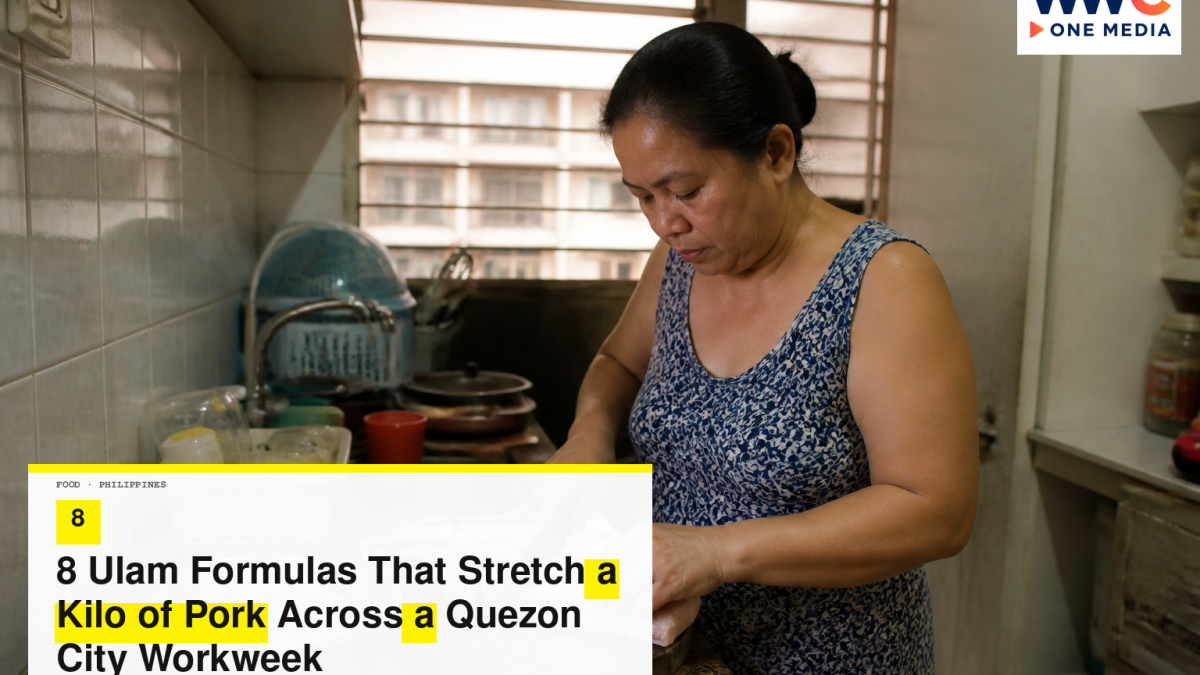
QUEZON CITY, Philippines — A kilo of pork is a week if you treat it like a system, not like one night of sizzling for a crowd that is not coming. The eight ulam formulas that stretch a kilo of pork across a Quezon City workweek live in palengke bags, a rice cooker that never quite cools, and leftover math you do on a phone while the UV crawls down Commonwealth. QC kitchens already have the tools. What they lack is a plan that survives Monday traffic, a BPO night, and the 9 p.m. hunger that wants delivery.
This is not a cookbook with plated garnish. It is a workweek. Muñoz, Farmer’s in Cubao, the wet aisles behind a barangay hall in Project 4, the stall your tita still trusts in Novaliches: the kilo comes home in thin plastic that sweats by the time you hit the jeep. You portion it on a chopping board that shares the counter with a rice cooker, a bottle of patis, and a charger. Then you cook like a person who has five lunches to pack and two dinners that will be eaten standing up.
Read the eight as a sequence, not as a menu you cherry-pick on a bored Thursday. Skip the freeze and you will cook the whole kilo on Monday because it smells like a dare. Skip the wet dish and you will fry everything into one salty night and spend Wednesday on instant noodles you swore you were done with. The formulas are boring on purpose. Boring is how a kilo lasts until Friday without pretending prices stood still.
1. Buy the kilo like a palengke system — the first of the ulam formulas
The first of the ulam formulas is not a pan. It is the bag. A Quezon City workweek dies at the stall if you buy one pretty cut because it looked like a restaurant plate under a fluorescent tube. Palengke pork is a mix if you ask for a mix. Kasim for wet dishes. A strip of liempo if you will fry once. Bones and bits if the stall will give you the trimmings you already paid for in the kilo. You are not building a lechon. You are building five lunches and two emergency dinners.
Go when the ice is still doing work. Early at Farmer’s, before the Cubao heat turns the aisle into a second kitchen. Early at Muñoz if you are coming off a night shift and the city is still half-asleep. Name the week out loud, even if only to yourself: soup day, fry day, gisa day, adobo, eggs. The vendor does not need your calendar. You do. If you only say “kilo of pork,” you will go home with a shape that wants one cooking method, and one cooking method is how the kilo is gone by Tuesday.
Do not be precious about supermarket trays if that is all you can reach after a late out at Eastwood. A tray from a grocer along Katipunan or near SM North still portions. What changes is the trim. Palengke gives you bones and fat you can use. A tray often gives you a uniform slab that looks efficient and then bores you. Either way, the rule is the same: you are buying days, not a dish. If the kilo is all one muscle and no bone, plan a broth from a cheap soup pack or leftover chicken frame later in the week. The wet dish still matters.
What not to do: buy a second kilo “because it’s there” and then freeze it as a shapeless brick. Label fails. Future-you will thaw the brick on a Wednesday and cook it like Monday all over again. One kilo, one week, one plan. If the household is bigger than two, you scale the same formulas, you do not invent a fiesta.
Carry a small insulated bag if you are transferring at North Ave or waiting for a jeep on Aurora. Pork sitting in a backpack on a QC afternoon is already cooking. The formulas assume the meat arrives home still in the same century you paid for it.
2. Day one: a wet dish that creates leftovers on purpose
Sinigang or nilaga is not nostalgia. It is leftover architecture. Broth is a second meal, a third if you are honest about the rice. On Monday night, or Sunday if your shift pattern is ugly, you cook the wet dish with a portion of the kilo — not the whole bag. Kasim or a bony cut. Kangkong, sitaw, radish, whatever the palengke still had that was not sad. Tamarind mix from a packet is allowed. This is a Quezon City workweek, not a tasting menu in Poblacion.
The point is volume you can reheat. A pot that looks too big for one person is the correct pot. You eat a proper bowl with rice from the cooker. You cool the rest on the counter until it is not a steam cloud, then fridge. If you live in a studio along Tomas Morato or a boarding room in Cubao where the fridge is a shared politics, portion into a lidded box that is obviously yours. Tape your name. This is not cute. This is how the wet dish survives a housemate who “thought it was communal.”
Day one’s leftover is not only meat. It is liquid. Tuesday lunch can be broth over rice with a few slices and extra kangkong you wilt in the same bowl with hot water from the dispenser. Wednesday, if anything remains, you can reduce it into a sauce for a small fry. The kilo stretches because water, vegetables, and rice do the filling. Pork is the flavour that makes you pack the lunch instead of buying a rice meal under the MRT.
What not to do: cook the wet dish so meat-heavy that the pot is a pile with a little soup. That is a party. You will eat it like a party and then the week has no architecture. Keep the meat modest in the bowl. You can always add a fried egg later. You cannot un-eat Monday.
If you hate sinigang, nilaga. If you hate both, a light tinola-style pot with pork instead of chicken still counts as wet. The formula is broth plus vegetable plus a measured amount of the kilo. Name it whatever you need to name it so you will actually cook it on a worknight.
3. Day two: garlic fried rice plus a small fry of the remaining slices
Not a new kilo. Day two is the night people blow the plan because they are tired and the palengke bag is still visible. You take a few slices — a number you can count on one hand if you live alone, a small plate if you are two — and you fry them with garlic in a pan that is actually hot. You do not crowd. Crowding is steam, and steam is how leftover pork becomes grey sadness. The rice cooker has yesterday’s rice, or this morning’s. Cold rice fries. Fresh-hot rice clumps. This is the whole technique.
QC kitchens forgive a lot. They do not forgive a wet fried rice that you then salt into a headache. Dry the pan. Garlic until it smells like a decision. Pork slices until the edges take colour. Rice. A little of the wet-dish broth if you saved a spoon of it, or a splash of toyo, not both as a flood. Egg if the slices look lonely. You are stretching, not plating for a camera.
This meal is also the lunch that survives a bag under a desk in a Quezon Avenue office. Pack the fried rice in a box that will not leak soy onto a laptop sleeve. Pack the slices on top, not mixed into a mash. Reheat if you have a pantry microwave. If you do not, this is a room-temperature rice meal that still beats a 3 p.m. bread from the lobby.
What not to do: fry half the remaining kilo because the pan is already dirty. The dirty pan is a sunk cost. The remaining kilo is Wednesday through Friday. Wash the pan. The workweek is longer than your dishwashing mood.
If you come home after 10 from a shift toward Ortigas, day two can be the garlic rice only, with the slices reduced to bits you render for flavour. That still counts. The formula is leftover starch plus a measured fry. It is how the kilo stops being a block of obligation in the fridge.
4. Day three: ginisang vegetables with pork as flavour, not the pile
The kilo is stretching, which means day three looks like a vegetable dish that happens to have pork in it. This is the meal Instagram will not thank you for. It is also the meal that keeps you from buying a budget rice plate on a sidewalk in Kamuning because you “have nothing at home.” You have something at home. You have a handful of the kilo, chopped small, and whatever the palengke still sold that will last: cabbage, beans, eggplant, ampalaya if you can live with it, pechay that you will actually cook tonight and not watch wilt.
Gisa is onion, garlic, tomato if you have it, then the bits of pork until they give up fat, then the vegetables, then a splash of water or leftover broth. Salt. Patis at the end if it needs a voice. Rice from the cooker. The pork should be findable, not a layer. If you cannot find a piece, you used too little and you will feel cheated and order something. If the plate is mostly meat, you used too much and Thursday is instant noodles with a story.
Day three is where leftover math gets honest. Look at what remains of the kilo before you chop. If you already fried generously on day two, day three is bits. If you were strict, day three can have a few proper cubes. Either way, the vegetables are the volume. QC wet markets still sell a mixed bag if you ask. You do not need a recipe blog’s shopping list. You need a bag that will cook in one pan on a weeknight while the rice clicks.
What not to do: call this a “cleanse” and then hate it. It is not a cleanse. It is ulam. Eat it with enough rice. Put a fried egg on it if the day was long. The formula survives an egg. It does not survive you deciding the kilo failed because a plate of cabbage did not feel like a celebration.
Teacher’s Village rentals and Fairview kitchens both do this dish. The difference is the extractor fan. Open a window. Gisa smell in a closed room becomes a fight with a roommate who did not eat it. Cook, plate, lid the leftovers, wipe the stove. The week is still going.
5. Day four: adobo from a reserved cut, cooked once, eaten twice
Adobo is a time machine, which is why it belongs in the middle of a Quezon City workweek and not only in the myth of a Sunday family table. You reserved a cut when you portioned on day zero — a piece that can take a simmer in toyo, vinegar, garlic, peppercorn, bay if you have the tired leaves in a jar. You cook it once. You eat it twice. That is the formula. If you cook adobo as a one-night event, you wasted the one dish that wants to sit.
The reserved cut is why formula 1 asked you not to fry the whole kilo. Adobo wants meat that still has a little fat and a little time. You do not need a clay pot. A covered pan on a condo stove along Scout area is enough. Vinegar first in the habit you were taught, or meat first in the habit the other side of the family uses. This desk is not here to referee that. What it will referee: do not drown it until it is a salty lake you cannot reheat. You want a sauce that will cling to rice tomorrow.
Day four dinner is adobo and rice. Day four lunch tomorrow, or day five breakfast if your shift is inverted, is the same adobo, hotter, saucier, maybe shredded into garlic rice. Some people fry the leftover adobo pieces for texture. That is allowed. What is not allowed is cooking a fresh adobo from the last of the kilo and also frying a new thing the same night. One cooking event. Two eats. The kilo has a job.
What not to do: add coconut milk because a video said so, then wonder why it does not keep as cleanly in a warm kitchen. Keep this adobo in the long-keeping lane: vinegar, soy, garlic. If you want a different dish, that is a different week. This week the reserved cut is doing overtime.
If you live without a reliable fridge, this is the dangerous formula. Adobo keeps better than a wet stew in the heat, which is why it earned its reputation, but a boarding-house counter in Cubao in April is not a laboratory. Cook, eat, finish within the window you actually trust. The formula assumes a fridge that closes. If yours does not, compress adobo into the early days and let eggs carry the back of the week.
6. Day five: eggs and bits plus leftover soup if any
Eggs are the partner, not a failure. Day five is when people feel the kilo is “gone” because they cannot see a chop. There are bits. There is fat you saved. There is soup if you were disciplined on day one. There is an omelette or a scrambled pan with chopped leftover adobo, or a fried egg with a spoon of gisa, or arroz caldo energy without calling it that: garlic, leftover broth, rice, a few shreds of pork, egg on top.
This is the meal that keeps Friday from becoming a food-court spiral at Trinoma because you “earned it.” You may still earn it. The formula is there so that earning it is a choice, not a collapse. Pack the egg dish if you can. A boarding-house kitchen can still boil eggs in the rice cooker while the rice cooks. People forget the rice cooker is a second pot. Use it.
If the bits are truly gone, the formula still holds as egg plus leftover starch plus a vegetable that cooks in five minutes. The kilo’s job this day is flavour memory: the oil you fried in, the sauce you saved, the broth ice cube you froze like a person with a plan. That counts as stretching. Stretching is not a daily steak.
What not to do: buy another kilo on Friday “to restock” and cook it that night. Restock is Saturday morning palengke, same system. Friday night pork is how you invent a second week inside the first and then throw half of it away on Sunday when you cannot face it.
QC workweeks include inverted shifts. If your Friday is someone else’s Tuesday, keep the sequence relative to the buy date, not to the calendar. Day five is five eating occasions after the kilo arrived, not the word Friday on a phone.
7. Freeze one labelled portion the night you buy
Future-you on a BPO night is not a better shopper. Future-you is hungry at 11:40 in a kitchen in Libis-adjacent QC, or in a room near Ateneo that has one pan. The freeze is the formula that looks like doing nothing. You wrap one portion the night the kilo comes home, before you cook the wet dish, before the smell makes you generous. Label it. Date it. Name the intended dish if you are a person who will read a label: “gisa Thursday” is better than “pork.”
A freezer in a shared apartment is a political document. Put the portion in a bag that cannot be mistaken for someone else’s. If the freezer is a glacier of unnamed bags, you will lose the portion to frost and then to a housemate’s late-night experiment. This is leftover math: one-fifth of the kilo, or whatever your household size needs for one emergency meal, is removed from temptation on Monday.
Thaw in the fridge while you are at work, not on a counter in the afternoon heat, and not in a microwave until the edges cook and the centre stays stubborn. The thawed portion becomes day four adobo, or day three gisa, or a small fry when the wet dish is gone and you still have two days. It is a shock absorber. Without it, every bad day raids the fresh kilo.
What not to do: freeze the whole kilo “to be safe” and then live on noodles because thawing feels like a project. The freeze is one portion. The rest of the kilo is the week’s working meat. A solid anonymous brick is how people rebuy pork they already own.
If you do not have a freezer, skip this formula without guilt and be stricter on days one through three. A mini-fridge that only chills still stores the wet dish and the adobo. The freeze is a bonus for QC kitchens that have it. Do not pretend a shared ice compartment full of ice candy is a food plan.
8. Bones, bits, and the rice cooker leftovers that finish the week
A palengke kilo includes flavour you already paid for. Bones go into a second small pot or into the rice cooker with extra water after you lift the rice, if you know your cooker and you are not about to warp a cheap pot. Bits become fried rice on the last night, not the bin. Fat you rendered on day two can fry tokwa, or an egg, or yesterday’s rice that dried out in the cooker because nobody unplugged it.
This is the formula people skip because it looks like poverty theatre. It is not. It is the opposite of throwing money in a lined bin in a Quezon City condo that already costs you a service elevator and a Wi-Fi bill. The last meal of the stretch can be ugly and still be ulam: garlic rice, scrambled egg, a few crunchy bits, pickled papaya if you have a jar, sliced tomato. You are not required to like every texture. You are required not to toss the parts that still cook.
Rice cooker leftover math is its own small science. Cook rice once for two meals when you can. The second meal is fried rice or a bowl with broth. A cooker that sits on warm until the rice is a crust is a wasted crust unless you mean to scrape it. Some households fight over the tutong. If yours does, plan it. If yours does not, soak the pot and stop performing waste.
What not to do: keep bones until they become a science project in a plastic bag in the vegetable drawer. Bones are a same-week ingredient. Same for bits. The stretch is a workweek, not a museum of good intentions.
Instant noodles can sit beside this meal as a side if you need salt and a hot cup. They are not the plan that replaces the pork. You promised the kilo a week. The last formula is how you keep the promise without pretending you are above a packet.
Palengke, rice cooker, leftover math: the QC kitchen that makes the eight work
The eight ulam formulas assume a kitchen that is not a showroom. A two-burner stove in a unit near Araneta. A shared sink in a house in Project 2. A window that faces another window. You portion on the lid of the rice cooker if the board is wet. You cool soup on the only clear corner of the counter. You label with masking tape because a housemate also bought pork.
Leftover math is arithmetic you can do without a spreadsheet. One kilo. One wet pot that feeds two eating occasions. One small fry. One gisa. One adobo that feeds two. One egg night. One frozen shock absorber. Bones at the end. If an occasion eats two portions because someone came over, you skip a later fry, you do not buy a panic kilo at a 24-hour grocer on Aurora at 1 a.m. unless you truly must.
Rice is the silent half of every formula. A Quezon City workweek that tries to stretch pork while buying a rice meal outside at lunch is doing two food systems at once. Pack the lunch. Even a small box of yesterday’s wet dish over rice is the stretch. The office microwave, the pantry, the park bench on a nicer day near UP if you work that side: the location does not matter. The packed box does.
If prices at the stall moved since last month, the formulas still hold. You do not need a number from a newsdesk to know a kilo is not a party anymore. What you need is to stop cooking it like one. Cut lists can change. Kasim one week, a different mix the next. The system is portion, wet, fry, gisa, adobo, egg, freeze, bits. Keep the system even when the stall’s mix is ugly.
Saturday is restock or rest. If anything remains, it becomes a breakfast fry, not a guilt. If nothing remains, you did the week. Go back to Muñoz or Farmer’s with the same bag and the same eight in your head. Do not invent a new personality as a cook. Invent a labelled box.
What this is not
This is not a claim that one kilo feeds a family of six without vegetables, rice, eggs, and honesty. Household size changes the weight, not the sequence. This is not a ranking of QC palengkes. Farmer’s, Muñoz, a barangay market in Novaliches, a morning stall in Commonwealth: use the one you can reach before the ice gives up. This is not a chef’s tasting of named restaurants. Named restaurants will still be there when you want them. The workweek is the problem this desk is solving.
No prices as gospel. Stalls write on cardboard. Cardboard changes. No quotes from a vendor who did not sit for an interview. The practice is older than this URL: buy a mix, cook wet first, save a cut, freeze a portion, eat the bits. What is new is only the reminder, because delivery apps trained a generation of QC renters to treat the kilo as a single night.
Bottom line
QC ulam math is soup, fry, gisa, adobo, egg, a freeze, and no wasted bits. The eight ulam formulas that stretch a kilo of pork across a Quezon City workweek are a palengke bag, a rice cooker, and leftover math you do before you are hungry. Cook the wet dish on purpose. Fry a few slices, not the week. Let vegetables carry a night. Let adobo work twice. Let eggs finish the stretch. Label the freeze the night you buy. Eat the bones and bits you already paid for. A kilo can cover a workweek if you stop cooking it all on Monday for a crowd that is not coming.




Leave a Reply