
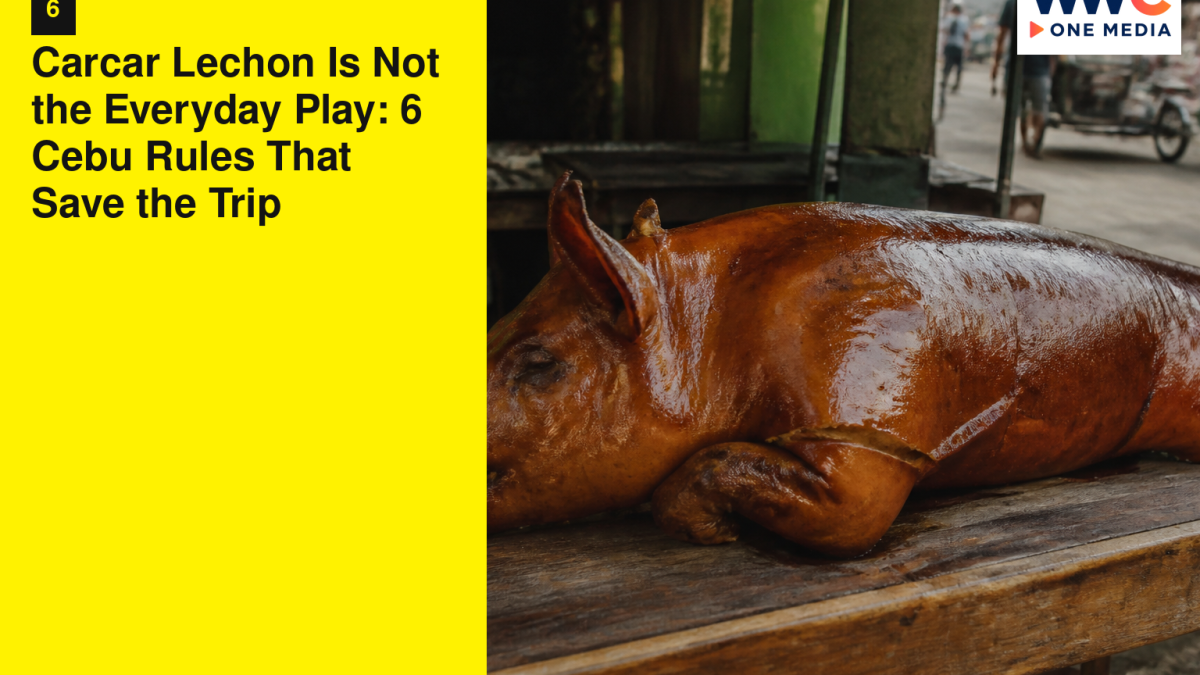
CARCAR, Philippines — Carcar lechon is not the everyday play. It is a trip south of Cebu City with a kilo cap, a packing plan, and a respect for traffic that does not care you wanted crackling. Six Cebu rules that save the trip will not name a stall as number one. They will not invent a chef. They will not pretend a weekday tinola should lose to a pig. Carcar still rewards people who treat the errand like a market morning, not like a buffet dare posted from a van that is already late for the city.
Cebu City will feed you every day without this drive. Carcar is the drive. South Road, the crawl through Talisay and Naga when a truck decides the lane is a suggestion, the heat in a parked vehicle while someone “just checks one more.” The meat is the headline. The trip is the cost. If you do not budget the trip, you will call the lechon expensive even when the stall was fair, because you paid in hours, petrol, and a bag that sat warm until the skin gave up.
Read the six in order if you can. Early skin, a kilo number said out loud, a plate on site, acid on the side, one stall you will repeat, and a ride home that is part of the price. Skip the first and you eat leftovers with a story. Skip the last and the story is a sour bag in a kitchen in Lahug or Mabolo that you will not want to open.
1. Go early if you want the Carcar lechon skin you came for
Late is leftovers with a story. The story is always that you still found a piece. The piece is not what you left Cebu City for. Carcar lechon as a morning errand still has a chance at skin that shatters instead of skin that has been holding under a lamp, under a lid, under a second round of chopping for people who arrived when the good crackling had already gone into other bags.
Early is not a personality. It is a departure time from the city that assumes a slow truck, a school-zone crawl, and a parking situation that is a row of other people who also had this idea. If you leave after a long breakfast in IT Park because the trip felt like a weekend luxury, you will eat like a person who arrived at lunch. That can still be good meat. It is a different product. Name it honestly so you do not spend the ride home ranking a stall for a failure that was a clock.
This desk will not publish a stall ranking as if a council had scored the pigs. Carcar has a public conversation about lechon that does not need another unofficial podium. Pick a stall you can see working. Heat, a chopping block, bags, a line that looks like it came to eat. If the line is only phones, keep your money until the line looks like households. Repeat the stall that treated the kilo like food. Do not tour five because a blog told you to complete a set.
Skin is the morning tell. If you came for it, come when the pig is still in the part of the day when skin is the point. If you came for leftover meat to flake into fried rice in a Cebu City kitchen tonight, you can arrive later and stop performing disappointment. The rule is match the hour to the craving. Carcar is not a mall food court with a holding cabinet that resets.
What not to do: sleep in, hit South Road in the worst of the heat, then ask why the skin is soft. The pig did not betray you. The trip did.
2. Decide kilo count before you smell the stall
Hunger will order a party. The smell of Carcar lechon will add a kilo you will not finish while it is still the food you paid for. Decide the number in Cebu City, in the van, at a table with the people you are actually feeding — not in front of a chopping block while someone is already holding a bag open.
Household of two: think like leftovers with a plan, not like a fiesta. A group: still a cap. The cap includes the plate you will eat there. People forget they will sit and eat a proper serving and then also pack as if they had not eaten. That is how a warm car becomes a second kitchen and a third regret. Say the number. If someone wants more, they say so before the chop, and they own the extra bag.
Kilo count is also a money conversation that should not wait for the ride back. Split it while you are still kind. GCash in the parking dust. A note in the group chat. Carcar lechon is already a special. It does not need a week of who-owes-who attached to a banana leaf.
If you are bringing a bag into Cebu City for a household that did not come, count them as real mouths or do not buy for them. Hypothetical guests are how meat sits. Sitting is the enemy of the skin you woke up for.
What not to do: let the stall’s smallest available chop decide your life. If the smallest is already more than you can eat with a plan, share with the van, or do not pretend you will become a larger household at 4 p.m. There is still other food in Cebu. This is not the everyday play.
3. Eat a proper serving there, pack the rest with a plan for the day
Lechon sitting in a warm car is a different food. Eat in Carcar. Sit if there is a place to sit. Stand if there is not. Put a proper serving on a plate or on a banana leaf and complete the thought: meat, skin if you still have it, rice if you want rice, something acidic. Then pack. Packing first is how you nibble scraps and call it lunch while the bag steams.
The plan for the day is not “we’ll figure it out in the city.” The plan is a fridge you will reach before the heat finishes the job, or a second meal that is already timed. If you will wander a heritage street and take photos because you are already in Carcar, the bag needs shade, a cooler if you own one, and a time limit you will actually honour. If you do not own a cooler, you are on a shorter clock. That is not a moral failure. It is physics in Cebu sun.
Packing is a skill. Air in the bag is not your friend. Juice collecting in a corner is not a sauce you want on a car floor. Put the pack where a passenger can feel if it is going wrong — not in a trunk that will cook it into a story you will tell as a joke and then throw away. If you are on a bus back toward Cebu City, you are even more on a clock. Buses are not chiller vans.
Cebu City kitchens receive the bag like a guest. Cool it. Do not leave it on a counter because you want to nap. The nap is how afternoon lechon becomes a dare. Eat the second meal while it is still a second meal. Fried rice with flakes tonight is a classic for a reason. Tomorrow is possible if your fridge is real. The day after is how people invent stomach folklore.
What not to do: keep tasting in the car “to check.” You will check it into a pile of scraps and a bag of steam. One plate on site. Then the pack. Then the road.
4. Pair with something acidic, not only rice
You will feel it on the drive back to Cebu City. Fat without acid is a nap at the worst part of the traffic. Carcar tables, when they are doing their job, already understand this: a vinegar dip, a pickling, a tomato, something that cuts. If you only eat meat and rice because that felt like the point of the trip, the point will sit on your chest through Naga.
This is not a nutrition lecture. It is a trip-saving rule. Acid makes the serving feel like a meal instead of a dare. It also makes you less likely to over-order a second chop because your mouth is bored of pure fat. Boredom is how kilo count dies.
Bring a bottle if you are particular and the table is basic. Do not be precious about a brand. Cebu vinegar culture is older than your tote. Use what is there. Eat a vegetable if a vegetable is there. If nothing acidic is there, you still have the option of not turning the plate into a contest.
The ride back is long enough to teach you whether you listened. South Road in heat, a full stomach, a closed van: this is how a good morning becomes a silent afternoon. Stop for water. Do not add a milk drink as a joke. Save the joke for a city dessert later if you still want one.
What not to do: chase the lechon with another heavy plate “because we came all this way.” You came for the pig. Let the pig be the event. Everyday Cebu food — a soup, a grilled fish, a small eatery near your actual house — can be dinner. Carcar lechon is not the everyday play. The pairing rule exists so the play stays a play.
5. One stall you will repeat, not a tour of five
Tasting everything is how a trip becomes a nap, and how a nap becomes a ranking you will argue in a group chat as if it were data. It is not data. It is five small plates in heat. Carcar lechon does not improve because you walked a strip comparing skin like a judge on a television set that does not exist.
Pick one stall. Eat. Pack. Leave. If the stall was good to you, return on another trip. That is how you get a relationship with a chopping block instead of a thread of photos that all look like pork. If the stall was not good to you, you still do not need to complete a tour the same morning. You need a ride that still has a human at the wheel.
This is the rule that protects the other five. Tours blow kilo count. Tours blow packing. Tours blow the clock that skin requires. Tours put you in the worst traffic with the most bags. A single stall is not a lack of curiosity. It is how a south-of-the-city errand stays an errand.
You will hear names. Everyone in Cebu has a name. This desk will not turn those names into a numbered list of winners. Named stalls as an official ranking is how food writing becomes a fight that helps nobody chew. Use your eyes in Carcar. Use your last trip if you had one. Use a friend who will eat with you, not a friend who will only film.
What not to do: drive from stall to stall with the first bag already warming on the floor. The first bag is already your lunch. Protect it.
6. Budget the van, bus, or traffic like it is part of the kilo
The meat is not the only line. Fuel, a hired van split, a bus fare, time you could have spent in Cebu City doing something that was not South Road — all of it sits on the same receipt even if only one line is printed. Carcar lechon feels “worth it” when the trip was designed. It feels like a mistake when the trip was a mood.
Leave early, as rule 1 said, because traffic is cheaper in the morning in the only currency that matters: your patience and the skin. Coming back, assume the city will take you later than the map says. Do not book a late obligation in Cebu City as if Carcar were a downstairs mall. If you have a flight out of Mactan the same day, this may not be the day. A bag of lechon and a domestic check-in is a different article. This one assumes you can take the meat home to a kitchen.
Parking, turning around, a one-way confusion in a town that is also trying to have a Saturday: budget the mess. Someone in the group should be the logistics person. That is not nagging. That is how you are not still looking for a gap in a row of vehicles while the bag sweats.
If you live in Cebu City and this is a treat, treat it like a treat. Do not start making it a monthly personality if your budget is already a conversation about rent in a walk-up. Everyday food can be a market soup. Save the pig for the trip you actually meant to take, with a cooler if you have one, with a number, with a stall you will not turn into a tour.
What not to do: hide the ride cost because it spoils the romance. Romance that ignores South Road is how people call Carcar a scam when they built a scam out of timing.
Cebu City is the everyday. Carcar is the errand.
A weekday in the city can be carbon, a soup, a small grilled thing, a carinderia you already know. That food is allowed to be ordinary. Ordinary is how you have a kitchen. Carcar lechon is a south run with rules. If you live in Carcar, the rules shrink to early, kilo, pack, acid, one stall, and no need to mythologise a commute you already do. If you are coming from the city, the commute is the dish’s other half.
Heritage streets, a church stop, a photo because the building is older than your group chat: fine, if the bag is not the victim. Appoint a bag person. The bag person does not drink if they are also the driver. The driver is not the bag person if the bag needs a lap. These are unglamorous sentences. They save the trip.
Packing for a household in the city means you tell them a time. “We’ll be there when we’re there” is how the fridge door stays open and the plan dies. Send a message when you leave Carcar. Send another if traffic is a punishment. The lechon is not a surprise if the surprise is that it arrived warm and late.
What this is not
This is not a tourist ranking of named famous stalls as number one, two, and three. This is not a fake origin story. This is not a claim that Cebu City lechon is a lesser species. City lechon exists and feeds people who did not have a morning for South Road. Different errand. Different clock. This is not a price. Prices move. Your kilo count should move with your household, not with a number you memorised from a stranger.
No invented wait times. Some mornings are kind. Some are a queue that tests rule 5. If the queue is a queue of eaters, it may still be worth it. If you cannot wait without turning mean, you should not have come hungry without a backup breakfast.
Bottom line
Carcar lechon is a morning errand with a kilo cap, a packing plan, and one stall. It is not the everyday play. Go early if you want the skin. Say the kilo before you smell the chopping block. Eat a proper serving there and pack with a day plan, not with a warm car. Pair with acid. Repeat one stall instead of touring five. Budget the van, the bus, and the traffic like they belong on the receipt. Everyday Cebu food can be tinola. Save the pig for the trip you actually meant to take.



Leave a Reply