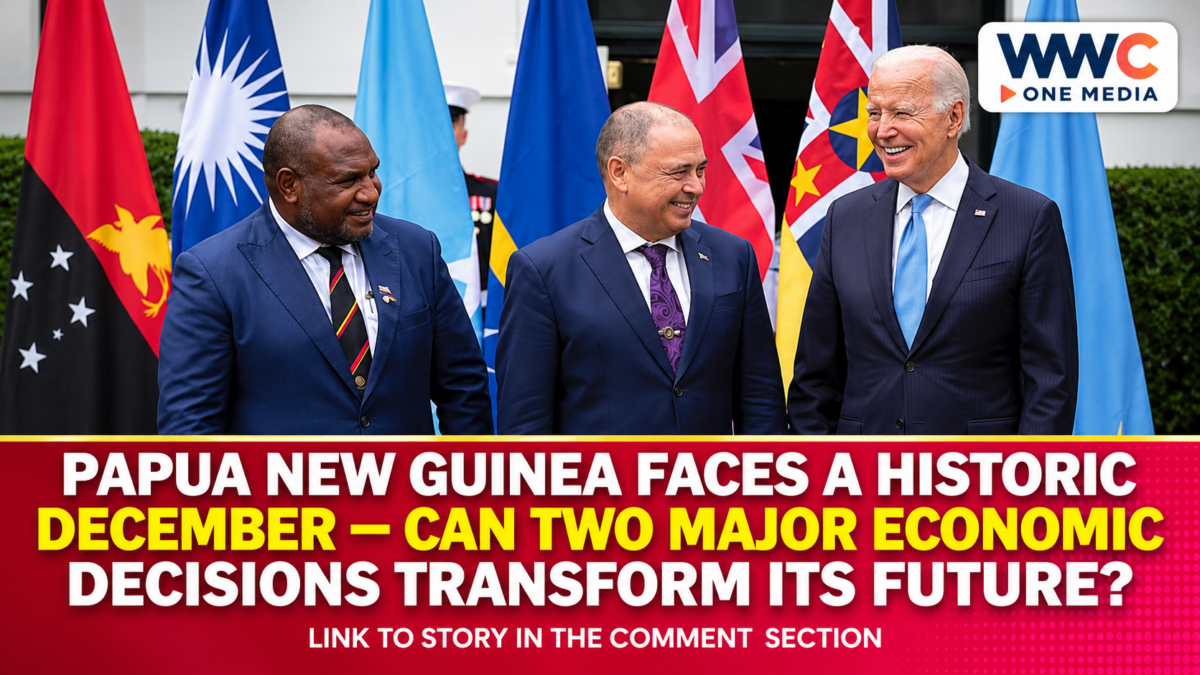
PORT MORESBY, Papua New Guinea — The Papua New Guinea economy is approaching a potentially historic turning point as the country prepares to unveil its 2027 national budget and advances towards a major investment decision on the Papua LNG project.
Prime Minister James Marape announced on Nov. 24, 2026, that the presentation of the national budget would be rescheduled to Dec. 1, allowing additional time to develop measures addressing rising living costs.
Meanwhile, the government is targeting Dec. 15 for a final investment decision on Papua LNG, placing two significant economic milestones within the final month of 2026.
Together, these developments could influence the country’s financial direction, investment environment and economic opportunities for years to come.
Papua New Guinea Economy Approaches a Crucial Fiscal Milestone
The Marape administration is targeting a balanced national budget in 2027 as part of its longer-term fiscal consolidation strategy.
Originally scheduled for Nov. 26, the budget presentation was postponed to allow government agencies to examine possible tax reductions and additional measures addressing household financial pressures.
The government must also accommodate funding requirements for the 2027 national general election, essential public services and the continuing effects of El Niño.
Treasurer Joseph Lelang faces the challenge of delivering these priorities while maintaining the government’s commitment to fiscal discipline.
WWC ONE MEDIA previously examined Papua New Guinea’s efforts to achieve its first balanced budget in 17 years, a target that could represent an important change in the country’s management of public finances.
However, presenting a balanced budget and achieving an actual balanced financial outcome are different accomplishments.
Government revenue, expenditure and economic conditions throughout 2027 will ultimately determine whether the objective is achieved.
Slower Economic Growth Adds Pressure to Government Plans
Papua New Guinea enters the final weeks of 2026 with a more challenging economic outlook than the previous year.
The International Monetary Fund’s October assessment projects real economic growth of 3.1% for 2026, compared with 6.2% in 2025.
Several factors are contributing to the expected slowdown, including limited growth in existing LNG production, weather-related disruptions and higher import costs.
Annual headline inflation is forecast to reach 4.8%, reflecting pressures involving food, transportation and other consumer expenses.
International reserves stood at approximately US$4 billion at the end of June, equivalent to around five months of goods and services imports.
The government has also reaffirmed its 2026 fiscal deficit objective of approximately K1.6 billion.
These indicators illustrate the competing pressures facing policymakers as they attempt to strengthen public finances without overlooking immediate economic difficulties.
Papua LNG Could Open Another Chapter in Energy Development
The proposed Papua LNG development represents another major component of the country’s economic ambitions.
The government has established Dec. 15, 2026, as the target date for reaching the project’s final investment decision.
A final investment decision is the stage at which project participants formally decide whether to proceed with the investment. It is not equivalent to completing construction or commencing commercial production.
Revised arrangements announced in September provide an opportunity for Papua New Guinea’s total equity participation to reach 25%.
The government has also been working with project partners, provincial authorities and customary landowners to advance the necessary agreements.
The development could create commercial opportunities involving construction, engineering, logistics and professional services.
However, employment creation, government revenue and investment returns will depend on the final project arrangements, financing and successful implementation.
The proposed development has already attracted international business attention, including Santos’ renewed sponsorship of PNG Investment Week 2026.
International Investors Turn Their Attention to Sydney
PNG Investment Week 2026 is scheduled to take place at the International Convention Centre in Sydney, Australia, from Nov. 29 to Dec. 2.
Organised by the Papua New Guinea Chamber of Resources and Energy in partnership with the national government, the gathering will bring together policymakers, investors and business representatives.
The programme extends beyond petroleum and mining to include infrastructure, agriculture, fisheries, tourism, technology and financial services.
This broader agenda highlights the importance of developing industries outside the traditional resource sector.
International investment can provide capital, technology and access to commercial networks. Its domestic economic value, however, depends on how effectively local enterprises and workers participate in the resulting opportunities.
An investment conference can facilitate commercial discussions, but participation alone does not guarantee that projects will secure financing or proceed to implementation.
APEC Engagement Opens Wider Economic Opportunities
Papua New Guinea’s year-end economic agenda follows its participation in the 33rd APEC Economic Leaders’ Meeting in Shenzhen, China.
On Nov. 23, Marape emphasised the importance of translating international diplomatic engagement into increased domestic production and commercial activity.
The government has identified agriculture, fisheries, forestry, minerals and energy as sectors with opportunities for further development.
Regional partnerships also form part of this strategy, including investment discussions between Papua New Guinea and the Philippines covering fisheries, ports and other commercial opportunities.
The challenge is converting these discussions into commercially viable projects that create employment, support local businesses and expand export capacity.
For Asia-Pacific investors, Papua New Guinea’s economic outlook will depend not only on its natural resources but also on the institutions, infrastructure and regulatory arrangements supporting investment.
What Happens Next?
December will provide several important opportunities to assess the country’s economic direction.
The national budget is scheduled for presentation on Dec. 1, followed by the opposition’s planned response on Dec. 4.
The government is targeting Dec. 15 for the Papua LNG investment decision.
Neither milestone guarantees immediate improvements in employment, household incomes or public services. Their significance will depend on the policies, commercial commitments and implementation measures that follow.
For Papua New Guinea, the closing weeks of 2026 could establish the foundations for a new phase of economic development.
Whether the year ultimately becomes historic will depend less on the number of announcements made and more on the country’s ability to translate its commitments into lasting economic and social outcomes.
Frequently Asked Questions
Why could December 2026 be historic for Papua New Guinea?
The country is preparing to present its 2027 national budget on Dec. 1 and targeting a final investment decision on Papua LNG by Dec. 15.
When is Papua New Guinea expected to achieve a balanced budget?
The government is targeting a balanced national budget in 2027. The actual fiscal outcome will depend on financial performance throughout the year.
What is Papua New Guinea’s projected economic growth for 2026?
The IMF’s October 2026 assessment projects real GDP growth of 3.1%, compared with 6.2% in 2025.
When is PNG Investment Week 2026?
The event is scheduled from Nov. 29 to Dec. 2, 2026, at the International Convention Centre in Sydney, Australia.
Has the Papua LNG project received its final investment approval?
The government is targeting Dec. 15, 2026, for the final investment decision. The target should not be confused with a completed investment approval or construction milestone.