
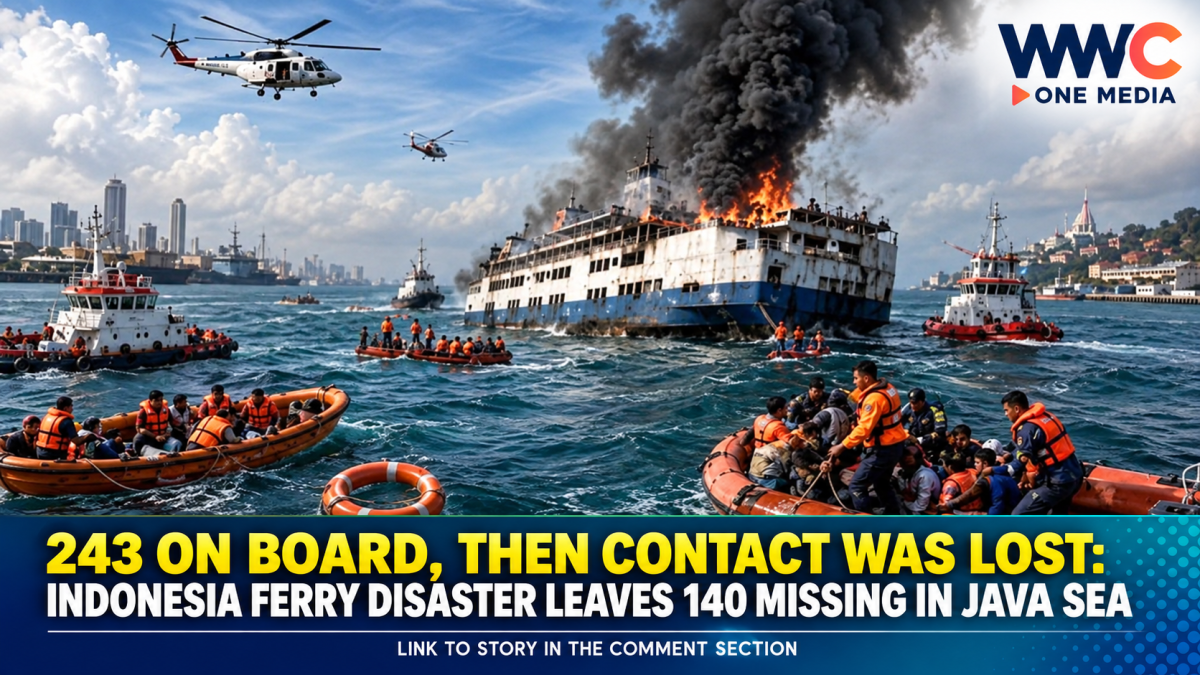
A major search-and-rescue operation is underway in Indonesia after a passenger ferry carrying 243 people lost contact in the Java Sea and was later confirmed to have capsized amid severe weather.
The vessel, Virgo Transport 8, was traveling from Surabaya in East Java to Banjarmasin in South Kalimantan when it encountered rough seas. Authorities said the ferry lost contact early Sunday after a distress message was sent.
Rescuers have so far recovered 103 people, but one person has died, leaving about 140 others still unaccounted for, according to the latest reports available Sunday.
Authorities said the ferry was found approximately 148 kilometers from Banjarmasin. The operation is being conducted under difficult weather conditions, with reports indicating waves reaching roughly three meters in height.
The incident has triggered a large-scale response involving Indonesian search-and-rescue personnel and maritime resources. Rescuers are continuing to search surrounding waters for survivors while authorities work to establish exactly what caused the vessel to capsize.
The disaster is particularly significant in Indonesia, where ferry transportation is a crucial part of connecting the country’s thousands of islands. Maritime safety has repeatedly been a concern following previous deadly ferry accidents.
The search remains ongoing, and the number of casualties could still change as rescuers reach more areas around the wreck.
What happened to the Filipino seafarers?
The Indonesian ferry disaster is separate from another maritime tragedy involving Filipino workers in the Strait of Hormuz.
The Philippine government confirmed that the remains of two Filipino seafarers killed aboard the Saudi Arabian-flagged oil tanker M/V Sidr have been repatriated to the Philippines.
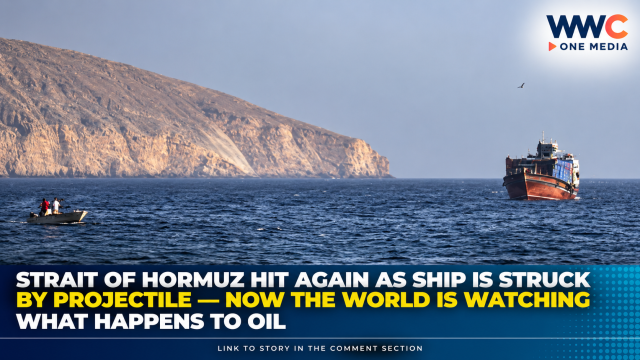
The two men were among 16 Filipino seafarers aboard the vessel when it was struck by unknown projectiles while transiting the Strait of Hormuz on August 31. Fourteen other Filipino crew members survived.
Saudi shipping company Bahri confirmed that two Filipino seafarers died in the security incident. Maritime security authorities had earlier reported that the tanker was struck by three unknown projectiles.
The tragedy has also raised questions about how Filipino seafarers are assigned to vessels operating in high-risk maritime zones.
GMA News previously reported that the family of slain seafarer Rodrigo Favis questioned whether he had been adequately informed that the vessel would enter the Strait of Hormuz. His family said he had reportedly exercised his right to refuse sailing after learning of the destination.
The Department of Migrant Workers has said shipowners must conduct appropriate risk assessments, maintain security protocols and recognize Filipino seafarers’ right to refuse sailing when vessels are headed toward high-risk areas.
The DMW has also said that the Strait of Hormuz remains a high-risk area and that it is coordinating with other Philippine government agencies over the safety of Filipino seafarers in the region.
Why these incidents matter
The two incidents underscore the continuing dangers faced by passengers and maritime workers across some of Asia’s busiest and most strategically important waterways.
In Indonesia, rescuers are racing against time to locate approximately 140 people still missing after the Virgo Transport 8 disaster. In the Strait of Hormuz, the deaths of two Filipino seafarers have renewed scrutiny of the risks faced by Filipino workers aboard ships traveling through conflict-affected waters.
For the Indonesian ferry, the search-and-rescue operation remains the immediate priority, and authorities have yet to provide a final explanation for the capsizing.
For the Philippines, attention is now turning toward bringing the two victims home to their families and determining whether additional safeguards could have prevented Filipino crew members from being exposed to the deadly incident.



Leave a Reply