
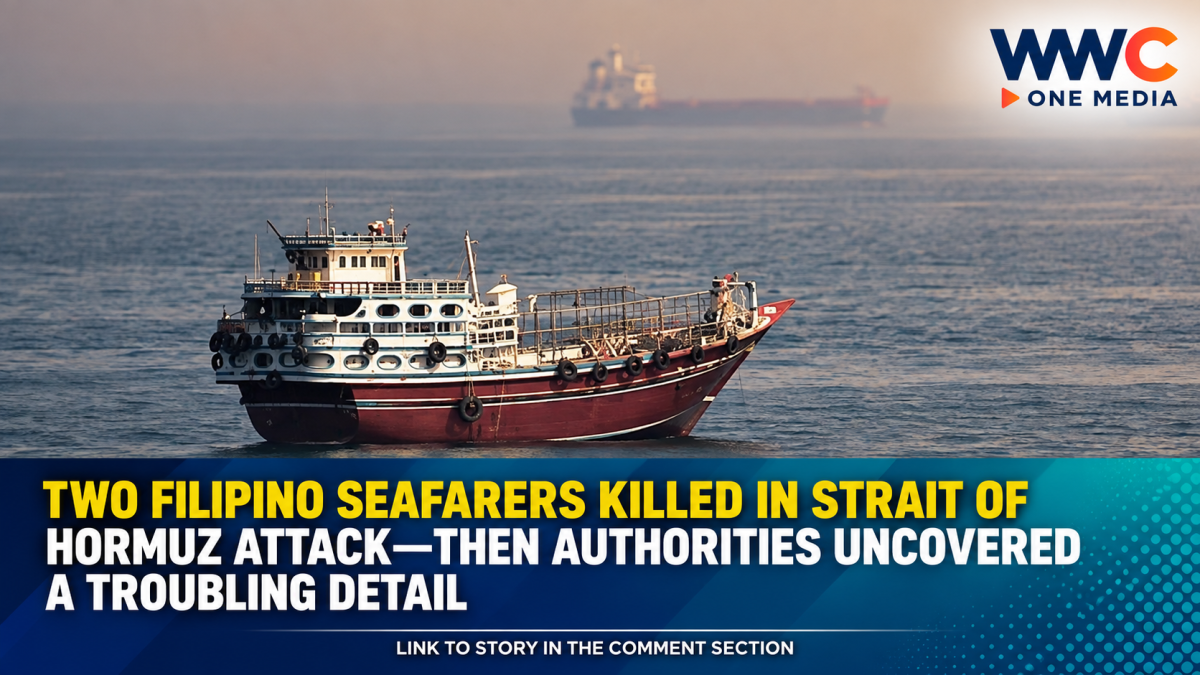
The remains of two Filipino seafarers killed aboard the Saudi Arabian-flagged M/V Sidr following an attack in the Strait of Hormuz have been brought home to the Philippines, closing one chapter of a tragedy that has also triggered questions over how the vessel was allowed to enter a high-risk maritime zone.
The Department of Migrant Workers confirmed that the remains arrived in the Philippines on September 12. The two seafarers were among 16 Filipinos working aboard the tanker when it came under attack on August 31.
The incident reportedly caused a fire aboard the vessel. Earlier statements from the DMW said the fire was contained by the Filipino crew, but two Filipino seafarers died in the incident. The remaining 14 Filipino crew members survived and were subsequently brought home.
The 14 surviving Filipino seafarers returned to the Philippines on September 8, while the remains of the two fatalities followed several days later. Government agencies have said the victims’ families will receive assistance.
The tragedy has also raised a more troubling question: whether the seafarers should have been placed on a vessel traveling through an area affected by heightened regional conflict.
According to GMA News, the DMW is continuing its investigation into the manning agency after learning that one of the deceased seafarers had exercised his “refuse to sail” right after learning that the vessel was expected to pass through the Strait of Hormuz.
That development adds a significant dimension to the case because the Strait of Hormuz is one of the world’s most strategically important maritime routes and has been affected by the wider regional conflict.
Earlier reporting by GMA News said the tanker had been approaching the Strait of Hormuz from the east coast of the United Arab Emirates when it was attacked off the coast of Oman. At the time, authorities stressed that details about the vessel’s precise route remained subject to final determination.
The incident comes amid continuing concerns over the safety of Filipino seafarers caught in conflict zones. In July, the Department of Foreign Affairs said 81 Filipino seafarers aboard four Philippine-registered vessels had safely exited the Strait of Hormuz, while authorities continued monitoring the situation involving other Filipino maritime workers in the region.
The two deaths have therefore become more than a repatriation case. They have also placed renewed attention on the responsibility of shipping companies, manning agencies and authorities to protect Filipino workers when commercial vessels operate in areas affected by armed conflict.
For the families of the two seafarers, the immediate priority is bringing their loved ones home and securing government support. For Philippine authorities, however, the investigation into the circumstances surrounding the voyage—and the reported refusal-to-sail request—could determine whether further accountability measures are warranted.




Leave a Reply