Ukraine is turning increasingly toward Europe for help as a fresh diplomatic clash between President Volodymyr Zelensky and U.S. President Donald Trump threatens to complicate Kyiv’s efforts to defend itself against Russia’s invasion.
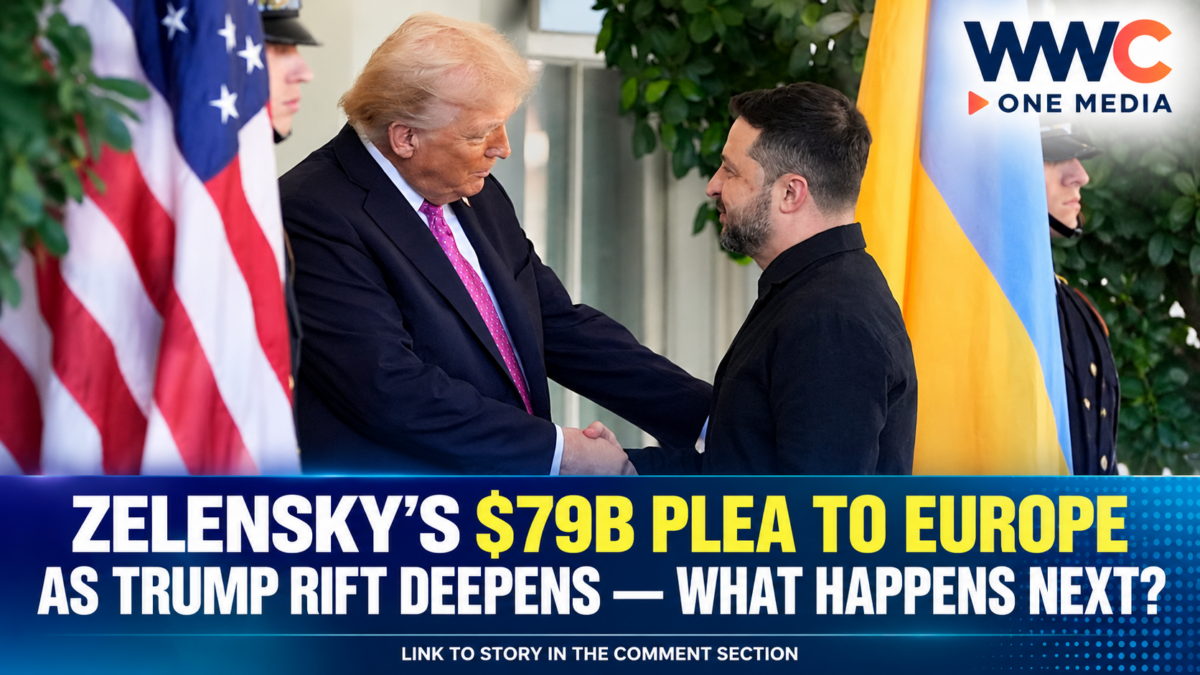
Speaking at the European Union summit in Brussels on Friday, October 16, Zelensky called on European leaders to provide an additional €70 billion, or approximately $79 billion, next year to sustain Ukraine’s defense, purchase weapons and strengthen its resilience against Russian attacks.
The appeal highlights the growing pressure on Ukraine to secure dependable financial and military assistance at a time when its relationship with Washington has deteriorated.
Trump’s Russia deal sparks fresh tensions
The latest dispute centers on Trump’s agreement involving Russian diesel supplies and the easing of sanctions on Russian oil products, which Zelensky argues could provide Moscow with additional revenue to finance its war.
Tensions intensified after Trump criticized Ukraine’s attacks on Russian oil refineries, describing Kyiv’s actions as a “disgrace.” Trump also suggested that Zelensky should be replaced and said dealing with Russian President Vladimir Putin was easier than dealing with the Ukrainian leader, according to reporting by The Associated Press.
Zelensky, meanwhile, has defended Ukraine’s position, arguing that Russia’s continued attacks undermine efforts to secure a meaningful peace agreement.
At the Brussels summit, the Ukrainian president condemned what he described as Moscow’s lack of genuine interest in peace negotiations. He also welcomed the prospect of European allies taking a greater role in diplomatic efforts, referring to European leaders as “real leaders.”
The confrontation raises a difficult question for Kyiv: how can Ukraine maintain its defense while navigating increasingly uncertain relations with one of its most important international partners?
Europe promises support, but the money remains a challenge
European leaders have reaffirmed their commitment to Ukraine, condemning Russian attacks on civilians and critical infrastructure and emphasizing the need for continued financial and military assistance.
According to the European Council’s official conclusions from its October 15–16 summit, the bloc welcomed ongoing disbursements under a €90 billion loan intended to support Ukraine during 2026 and 2027. Leaders also backed continued military assistance, including the release of €6.6 billion through the European Peace Facility.
However, these existing commitments do not automatically resolve Ukraine’s additional funding requirements for 2027.
Reuters reported that Estonian Prime Minister Kristen Michal believes the EU will probably need to provide another loan to help Ukraine cover its budget shortfall and sustain its war effort. European governments are also considering how frozen Russian state assets might be used to support Kyiv, although disagreements over the proposal remain.
For Zelensky, the challenge is securing more than expressions of solidarity. Ukraine needs reliable funding, ammunition, air-defense systems and protection for its energy infrastructure as the colder months approach.
Satellite communications add another layer of concern
The diplomatic dispute has also coincided with concerns over satellite communications used by Ukrainian forces.
Ukraine relies on SpaceX’s Starshield military satellite network for battlefield communications and certain drone operations. Recent restrictions affecting the system have raised concerns about Ukraine’s ability to conduct some operations effectively.
The Associated Press reported that Kyiv has been negotiating with SpaceX and the U.S. government over a speed restriction affecting military satellite services. The issue has become particularly sensitive as Ukraine faces uncertainty over the future of American intelligence and military support.
The restrictions should not automatically be interpreted as a deliberate political decision by Trump. The circumstances surrounding the disruption and the measures being taken to address it remain important distinctions.
Nevertheless, the episode illustrates how Ukraine’s battlefield capabilities can be affected by decisions involving technology providers and foreign governments.
Europe faces a difficult strategic choice
European leaders are trying to sustain support for Ukraine while managing their own security needs and preserving working relations with Washington.
The Financial Times reported that EU leaders were also concerned about Zelensky’s increasingly public criticism of Trump, fearing that further deterioration in U.S.-European relations could make it harder to maintain a coordinated response to Russia’s invasion.
This leaves Europe facing two connected challenges: helping Ukraine withstand Russia’s military campaign and finding a way to keep the United States engaged in efforts to end the war.
Although EU leaders have reiterated their support for Kyiv, funding decisions, national defense requirements and disagreements over the use of frozen Russian assets could complicate efforts to meet Ukraine’s demands.
What happens next?
Zelensky’s appeal for an additional €70 billion underscores the scale of the financial challenge facing Ukraine as the war continues.
The EU has reaffirmed its commitment to Ukraine, but its next decisions on funding and military assistance will help determine how much support Kyiv can count on in 2027.
At the same time, the deteriorating relationship between Zelensky and Trump raises questions about the future of U.S. intelligence cooperation, military support and diplomatic coordination.
The key question is whether Europe can deliver the resources Ukraine needs while keeping Washington involved—or whether the widening divide among Kyiv’s allies will create new opportunities for Moscow.
For Ukraine, the stakes extend beyond diplomacy. The decisions made in the coming months could affect its military resilience, economic stability and ability to negotiate from a position of strength.