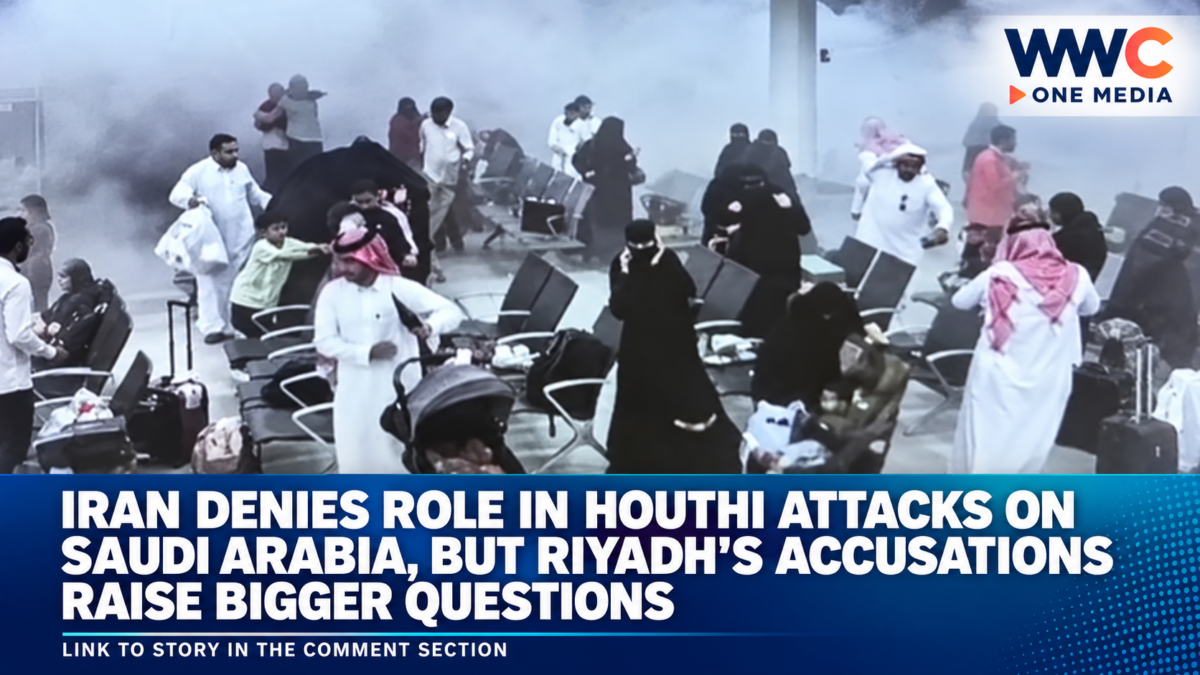
Iran has rejected allegations linking it to Houthi attacks targeting Saudi Arabia, pushing back against claims of Tehran’s involvement as tensions across the Middle East continue to threaten regional security.
The denial comes amid renewed scrutiny of the relationship between Iran and Yemen’s Houthi movement, which has repeatedly been at the centre of regional security concerns. The allegations raise questions about the extent of Iran’s influence over the group and the potential consequences for Saudi Arabia and neighbouring countries.
Iranian Foreign Ministry spokesman Esmaeil Baqaei said Tehran rejects any suggestion that it played a role in Houthi military operations. He maintained that Yemen’s armed forces make their own decisions based on their interests and assessments.
Despite the denial, Saudi Arabia has accused Tehran of continuing to arm, train and support the Houthi movement, allegedly violating United Nations Security Council resolutions. Saudi Deputy Foreign Minister for Public Diplomacy Rayed Krimly said Iran had encouraged the latest escalation and criticized the Houthis for rejecting an invitation to hold discussions in Oman.
Iran, however, has presented itself as a potential mediator. Baqaei reiterated that Tehran was willing to use its diplomatic channels to help bring an end to the hostilities between Saudi Arabia and the Houthis.
The latest developments come after a series of increasingly serious attacks against Saudi targets. The Houthis have reportedly struck oil facilities, Red Sea shipping routes and Riyadh’s international airport. An airport attack last week killed 13 people, further intensifying security concerns across the kingdom.
Saudi Arabia’s military coalition also reported intercepting several incoming threats on October 16, including three drones over southern Saudi Arabia and Riyadh, two cruise missiles over the Red Sea, and a ballistic missile near Yanbu, a strategic coastal city connected to a major oil pipeline.
The escalating attacks have raised concerns about the security of Saudi Arabia’s critical infrastructure, particularly its energy facilities and international transportation networks.
The conflict has also spread beyond Saudi territory. In Yemen’s interim capital, Aden, two missiles reportedly struck within the airport perimeter on Friday, marking the second incident of its kind in less than a week. The Houthis claimed the attack targeted a Saudi military command headquarters and a weapons depot. Separately, a missile attack on a presidential palace complex in Aden killed five people and injured 16, according to Yemeni health authorities.
International concern is also growing over the potential impact on commercial shipping. The United Nations Security Council strongly condemned the continuing Houthi attacks against Saudi Arabia and threats against commercial vessels operating in the Red Sea and the Bab al-Mandab Strait, an important maritime passage connecting the Red Sea to the Gulf of Aden.
The strategic importance of these waterways makes the confrontation particularly concerning. Disruptions could affect international shipping, energy transportation and supply chains, adding further pressure to already unsettled global energy markets.
The crisis also presents a complicated challenge for Saudi Arabia. According to Reuters’ regional analysis, Houthi attacks could be part of a broader effort to pressure Riyadh over Yemen-related demands while undermining investor confidence and Saudi Arabia’s ambitious Vision 2030 economic transformation programme.
The situation is particularly sensitive because Saudi Arabia is the world’s largest oil exporter, making its energy infrastructure and shipping connections critical to international markets.
Although Iran denies directing or participating in Houthi military operations, Saudi Arabia continues to insist that Tehran is contributing to the group’s military capabilities. The Houthis, meanwhile, maintain that their actions are driven by their own political and military objectives.
For now, Iran’s offer to mediate has not resolved the growing disagreement, while Saudi Arabia faces continuing security threats and difficult decisions over how to respond.
With missile and drone attacks continuing and accusations between Tehran and Riyadh intensifying, the biggest concern is whether the confrontation can be contained or whether it will develop into a much wider regional conflict.