
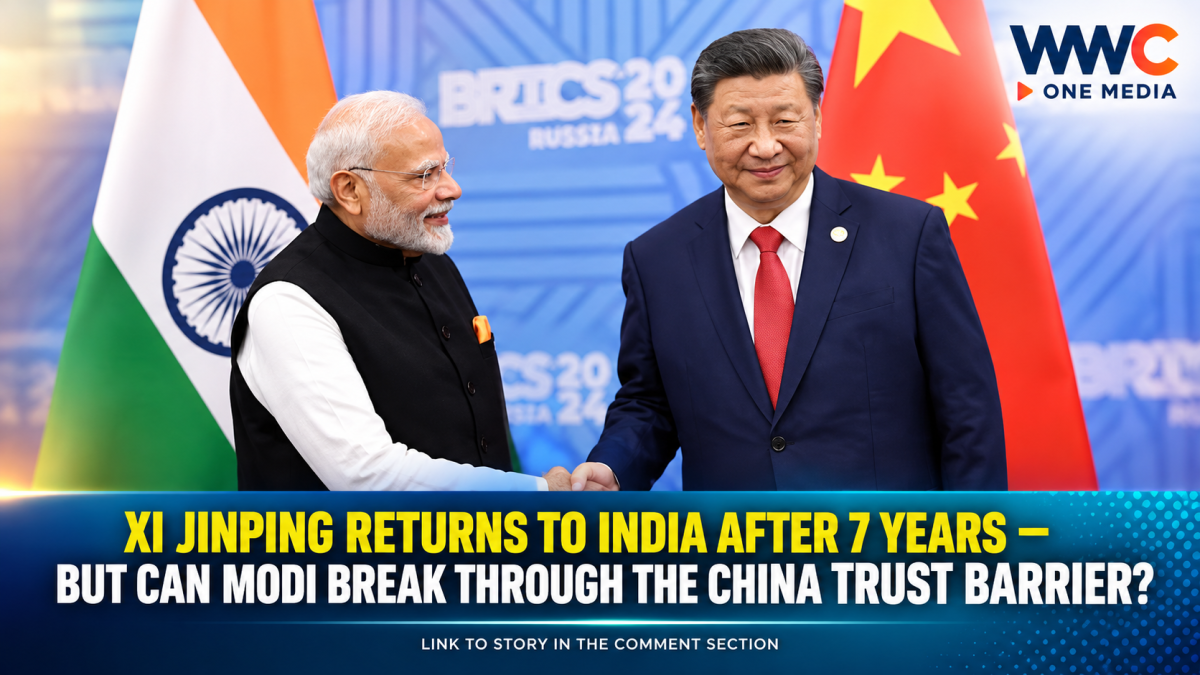
NEW DELHI — Chinese President Xi Jinping’s visit to India for the BRICS summit could mark one of the most significant moments in India-China diplomacy in years.
Xi is due in New Delhi for the 18th BRICS Summit on Sept 12 and 13, his first visit to India since 2019 and the first since relations between the two Asian giants plunged following the deadly 2020 border clash in the Himalayas.
The visit comes as New Delhi and Beijing attempt a cautious reset after years of military tensions, diplomatic friction and growing economic restrictions. But analysts warn that a warmer political atmosphere does not necessarily mean a breakthrough in business ties.
The biggest question now is whether high-level diplomacy between Xi and Indian Prime Minister Narendra Modi can begin to close the enormous trust gap between the world’s two most populous countries.
A Major Diplomatic Moment After Years of Tension
Relations between India and China deteriorated sharply after the 2020 border confrontation in the Galwan Valley, which killed soldiers from both sides.
Since then, however, the two countries have gradually moved towards stabilising their relationship. Progress in military disengagement and border management has helped reopen political dialogue, while recent diplomatic engagement has raised hopes of a broader reset.
Xi’s upcoming India visit is therefore being closely watched as more than just another BRICS gathering.
Indian media, including The Indian Express, reported that a possible strategic economic dialogue could feature prominently in discussions between the two sides, with issues such as India’s trade deficit with China, market access, investment and visa restrictions expected to remain important points of contention.
Border issues are also likely to remain central.
Despite signs of improvement, India and China still face unresolved questions over troop deployments, border security and long-term management of their disputed frontier.
Diplomacy May Be Thawing — But Business Is Still Frozen by Suspicion
The biggest obstacle may not be diplomatic protocol.
It may be trust.
Reuters reported that businesses in both India and China continue to face significant barriers, including stalled investments, regulatory restrictions, visa delays and limits affecting industrial equipment and technology.
India has tightened scrutiny of Chinese investments and companies since the 2020 border crisis, particularly in strategically sensitive sectors.
At the same time, some restrictions have reportedly begun to ease, including approvals involving Chinese participation in selected electronics and manufacturing ventures.
But major Chinese companies remain cautious about expanding in India, while Indian businesses continue to face obstacles involving market access, technology and trade with China.
Reuters reported that security concerns and mutual suspicion continue to limit deeper economic integration between the two countries, despite progress at the diplomatic level.
That creates a difficult reality for Modi and Xi:
It may be easier to improve diplomatic language than to rebuild commercial confidence.
Trade Is Growing, But So Are the Strategic Concerns
The economic relationship between India and China remains enormous despite years of political tension.
The Financial Times reported that bilateral trade reached a record level last year and continued to grow strongly this year, highlighting the complicated reality of the relationship: India and China may be geopolitical competitors, but they remain deeply connected through trade and supply chains.
New Delhi depends heavily on Chinese imports in several areas, including electronics components, industrial equipment and manufacturing inputs.
At the same time, India remains concerned about its large trade imbalance with China and the strategic risks of excessive dependence on Chinese supply chains.
China, meanwhile, is watching India’s rapid push to become a global manufacturing alternative and expand its role in sectors traditionally dominated by Chinese companies.
This means economic cooperation is increasingly being shaped by competition.
The two countries may want more trade.
But they also want greater strategic independence from each other.
BRICS Gives Modi and Xi a New Diplomatic Opening
The BRICS summit provides an important setting for both leaders to engage without making the relationship itself the sole focus.
Originally formed by Brazil, Russia, India and China before South Africa joined, BRICS has expanded into a much larger grouping with growing ambitions to influence global economic and political governance.
The expanded bloc now includes 11 countries and represents a substantial share of the world’s population and economic output.
But expansion has also brought new divisions.
Associated Press reported that BRICS faces major challenges because of differing national interests and disagreements over conflicts, financial cooperation and the group’s broader geopolitical direction.
India is attempting to position itself as a balancing force within the bloc — maintaining relationships with Russia and China while also preserving strong ties with the United States and Western partners.
That balancing act makes Modi’s engagement with Xi particularly important.
Digital Currency Proposal Adds Another Economic Dimension
The New Delhi summit is also expected to feature discussions about cross-border payments and financial cooperation.
Reuters reported on Sept 10 that India is pushing for greater interoperability between central bank digital currencies among BRICS members to make cross-border transactions faster and easier.
However, the proposal faces serious political and technical obstacles.
India remains cautious about deeper financial integration with China because of national security concerns, while broader disagreements among BRICS members could also complicate any common payment system.
Indian officials have stressed that the effort is aimed at improving international transactions rather than replacing the US dollar as the world’s reserve currency.
The issue illustrates a larger challenge facing BRICS:
The members may agree that the global financial system needs more options — but they do not always agree on how to build them.
What Could Modi and Xi Actually Achieve?
Expectations for a dramatic breakthrough remain low.
Analysts say the more realistic outcome would be a series of smaller steps designed to stabilise the relationship.
Possible areas of progress could include:
- Greater communication on border management
- Reduced obstacles affecting business travel and visas
- Discussions on trade and market access
- A potential strategic economic dialogue
- Cooperation on energy and supply-chain security
- Continued engagement through BRICS and other multilateral forums
But major challenges remain unresolved.
India remains wary of China’s growing military and economic influence in the region, while Beijing remains concerned about New Delhi’s closer strategic relationships with Washington and other Western partners.
China’s relationship with Pakistan also remains a sensitive issue for India.
That means any improvement is likely to be gradual.
The Real Test Is What Happens After the Handshake
Xi’s return to India could deliver an important symbolic victory for diplomacy.
A meeting with Modi would show that the leaders of the world’s two most populous countries are willing to engage directly after years of tension.
But the real test will come after the summit.
Can political engagement lead to easier visas?
Can investment restrictions be addressed?
Can businesses regain confidence?
Can border tensions remain under control?
And perhaps most importantly — can India and China learn to compete without allowing that competition to push their relationship back towards confrontation?
For now, the signs point to a cautious diplomatic thaw.
But the economic relationship remains trapped by years of distrust.
Xi and Modi may be preparing to reopen the conversation — yet turning that conversation into genuine trust could prove to be their most difficult challenge.

Leave a Reply