LONDON / SINGAPORE — November 10, 2026 — A legal battle over one of the world’s most influential oil-shipping benchmarks has exposed extraordinary internal disagreements at the Baltic Exchange, with staff and market participants questioning whether a price used to settle billions of dollars in tanker contracts accurately reflected shipping conditions during the Iran war.
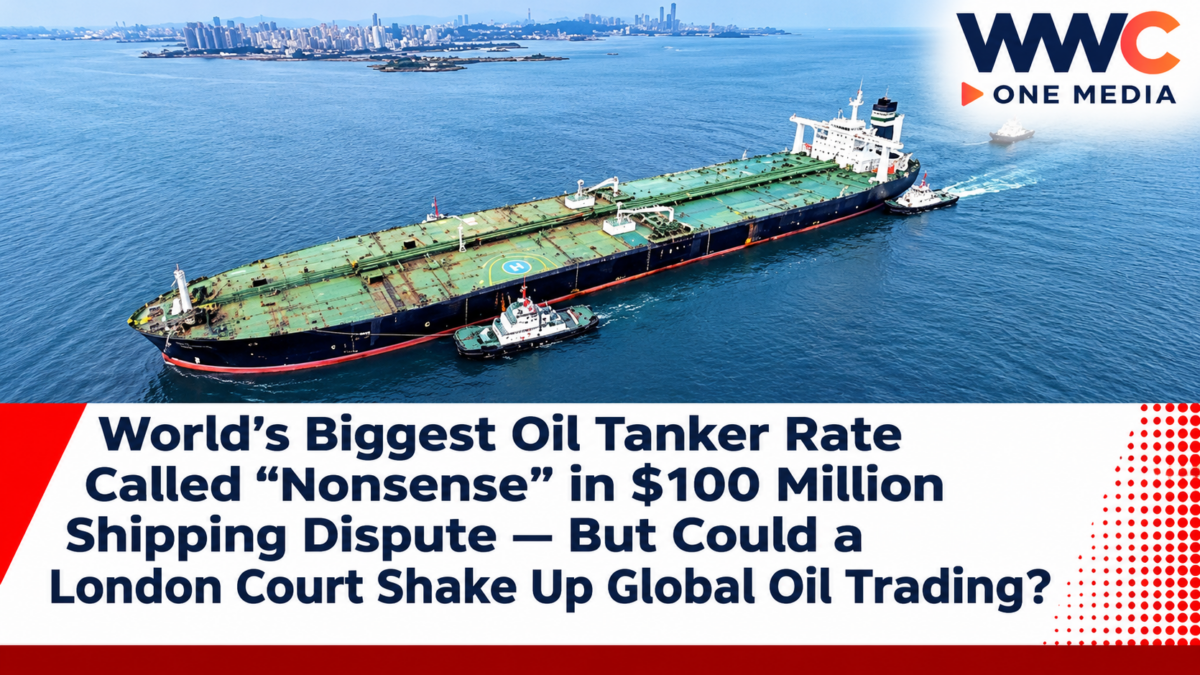
The controversy centers on TD3C, the benchmark measuring the cost of transporting crude oil aboard very large tankers from Saudi Arabia to China.
According to a Bloomberg investigation published Tuesday, internal documents and court testimony reveal that some people involved in producing the benchmark described its published rates as unrealistic during the severe disruption of shipping through the Strait of Hormuz.
The revelations are particularly damaging because the Baltic Exchange, a London-based institution owned by Singapore Exchange Ltd. (SGX), plays a central role in global shipping-price assessments.
One internal employee repeatedly questioned the index’s validity, writing comments including “Nonsense rate” in documents used during the price-setting process.
Now, commodity trading giant Mercuria Energy Group is challenging the Baltic Exchange in London’s High Court, arguing that the benchmark should have been suspended during the most disrupted months of the conflict.
The stakes extend beyond one shipping company or trading house.
If a court determines that a major international freight benchmark should not have been published, could the decision create uncertainty across billions of dollars in oil-tanker contracts and financial derivatives?
Baltic Exchange’s TD3C Rate Faces Explosive Criticism
At the center of the controversy is a benchmark that has helped oil traders and shipping companies determine transportation costs for years.
The TD3C index measures freight rates for transporting approximately 270,000 metric tonnes of crude oil aboard a very large crude carrier, commonly known as a VLCC, from Saudi Arabia’s Ras Tanura terminal to Ningbo, China.
The route passes through the Strait of Hormuz, one of the world’s most strategically important maritime chokepoints.
Under normal market conditions, experienced shipbrokers contribute assessments of the cost of hiring a suitable tanker.
The Baltic Exchange then uses those submissions to publish its freight benchmark.
But the war involving Iran transformed that process into a major challenge.
Military attacks, restrictions on shipping and uncertainty about safe passage made it increasingly difficult to determine what companies would actually pay to transport oil through the strait.
Bloomberg’s investigation found that reservations about the benchmark were not limited to dissatisfied traders.
Some concerns came from within the Baltic Exchange itself.
Employee Called the Benchmark “Nonsense”
One of the most revealing developments involves Christopher Loveday, an employee involved in producing the TD3C rate.
According to internal documents disclosed during the legal proceedings, Loveday repeatedly questioned the validity of the published assessment.
On March 23, he wrote “Nonsense rate” in an internal document.
Two days later, he again criticized the assessment.
On March 31, he recorded another dismissive description while completing his contribution to the benchmark-setting process.
The remarks became public through the ongoing legal dispute between Mercuria and the Baltic Exchange.
Lloyd’s List separately reported testimony and evidence showing that several broker-panel participants also questioned whether meaningful freight rates could be established under the prevailing conditions.
One participant described the assessment process as hypothetical.
Another compared it to a lottery.
The comments reveal serious concerns about the reliability of price discovery during the crisis.
However, criticism from employees and contributors does not, by itself, establish that the benchmark was legally invalid or deliberately manipulated.
Those questions remain central to the court proceedings.
Why the Iran War Created a Benchmark Crisis
The dispute began after the US-Israeli war with Iran erupted in February 2026.
The conflict severely disrupted maritime traffic through the Strait of Hormuz.
The waterway connects the Persian Gulf with international markets and normally carries approximately one-fifth of global petroleum-liquids consumption.
As attacks and restrictions intensified, many shipping companies became reluctant to send vessels through the region.
Some tankers were delayed, diverted or unable to complete their intended voyages.
For freight-market participants, this created an extraordinary problem.
How should a shipping benchmark be calculated when very few ordinary commercial voyages are taking place?
Should brokers estimate what a shipment would cost under hypothetical conditions?
Or should the benchmark be suspended until the market becomes sufficiently active again?
Mercuria believes the Baltic Exchange made the wrong decision by continuing to publish TD3C throughout the disruption.
The Baltic Exchange rejects that position.
WWC ONE MEDIA previously examined the escalating maritime danger in Iran Says No Unauthorized Ships Crossed Strait of Hormuz After Navigation Systems Were Destroyed.
The reporting demonstrates why reliable information about shipping movements has become increasingly difficult to obtain.
Mercuria Takes the Baltic Exchange to Court
Mercuria Energy Trading filed its legal challenge against the Baltic Exchange in April.
The trading company argues that the TD3C index failed to reflect commercial reality as shipping through the Strait of Hormuz became severely restricted.
Mercuria maintains that the exchange should have suspended the benchmark from early March until July 3.
Its legal argument focuses on whether the exchange complied with its statutory and contractual responsibilities in continuing to publish the rate.
The company is seeking a court declaration concerning the validity of the benchmark’s continued publication during the disputed period.
It is not currently seeking a direct damages award against the Baltic Exchange in the principal proceedings.
The Baltic Exchange denies Mercuria’s allegations.
In a public statement issued in May, the institution maintained that its benchmarks were produced using established governance procedures, methodologies and oversight arrangements.
It said it had fulfilled its legal and contractual obligations.
The exchange has also argued that some ships continued moving through the strait despite the conflict.
Those movements, it maintains, provided a basis for assessing freight-market conditions.
The dispute therefore concerns not only whether shipping was disrupted, but whether the available information was sufficient to produce a legitimate benchmark.
$100 Million Tanker Dispute Raises the Financial Stakes
The consequences of the TD3C controversy are already reaching companies outside the principal lawsuit.
Bloomberg reported on November 4 that Norway’s Hunter Group had approximately $100 million at stake in a separate commercial dispute involving Mercuria.
The disagreement concerns a tanker-chartering arrangement tied to the TD3C benchmark.
Hunter Group claims that Mercuria has been making reduced payments, leaving substantial sums outstanding.
Hunter chairman Morten Astrup said the amount involved, including accrued charter income, losses and interest, exceeded $100 million.
Mercuria declined to comment on that particular dispute, according to Bloomberg.
Importantly, the $100 million is a disputed commercial claim, not a confirmed judgment or a court-ordered payment.
The case illustrates how the TD3C benchmark influences financial obligations between shipowners and charterers.
If a major reference rate becomes legally contested, disagreements can spread into contracts that rely on it.
This is why the outcome of the London proceedings could matter well beyond the two parties directly involved.
Why Billions in Oil-Shipping Contracts Depend on TD3C
TD3C is more than a daily shipping quotation.
It is used in physical chartering arrangements and freight derivatives, including forward freight agreements.
A forward freight agreement is a financial contract whose settlement value depends on an agreed shipping-rate benchmark.
These instruments allow shipping companies, oil traders and other market participants to manage exposure to fluctuating transportation costs.
For example, an oil trader expecting to charter a tanker may seek financial protection against rising freight rates.
A shipowner may use a derivative to reduce exposure to falling transport prices.
The benchmark helps determine settlement outcomes.
If the published index no longer reflects an economically meaningful market, participants may disagree over whether it should remain the basis for settling those obligations.
That is precisely the issue raised by the Mercuria litigation.
A court judgment affecting the benchmark’s validity could influence disputes involving contracts tied to TD3C.
But the consequences would depend on the wording of individual agreements, applicable law and the scope of any court ruling.
There has been no final judgment establishing that all such contracts are invalid.
Whistleblower Allegations Add to the Controversy
The TD3C benchmark has also come under scrutiny following whistleblower complaints.
Bloomberg reported on October 30 that the Baltic Exchange had received two allegations of attempted benchmark manipulation during the Iran war.
One complaint involved Mercuria and another company that was not publicly identified.
According to court documents, the Baltic Exchange investigated that allegation but did not establish that benchmark manipulation had occurred.
Mercuria strongly rejected any suggestion of wrongdoing.
A separate allegation involving another unnamed company remained under investigation at the time of the reporting.
These allegations should be distinguished from Mercuria’s main legal case.
The central lawsuit concerns whether continued publication of the benchmark was appropriate during severe market disruption.
The whistleblower complaints concern allegations of attempted manipulation.
Neither the existence of complaints nor internal criticism establishes that proven manipulation occurred.
Nevertheless, the disclosures have added to concerns about transparency and governance in freight-price assessment.
Baltic Exchange Defends Its Pricing Methodology
The Baltic Exchange argues that its methodology continued to function despite extraordinary market conditions.
The institution relies on a panel of experienced shipbrokers who assess freight rates using available market information and professional judgment.
Under certain conditions, assessments may incorporate broader market evidence rather than rely exclusively on completed fixtures for an individual route.
The exchange maintains that vessels continued transiting the Strait of Hormuz and that freight risk remained capable of being priced.
According to Reuters’ June coverage, the Baltic Exchange said it had consulted market participants and operated within its regulatory obligations.
The institution also warned that invalidating past benchmark publications could create severe disruption for companies with existing contracts.
This is a substantial concern because financial-market benchmarks are used not only to observe prices but also to determine payments.
Retrospectively changing the status of an index could generate commercial and legal uncertainty.
At the same time, Mercuria argues that continuing to publish an unreliable benchmark creates its own risks.
The court must evaluate those competing positions.
The Singapore Exchange Faces a Reputational Test
The controversy has implications for Singapore because the Baltic Exchange is owned by Singapore Exchange Ltd.
SGX acquired the historic London institution in 2016.
The acquisition strengthened Singapore’s position in international shipping and financial-market infrastructure.
The Baltic Exchange’s indices are widely used in maritime markets, including dry bulk, tankers and other shipping segments.
For SGX, trust in benchmark administration is important to the institution’s commercial reputation.
The TD3C dispute therefore creates a governance challenge even if the Baltic Exchange ultimately prevails in court.
Investors and market participants will want to know whether its assessment processes can remain credible during periods when shipping routes are heavily disrupted.
However, the existence of litigation does not establish misconduct by SGX or the Baltic Exchange.
The court has not yet issued a final determination on the central dispute.
Could Alternative Tanker Benchmarks Replace TD3C?
The disagreement has increased interest in alternative shipping-rate benchmarks.
The Baltic Exchange has introduced an alternative route assessment covering shipments from Fujairah, outside the Strait of Hormuz, to China.
That route can provide additional information when tanker activity inside the Persian Gulf becomes difficult to assess.
However, an alternative route is not automatically an interchangeable replacement for TD3C.
Different loading locations, voyage distances, fuel costs and security conditions can produce different freight prices.
Contracts specifically referencing TD3C may also require formal amendments before another index can be used.
Replacing a benchmark can therefore involve substantial commercial and legal work.
The dispute underscores a larger challenge for commodities markets: building reliable fallback mechanisms for exceptional disruptions.
Why Asian Oil Importers Should Pay Attention
The TD3C route links Saudi Arabian crude exports with Chinese refineries.
China is one of the world’s largest oil importers, making the Persian Gulf-to-Asia shipping market economically significant.
Shipping costs influence the delivered price of crude oil.
When tanker rates rise sharply, importers may face higher transportation expenses even if the underlying oil price remains unchanged.
The effects can extend across Asia as shipping companies adjust capacity, routes and commercial pricing.
Countries such as Japan, South Korea and India also rely on international tanker markets.
The Philippines, while importing much of its petroleum as refined products, can still face indirect effects through international fuel prices and transportation expenses.
WWC ONE MEDIA previously reported on those regional pressures in Asia’s Fuel Oil Prices Plunge as Iran War Peace Hopes Grow — But Expensive Tankers Remain a Threat.
The article explains why falling commodity prices do not necessarily mean transportation costs have returned to normal.
Tanker Freight Costs Have Reached Extraordinary Levels
The Iran war has transformed the economics of transporting oil.
Security threats, insurance costs, limited vessel availability and complicated alternative routes have increased expenses.
In some markets, extraordinary freight charges have created significant financial incentives for shipowners willing and able to operate in dangerous regions.
At the same time, those conditions have made normal pricing relationships more difficult to interpret.
WWC ONE MEDIA examined the resulting shortage of available vessels in Trump Weighs Return of 50 Sanctioned Oil Tankers as Shipping Costs Explode to $80 Million.
The report described discussions involving major commodity traders, including Mercuria, about potentially returning sanctioned vessels to commercial service.
Those discussions are separate from the TD3C litigation.
But they illustrate the extraordinary market pressures affecting oil transportation.
Another example comes from Venezuela, where high freight costs contributed to weaker crude shipments.
WWC ONE MEDIA reported on those challenges in Venezuela’s Oil Exports Plunge 25% to an Eight-Month Low as Tanker Costs Soar.
Both developments reinforce the importance of transparent, commercially meaningful freight pricing.
What Happens Next in the London Court?
The Mercuria-Baltic Exchange dispute is approaching an important stage.
Bloomberg reported that lawyers for both parties were expected to present closing arguments during the week of November 10.
A final judgment may take several months.
The court must determine whether the Baltic Exchange acted consistently with its legal and contractual responsibilities in continuing to publish TD3C during the disputed period.
Possible consequences will depend on the court’s reasoning and the scope of its decision.
A ruling favorable to Mercuria could intensify uncertainty over contracts tied to historical TD3C assessments.
A ruling favorable to the Baltic Exchange could reinforce the administrator’s position that its methodology remained valid during extraordinary circumstances.
But either outcome could prompt further industry debate about how shipping benchmarks should operate when normal market activity becomes severely restricted.
Until a judgment is issued, neither side’s legal position should be presented as an established court finding.
The Bigger Picture: Can Global Oil Markets Trust Their Most Important Shipping Prices?
The TD3C controversy exposes a fundamental challenge in modern commodity trading.
Financial contracts often depend on benchmark prices that market participants assume are transparent, reliable and representative.
But war can disrupt the commercial activity needed to produce those benchmarks.
During the Iran conflict, tanker movements through the Strait of Hormuz became unusually difficult, freight rates surged and reliable information became harder to obtain.
The Baltic Exchange continued publishing TD3C.
Mercuria argues that it should have stopped.
Internal documents now reveal that even some people involved in producing the rate questioned its reliability.
For shipping companies, traders and financial institutions, the outcome could influence how they evaluate benchmark risk during future geopolitical crises.
As a London court examines whether the world’s most important oil-tanker benchmark remained valid during the Iran war, the question is no longer simply why one employee called the rate “nonsense”—but whether billions of dollars in shipping contracts can continue relying on a pricing system tested to its limits by war.