
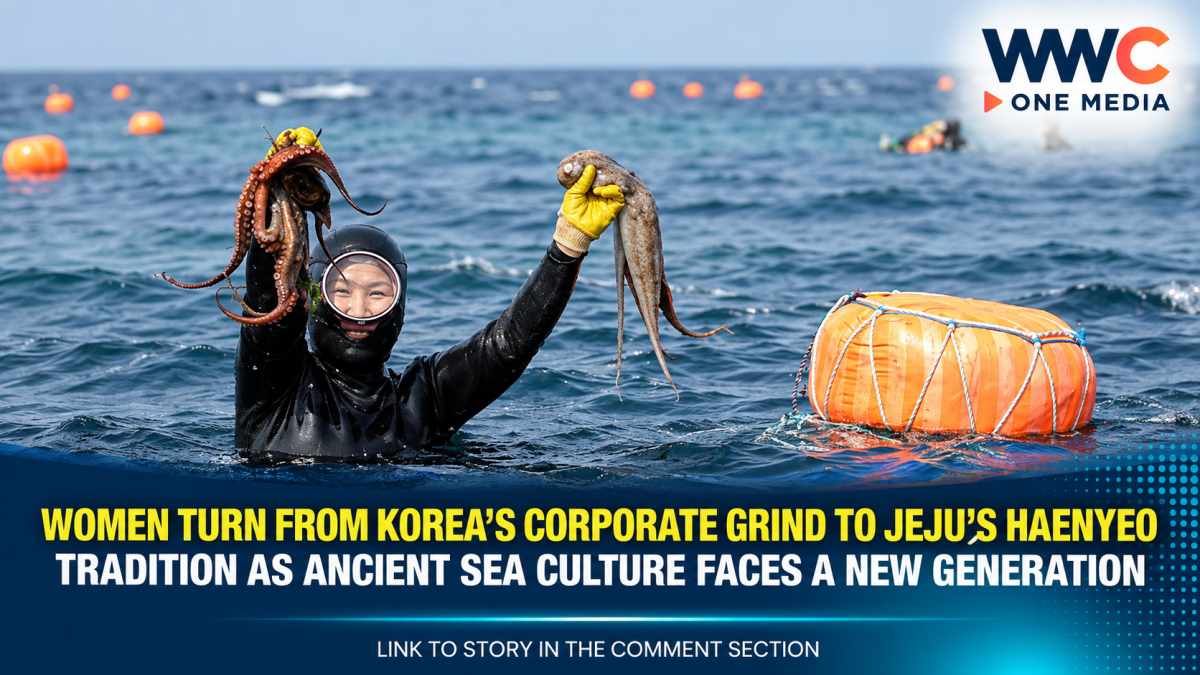
JEJU, South Korea — For generations, Jeju’s women divers have entered the sea armed with little more than a wetsuit, a basket and their knowledge of the ocean.
Now, the tradition is attracting a new generation of women—including people who once imagined very different careers for themselves.
Known as haenyeo, or “sea women,” Jeju’s female divers make their living by free-diving for marine products without breathing equipment. Their culture was inscribed on UNESCO’s Representative List of the Intangible Cultural Heritage of Humanity in 2016, recognizing not only the diving itself but also the community knowledge, rituals, cooperation and sustainable relationship with the sea.
For some younger women, however, becoming a haenyeo is about more than preserving an old tradition.
It can represent a different way of living.
From the City Back to the Sea
The modern South Korean workplace can be intensely competitive, particularly for younger workers seeking secure and prestigious careers.
For some Jeju women, that pressure has prompted a reassessment of what they want from work and life.
The UN Food and Agriculture Organization (FAO) recently highlighted the story of Ryou-jin Ko, who initially followed an academic and career path away from her family’s diving tradition.
After graduating in athletics, she left Jeju. But burnout eventually led her back home—and back toward the sea.
She ultimately chose to become a haenyeo like her mother and grandmother.
Her story illustrates a broader tension surrounding the tradition: while haenyeo culture is centuries old, its future depends on whether younger generations can see a place for themselves within it.
What Does It Mean to Be a Haenyeo?
Haenyeo are not simply women who go swimming for seafood.
The practice involves specialized knowledge of tides, currents, marine life, weather and underwater terrain.
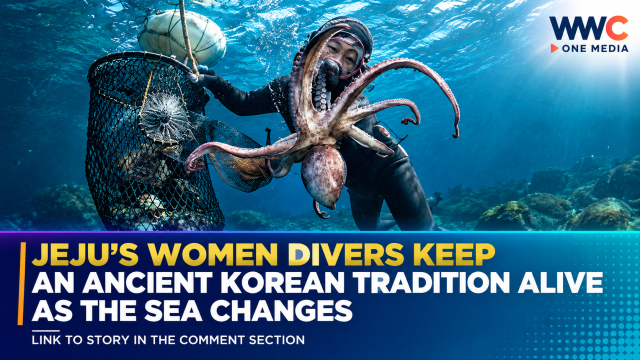
Divers traditionally descend without oxygen tanks to collect seafood such as abalone, sea urchins, seaweed and turban shells.
UNESCO says some divers have historically worked for hours a day and descended to depths of around 10 meters. Their knowledge is passed between generations through families, fishing cooperatives, associations and Haenyeo Schools.
The community also has its own social structure and traditions.
Experienced divers help guide newer members, while rituals connected to the sea reflect the risks and uncertainty of their work.
That combination of livelihood, culture and community is what makes the haenyeo tradition particularly distinctive.
A Tradition That Changed Women’s Role
The haenyeo system also challenged conventional gender roles on Jeju.
Historically, women divers contributed significantly to household income and, in some communities, became important economic decision-makers.
UNESCO specifically recognized the tradition’s contribution to women’s status within the community, as well as its role in strengthening social cohesion and cultural identity.
The tradition’s sustainability practices are another important part of its legacy.
Rather than relying on industrial fishing technology, haenyeo have traditionally harvested marine resources through knowledge of seasons, breeding periods and local marine ecosystems.
The FAO has also recognized the Jeju Haenyeo Fisheries System as a Globally Important Agricultural Heritage System, highlighting its relationship with the island’s environment and traditional resource management.
The Tradition Is Finding Unexpected New Recruits
The revival is not limited to women born into Jeju families.
In April 2026, Kylie Genter, an American woman from upstate New York, was officially designated as a haenyeo in Yeongrak-ri on Jeju’s western coast, according to Korea.net.
Her recognition demonstrates how a tradition rooted in Jeju communities is attracting people from outside the island and even outside South Korea.
That development is significant because the biggest threat facing haenyeo culture may not be a lack of international attention.
It is succession.
An Aging Community Faces a Difficult Future
Despite renewed interest, the haenyeo community remains heavily affected by aging.
UNESCO has warned that the aging of practitioners, combined with marine ecosystem degradation caused by climate change and pollution, threatens the long-term sustainability of the tradition.
South Korea and Jeju have therefore supported measures including Haenyeo Schools and educational programs designed to introduce younger people to the culture and develop new practitioners.
The challenge is complicated by the fact that becoming a haenyeo is not something that can simply be learned from a textbook.
It requires practical skills, knowledge of the sea and participation in a community.
Climate Change Is Changing the Sea They Depend On
The environmental side of the story is becoming increasingly urgent.
Recent reporting from Reuters found that soft coral reefs around Jeju are suffering significant deterioration, with warmer ocean temperatures and extreme weather among the concerns researchers are investigating.
Local divers, including haenyeo, have reported changes in marine life and declining catches in some areas.
That creates a troubling paradox.
The women helping preserve one of Jeju’s most important traditional cultures depend on an ecosystem that is itself changing.
If the sea changes dramatically, preserving the tradition will require more than simply teaching young women how to dive.
It will also require protecting the marine environment that makes the livelihood possible.
More Than a Career Change
The story of women turning toward haenyeo life should therefore not be reduced to a simple “corporate job versus diving” narrative.
For some, it is about returning home.
For others, it is about reconnecting with family, community and the natural environment.
And for newcomers, it can mean becoming part of a cultural tradition that has survived generations.
The appeal is striking precisely because it runs against the direction of modern urban life.
Instead of measuring success only through office titles, salaries or career advancement, the haenyeo tradition places value on skill, independence, community and a relationship with nature.
Can the Next Generation Keep the Tradition Alive?
Jeju’s haenyeo have survived social change before.
But the pressures facing them today are different.
Young people have more career options than previous generations, while the marine environment is being reshaped by warming seas and pollution.
That means the future of the tradition may depend on whether haenyeo culture can adapt without losing what makes it unique.
For women like Ryou-jin Ko, the answer has been to return to the sea.
And for newcomers such as Kylie Genter, the answer has been to enter a tradition that once seemed unlikely to have a place in a modern globalized world.
The haenyeo story is ultimately not just about women leaving behind the grind.
It is about what they are choosing instead.
On Jeju, that choice can still begin where generations of women began theirs: at the edge of the sea, looking toward the water and deciding to dive.
WWC ONE MEDIA G.A



Leave a Reply